After more than twenty-five years of writing and recording, Eddy Mann is still following songs toward the place where faith becomes lived experience. His project The Unveiling grew from an intentional study of the Book of Revelation with his wife, ultimately opening into roughly thirty songs rather than a single predetermined statement.
At the center of this conversation is “I Will Never Know the Desert Again,” a restrained, hopeful song inspired by Revelation 7:16–17. Exposed Vocals caught up with Eddy Mann to discuss the project’s “divine outcome,” why softness can command more attention than volume, and how an artist can create outside genre while remaining anchored to a clear spiritual purpose.
The Unveiling takes its inspiration from the Book of Revelation. What made that text feel like a creative beginning for you, rather than simply a vision of endings?
The project grew out of an intentional deep dive into the book. My wife and I decided we would dig into it in a way we hadn’t before. Months later I was looking at thirty songs that came from the journey. It happened organically—what I’d refer to as a divine outcome.
“I Will Never Know the Desert Again” is rooted in Revelation 7:16–17. Was there a particular image or phrase in that passage that first began turning into music?
I wouldn’t say a phrase as much as a mood. I found a message that was wrapped in a very calm and reassuring atmosphere. I was just trying to capture the feeling in words and melody.
The desert can represent suffering, distance, testing or transition. What does that image mean to you personally in this song?
For me personally it represents our daily journey. We face unexpected and challenging circumstances each and every day. It’s comforting to face them with the knowledge of what we’ve been promised, and with the Advocate.
Songs about hope can easily become abstract. How did you keep this one grounded in something human and emotionally specific?
Well, I think that’s a Spirit question. I really try very hard to be as transparent in the writing as I can. I’m always striving to have the Spirit work through me. More Spirit and less of me usually breeds success for me.
After more than 25 years of writing and recording, how has the relationship between your faith and your songwriting changed?
It’s constantly growing and gaining strength and insight. The fact that the Word is living and adapting itself to our journey each day means there’s an endless amount of inspiration to share with others.
When scripture inspires a song, does the melody usually arrive alongside the idea, or do you translate the text into musical language afterward?
I tend to hear a phrase that sings. Once that occurs, I’m just gently nudging the song forward and, as I said earlier, trying my best to get out of the way.
The track moves between Christian, country, pop and inspirational traditions. How do you use those influences without letting genre overpower the message?
I couldn’t care less about what’s trending and what isn’t. I don’t subscribe to genres. I learned quite a while back that God wants me to write and sing in my own unique voice. He’ll use it, or not, in the way that He deems right. My job is just to create it so that He can use it.
There is real restraint and tenderness in the performance. How do you know when a quieter delivery will say more than a bigger one?
There’s a tendency to get louder to get attention, but I’ve found that getting softer can sometimes be an even stronger way to get listeners to lean in. Music needs to be alive; it needs to breathe dynamically, and you achieve that by sensing a tone and volume landscape.
Has anything listeners have shared about this song or The Unveiling changed the way you understand the work yourself?
We create to inspire an emotional response. That can be positive or negative. I’m fine either way. I personally enjoy my faith being challenged because, in the end, it usually grows stronger.
What does the promise “I will never know the desert again” mean to you at this point in your life?
It means that there’s a reason to be hopeful—that in a darkening world there’s a light to be found, and we should be spreading it freely and abundantly. It means that there’s a God who loves me, is watching over me and has promised me an eternal inheritance.
Mann’s answer to a darkening world is not to compete with its volume. It is to lower his voice until the listener leans closer. In that restraint, “I Will Never Know the Desert Again” turns Revelation’s scale into something immediate: the daily decision to carry hope as a lived practice and to offer it freely.
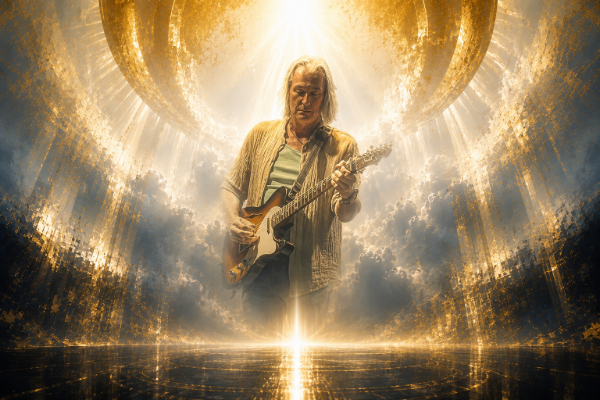
Photo courtesy of Eddy Mann.