“Twenty-Five Years in, Eddy Mann’s ‘I Will Never Know the Desert Again’ Is His Most Quietly Powerful Statement Yet”
In this story
Eddy
Mann
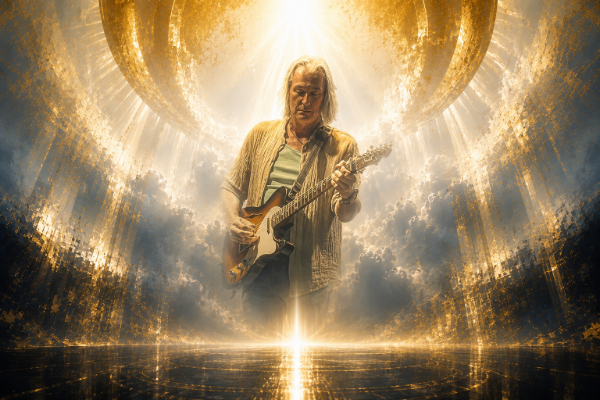
“Feels like stepping into shade after miles of heat.” — Twenty-plus albums deep, Melbourne Beach’s most quietly powerful faith-driven songwriter delivers his most personal work yet.
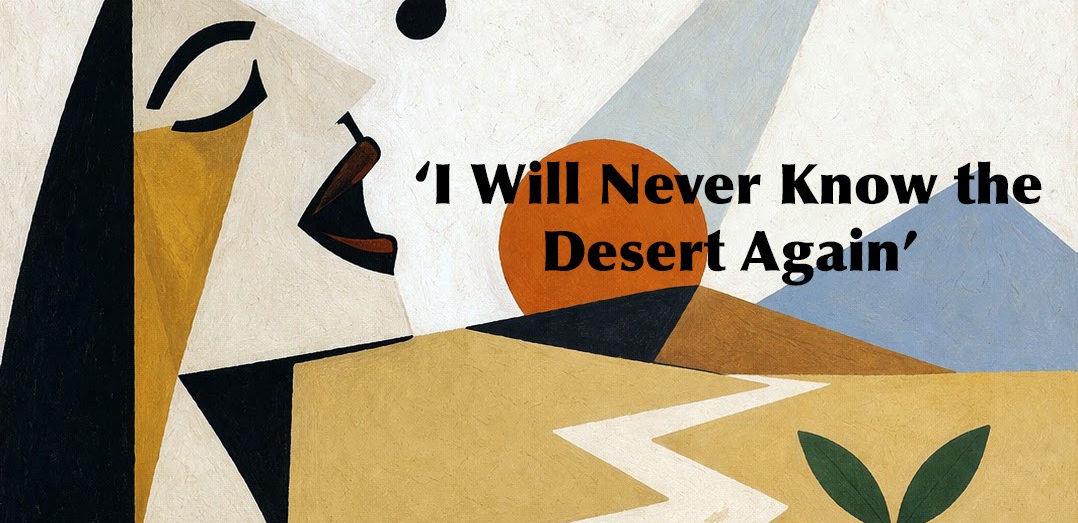
Most artists spend a career searching for a singular theme that can sustain a body of work. Eddy Mann found his early and has been deepening it for more than two decades — the intersection of faith, humanity, and the kind of hope that doesn’t look away from difficulty. “I Will Never Know the Desert Again,” the second single from his 2026 album The Unveiling, is a distillation of everything that approach has been building toward: a song rooted in Revelation 7:16–17 that transforms ancient scripture into something felt rather than merely believed.
Mann is not a fringe artist working in a niche corner of the Christian market. He is a prolific, internationally recognized songwriter with more than twenty albums behind him, multiple charting singles on Christian and inspirational radio, and a reputation built on consistency and spiritual authenticity rather than trend-chasing. The Unveiling continues that tradition while pushing deeper into personal territory than anything he has released before.
“Feels like stepping into shade after miles of heat. The Lamb becomes Shepherd. Hunger fades. The voice of the singer relaxes, as if he’s reached the edge of the vision and found rest waiting there.”— Music Crowns
Twenty Albums and Still Deepening
Eddy Mann grew up in Philadelphia in a household where music and faith were not separate languages. His father was a be-bop pianist; his mother brought a broad cultural curiosity to everything she touched. That combination — jazz-rooted rhythmic instinct meeting spiritual openness — has shaped the way Mann writes, which is why his catalog resists easy categorization. Country Christian, Contemporary Christian, Americana, gospel, folk: the labels shift from album to album because Mann follows the song rather than the format.
Over more than two decades, he has built a genuinely international audience. His single “The Consequence” was a Top 10 hit on Christian Music Weekly radio. His album Chapel Songs produced two #1 UK iTunes hits in “Hallelujah” and “Hope of the World.” He has earned recognition from independent music organizations and Christian media outlets across multiple countries — the kind of slow-built, word-of-mouth reach that doesn’t inflate and doesn’t deflate, because it was never manufactured.
Now based in Melbourne Beach, Florida, Mann writes, records, and performs with the same daily discipline he has always maintained. He has described his creative process as simply showing up — writing, playing, and recording every day, treating the craft with the same seriousness a worshipper brings to prayer. That consistency is audible in The Unveiling, which carries the ease of a man who has been saying exactly what he means for a very long time.
“Mann sings of thirst quenched and hunger ended, of a Shepherd who finally leads His people home. It’s tender. It’s earned.”— Music Existence
The Unveiling — Scripture as Song
The Unveiling is Mann’s most overtly scriptural project — a full album drawn from and inspired by the Book of Revelation. That is an ambitious source text for a songwriter: Revelation is visionary, overwhelming, and deeply contested as a document. Mann’s approach is not to decode it but to inhabit it — to find the emotional truth inside the imagery and translate that into melody and lyric.
“I Will Never Know the Desert Again” takes its anchor from Revelation 7:16–17, the passage that speaks of a people who will no longer hunger or thirst, who will no longer be scorched by sun or heat, led by the Lamb to springs of living water where every tear is wiped away. In Mann’s hands that prophecy becomes a personal promise — not a theological statement but a felt one. The instrumentation is gentle by design: the song does not announce its comfort, it offers it.
The track arrives as the second single from the album and has already drawn significant praise from Christian music press. Music Crowns described it as feeling like stepping into shade after miles of heat. Music Existence called it one of the album’s most moving moments. Both responses point to the same quality: restraint used as a form of power. Mann does not reach for the emotional crescendo. He trusts the words and the space around them to carry the weight, and they do.
“I’m driven to write, to record, and to perform by the opportunity to bring a smile, a light, or just a moment of peace to someone in need. That’s why I get up each day.”— Eddy Mann
Faith Music That Earns Its Ground
The contemporary Christian music landscape is crowded with product — songs engineered for Sunday morning playlists, built around chord progressions and lyrical formulas that have been field-tested to elicit a specific congregational response. Eddy Mann has never operated in that space, and “I Will Never Know the Desert Again” makes clear he never will.
What Mann makes is music rooted in genuine encounter — with scripture, with doubt, with the experience of getting through the day. His Philadelphia upbringing gave him a blues and jazz sensibility that sits beneath the faith content and keeps it honest. When he writes about suffering being temporary, you believe him not because the production tells you to, but because the delivery sounds like someone who has sat with that question for a long time and arrived somewhere real.
For listeners who follow independent music with any seriousness, Mann represents something important: proof that a career built entirely on artistic integrity and direct audience connection can sustain and deepen over decades. Twenty-plus albums is not output for its own sake. It is the record of a man who found what he needed to say and keeps finding new ways to say it. The Unveiling may be his clearest statement yet.
“I Will Never Know the Desert Again” is not a complicated song. It does not need to be. Some of the most durable music ever written has been built on the simplest of promises — that the hard part will end, that rest exists, that someone is leading you there. Eddy Mann has been making that case for twenty-five years. On this single, he makes it with particular grace.
Keep reading
Back to Music News ↗
Also featuring this profile
Eddy Mann — When I Was Saved: Found in the Inbox
October 19, 2026
Also featuring this profile
Eddy Mann — We Are: Found in the Inbox
October 19, 2026Also featuring this profile