
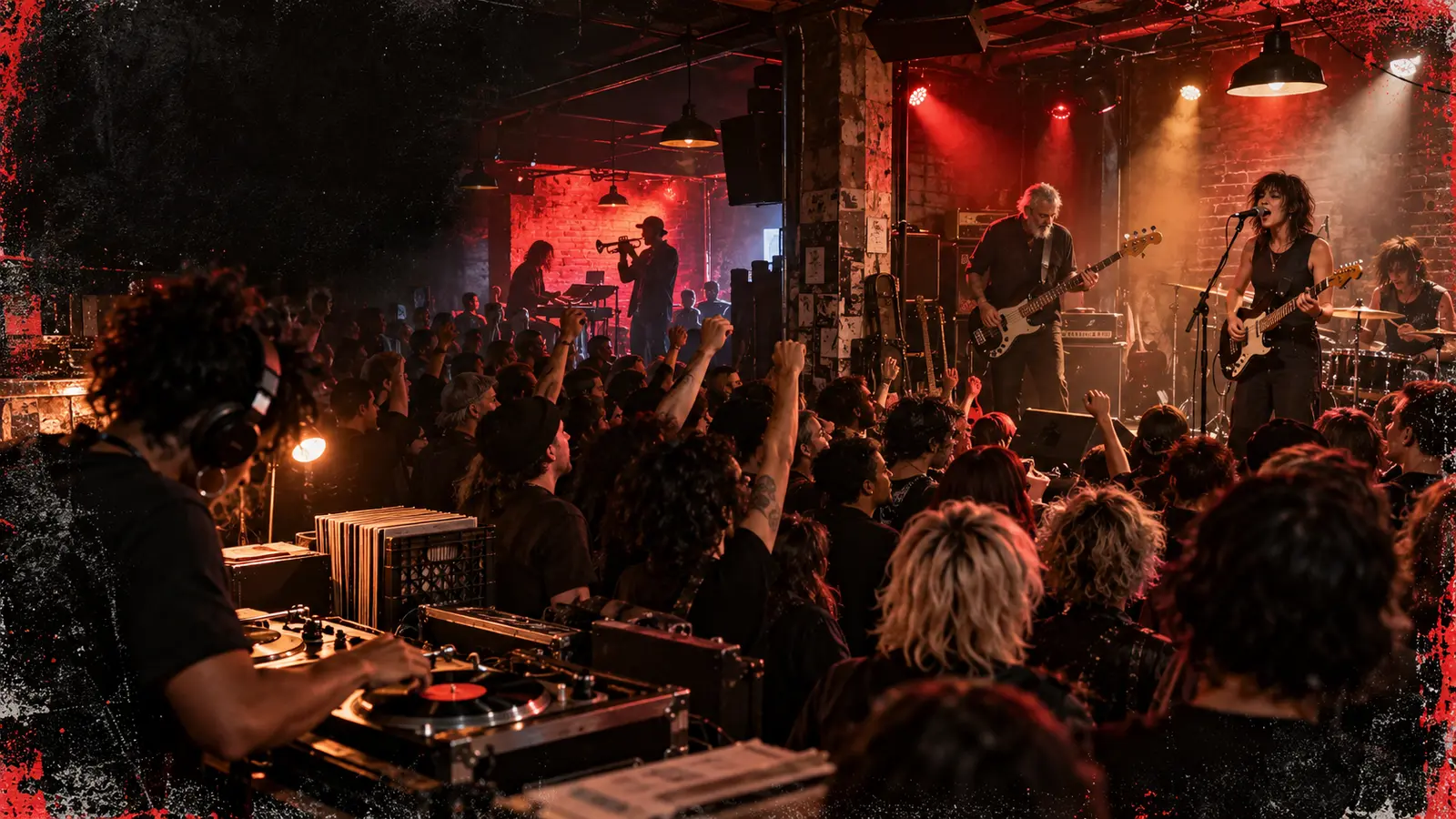
PravdaFest returned to Fitzgerald’s in Berwyn on September 12 with a marathon bill connecting more than four decades of Chicago independent music. Built around Pravda Records, the label founded in 1984 by Kenn Goodman and Rick Mosher, the event assembled sixteen Pravda acts alongside special guests, with a lineup including Jon Langford, The Effigies, The Handcuffs, the Josh Caterer Trio, and Nicholas Tremulis and the Prodigals. WXRT DJs Marty Lennartz and James VanOsdol were set to guide the day, while vinyl sets, performance elements from Annoyance Theater figures Mick Napier and Jennifer Estlin, and food from BabyGold BBQ expanded the gathering beyond a sequence of bands moving through a stage. The scale was intentionally local and unusually broad: artists connected to different eras of the label shared one bill in a venue where an audience could see the history as a living network rather than a museum piece. Pravda has released more than two hundred records by more than seventy artists, a catalog that includes New Duncan Imperials, Smoking Popes, The Flat Five, and a changing roster of Chicago projects that often developed without national-industry attention. A single festival cannot summarize that history, but it can make the relationships visible.
The event arrived at a useful moment for independent music. The modern release system makes distribution easier than it was in 1984, but it does not automatically create the local memory, physical gathering places, or trusted intermediaries that turn available music into a scene. A label like Pravda matters because it has functioned as more than a logo on a digital upload. Its history includes a Wrigleyville retail store dedicated to independently made music and merchandise, long-running relationships with artists, catalog stewardship, and the practical willingness to release work that may never fit a major company’s scale. Fitzgerald’s plays a similar role from the venue side: the room allows generations of musicians and listeners to occupy the same physical space and recognize one another. PravdaFest brought those functions together. Newer artists did not appear as algorithmic suggestions detached from context; they appeared beside established names whose audiences could hear how the scene continues. Legacy acts were not reduced to nostalgia; they became evidence that independent records can retain value when the institutions around them remain active. That combination—catalog, venue, artist relationships, and an audience willing to spend a full day listening—is difficult to manufacture through promotion alone.
PravdaFest’s larger significance is the argument it makes about survival. Independent music is often described as a collection of individual breakthroughs, yet most durable scenes are built by people who keep doing smaller jobs for a very long time: releasing the record, booking the room, stocking the physical copy, preserving the master, introducing the new band, and bringing listeners back after the news cycle moves on. Goodman has continued adding to the label’s story, with recent activity including Wesley Stace joining the roster, new work from The Claudettes, and Park Hills Circle’s atmospheric Chicago project. The festival placed those current moves beside the label’s older chapters instead of treating history and discovery as separate businesses. For artists watching from outside Chicago, that may be the most useful part of the story. Careers need platforms, but scenes need institutions with addresses, names, and memory. Pravda Records and Fitzgerald’s provided all three for a day, giving independent music the kind of concentrated attention that rarely appears in a feed. Four decades after the label began, PravdaFest showed that longevity does not come from resisting change entirely. It comes from carrying the relationships forward while leaving space on the stage for whoever arrives next.