
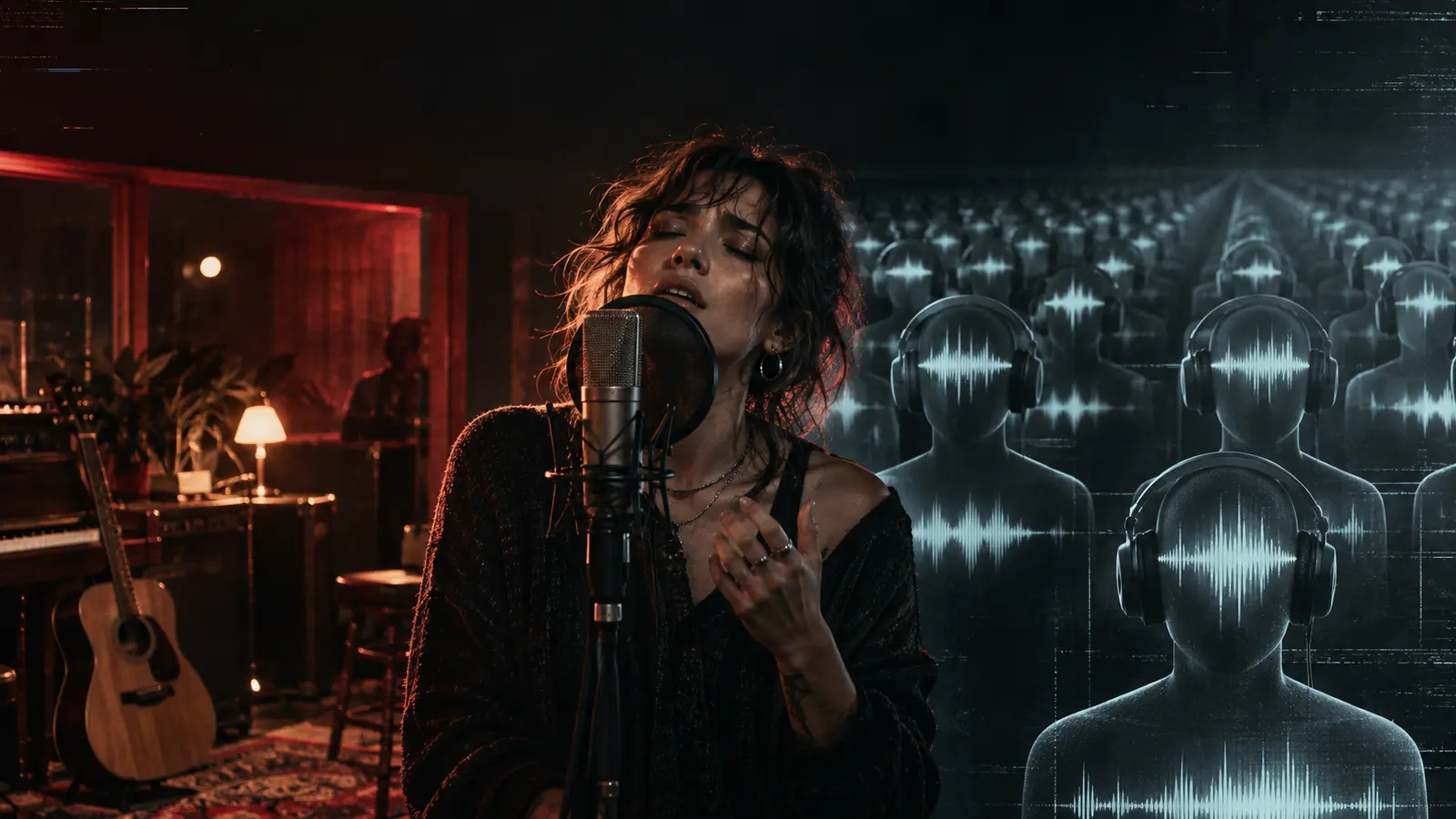
AI did not invent generic music. The industry has always rewarded imitation, sanded rough edges into marketable shapes, and chased the last successful sound until it stopped working. Artificial intelligence simply increases the speed and scale of that instinct. It can generate more versions, more quickly, at almost no emotional cost to the person pressing the button. That makes the volume problem real: playlists, feeds, libraries, and licensing catalogs can be flooded with competent material that resembles music people already liked. But competence was never the same thing as necessity. A song matters when there is a reason this person had to make it this way—because of the room they came from, the voice they nearly hid, the rhythm their community understands, the failure they can finally name, or the contradiction they have not resolved. A machine can model the surface of those things. It cannot have needed to survive them. The independent artist’s advantage is therefore not technical purity or a promise never to touch new tools. It is specificity. The more music becomes available, the more valuable a recognizable human perspective becomes. If your song could have been made by anyone, AI will expose that weakness faster. If it could only have been made by you, the technology may change the process, but it does not erase the source.
The deeper concern is ownership of the infrastructure around independence. Major companies, investment funds, distributors, platforms, data brokers, and technology firms are increasingly positioned between artists and listeners: they control discovery systems, acquire catalogs, shape recommendation engines, sell promotional access, and gather the behavioral data that tells them what to copy next. AI strengthens that leverage because whoever owns the largest datasets, distribution channels, and licensing relationships can manufacture and place content at a scale no individual artist can match. The answer is not to compete on volume. It is to build assets and relationships that cannot be removed with a settings change. Own a mailing list. Maintain a complete artist profile. Keep high-quality masters and visual files organized. Document credits. Create interviews, reviews, videos, and live moments that establish a public history. Know which listeners repeatedly act, not merely which post briefly traveled. Support independent spaces that give music context instead of treating every track as interchangeable inventory. The majors buying the infrastructure of independence does not mean independence is over; it means artists must understand which parts of their career they are renting and which parts they can still own. A platform can introduce you. It should not be the only place your identity exists.
Used with judgment, AI can be an assistant rather than an author of the self. It can organize a release calendar, surface gaps in metadata, create alternate crops, help summarize a long conversation, translate routine information, or give a small team leverage on work that would otherwise consume the day. The line is not drawn at whether a machine touched the process. It is drawn at whether the artist surrendered the decision-making, the truth, and the accountable human voice. Do not ask technology to manufacture a childhood, a scene, a grief, a politics, a sense of humor, or a reason to stand onstage. Bring those things yourself. Preserve the mistakes that carry character. Choose the take that communicates, not only the one that measures as flawless. Tell stories detailed enough that they cannot be reverse-engineered from a trend report. Then use every available tool to present that work with clarity and reach. Audiences are not going to stop wanting music because machines can make sound. They may stop noticing artists who offer nothing beyond familiar sound. The future will be noisy, efficient, and full of convincing replicas. The grind is to become more specific, more connected, and more human—not as a nostalgic protest against technology, but as the only position technology cannot occupy for you.