Michael St. Over on Ride Sweet Angel, Hard Rock and Finding a Voice for Difficult Stories
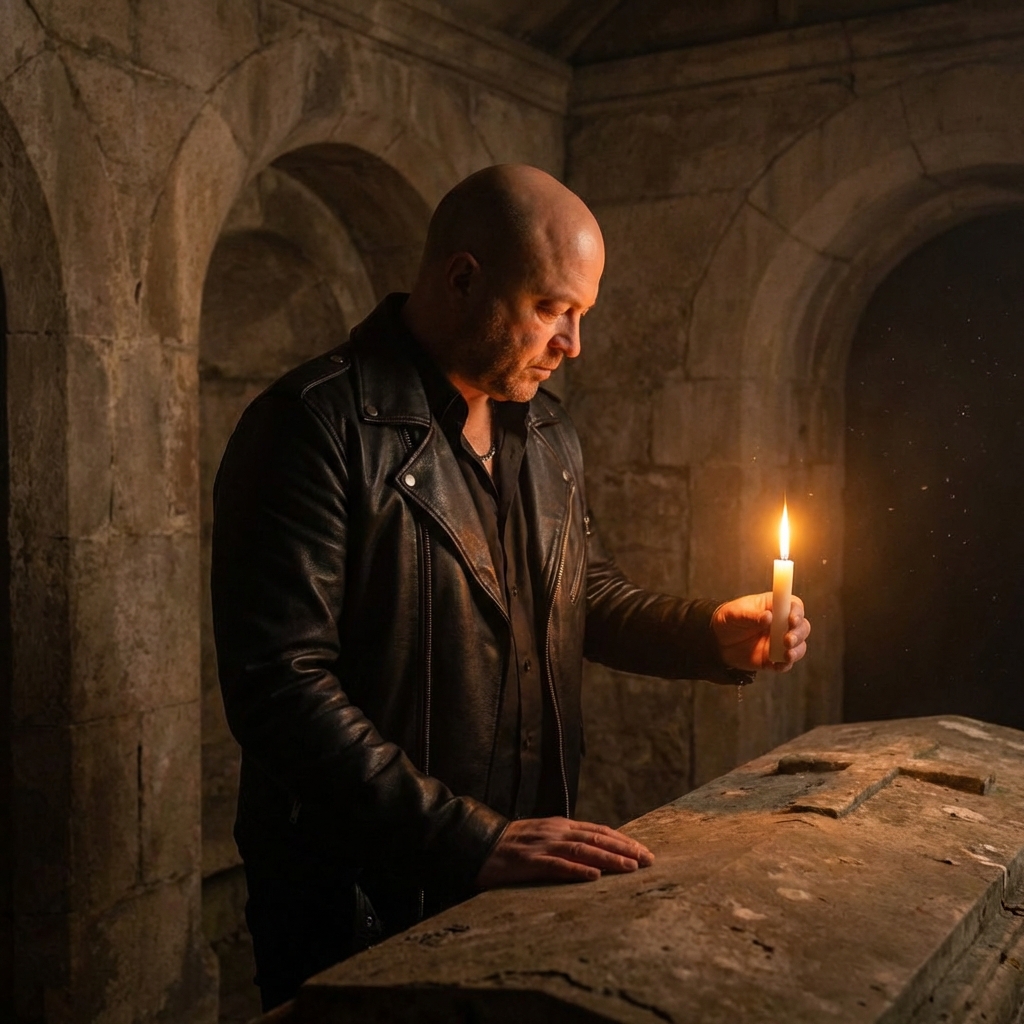
A song can take decades to find its final words. For Michael Stover, “Ride Sweet Angel” began roughly 35 years ago with the memory of a teenage girl whose sadness stayed with him. He is careful not to present the song as her biography: he never knew the full circumstances of her life. Instead, the encounter became the emotional starting point for a hard-rock story about suffering, empathy and the possibility of redemption. Only this year, Stover says, did he write the final chorus that made the song feel complete.
The release also helps explain why Stover created Michael St. Over as a distinct recording identity alongside the Christian metal project Ashes Awaken and country-oriented Dust and Grace. Here, distorted guitars and memorable hooks provide room for subjects he considers too raw for a more restrained setting. We spoke with the songwriter and MTS Management Group founder about the responsibility of writing around abuse and addiction without exploiting either, the craft behind the record’s sound, and the tonal shift of his next single, “Crave,” scheduled for October 30.
Listen / Explore: Michael St. Over
Explore the music and releases discussed in this interview.
EV: Why did you need a separate hard-rock identity, Michael St. Over, for these songs?
Michael St. Over gave me a place where I could be completely unfiltered. I work in a lot of different musical worlds, but these songs needed their own identity. They’re heavier, darker, more personal, and sometimes uncomfortable. I wanted a project where I could turn the guitars up, dig into subjects that aren’t always pretty, and not worry about whether they fit somebody’s expectations of what I should be doing. Michael St. Over is still me—it’s just the side of me that comes out when the amps get loud.
EV:“Ride Sweet Angel” deals with child abuse and addiction. Where did the story come from?
I actually started writing “Ride Sweet Angel” about 35 years ago, after meeting a teenage girl named April. There was a sadness in her eyes that stayed with me, and that became the emotional starting point for the song. I didn’t know her full story, and I have no idea whether addiction was ever part of her life, so the song was never meant to be a biography of her.
The story really just wrote itself from that feeling. I carried the song with me for decades, but I never felt like it was completely finished. This year, I finally found the ending it needed by writing the final chorus. That chorus gave the song its sense of redemption and closure, and after all those years, I finally felt like “Ride Sweet Angel” was complete.
EV:How do you write about subjects that painful without exploiting them?
You have to remember that you’re writing about human beings, not subject matter. I never wanted “Ride Sweet Angel” to use abuse or addiction for shock value. The question I kept coming back to was, “Does this line serve the person in the story?” There are details you don’t need to spell out. Sometimes what you leave unsaid is more powerful. I wanted empathy to come first. If somebody who has experienced those things hears the song, I want them to feel seen rather than used.
EV:What did hard rock let you say that your other projects couldn’t?
Hard rock lets anger, frustration, pain, sexuality, faith, doubt—all of those things exist at full volume. You don’t have to make the edges comfortable. With Michael St. Over, I can write something like “Ride Sweet Angel,” and then turn around and release something as obsessive and sensual as “Crave.” They’re very different songs, but both deal with emotions that are bigger than polite conversation. Hard rock gives me the vocabulary to make those emotions physical.
EV:How did you decide on the sound of the record: the guitars, the vocal, the tempo?
I wanted weight without losing melody. I love heavy guitars, but I also grew up believing a song needs a hook. If you can’t remember anything after the distortion stops, what was the point? The guitars had to sound aggressive and large, while the vocals needed to stay understandable because the lyrics matter to me. Tempo depends entirely on the story. I’m always asking what makes the lyric hit harder rather than simply what sounds heavy.
EV:Who else played on or produced the song, and what did they bring?
I’ve been very hands-on with the Michael St. Over material from the writing through the overall production direction. These songs begin with me, and I’m very particular about the emotion and sound I’m trying to capture. When other musicians or production people become part of that process, I want them serving the song rather than showing off. For me, the important thing is that everything sounds like it belongs in the same emotional world. I’d rather have one perfectly placed part than twenty parts competing for attention.
EV:What reaction have you had from listeners who have lived through something similar?
Those are the responses that mean the most. Chart positions and radio spins are great, and I’m grateful for every one of them, but when somebody tells you, “That song reminded me of what I went through,” or that it gave them some kind of release, suddenly the numbers seem secondary. “Ride Sweet Angel” reached people on a very personal level. Some of the messages have been difficult to read because people have shared incredibly painful experiences, but that connection reminds me why writing something like this matters.
EV:How do you switch between running MTS for other artists and making your own music?
My MTS clients always come first. That’s the priority, and I take that responsibility seriously. Most of my time is spent working on their releases, press, radio, strategy, and whatever else they need to keep moving forward. My own music gets squeezed in around all of that whenever I can find the time.
Sometimes that means writing late at night, recording on a weekend, or grabbing a few hours between client projects. I don’t really separate the two worlds as neatly as people might imagine. MTS is my full-time focus, and Michael St. Over is something I pursue in the spaces in between. That probably makes the process slower, but it also makes me appreciate every chance I get to create my own music.
EV:Is Michael St. Over one song or a longer project?
Definitely a longer project. Michael St. Over was never intended to be a one-off. “Ride Sweet Angel” established one side of what I wanted to do, and “Crave” shows another. I like that there’s room under this name for heavy songs about serious social issues, songs about faith and redemption, and straight-up rock songs about desire and relationships. The common thread is honesty, big guitars, memorable hooks, and not being afraid to go somewhere emotionally uncomfortable.
EV:What comes next under this name?
“Crave” is next, with the single and video coming October 30, and I’m excited because it shows a completely different side of Michael St. Over. It’s darker, sexier, more obsessive—basically desire portrayed as an addiction. Beyond that, I’m continuing to write and build this into a real body of work rather than a collection of unrelated singles. I want people to eventually hear a Michael St. Over song and recognize the attitude behind it, even if every song doesn’t sound exactly the same. That’s where I think this project gets really interesting.
The distance between “Ride Sweet Angel” and “Crave” is part of the point. One took decades to resolve into a song of empathy and redemption; the other, Stover says, explores desire as an obsession. Rather than treating those subjects as competing directions, he sees them as different expressions of the same hard-rock voice. What gives Michael St. Over a developing identity is not a fixed topic but a method: start with an uncomfortable emotion, give it a strong melody and refuse to soften it merely to make it easier to hear. His next release will test how far that approach can stretch.
Signal this interview
Send it up if it hit, down if it missed. The most engaged pieces surface on Signal.
Keep reading
Back to Interviews ↗
From this section
Exposed Vocals Interview: AETHERFALL on PARALLAX and an 18-Album Science-Fiction Saga
October 22, 2026
From this section
Pam Ross on Outside the Box, Songwriting and the Stories Behind the Music
October 22, 2026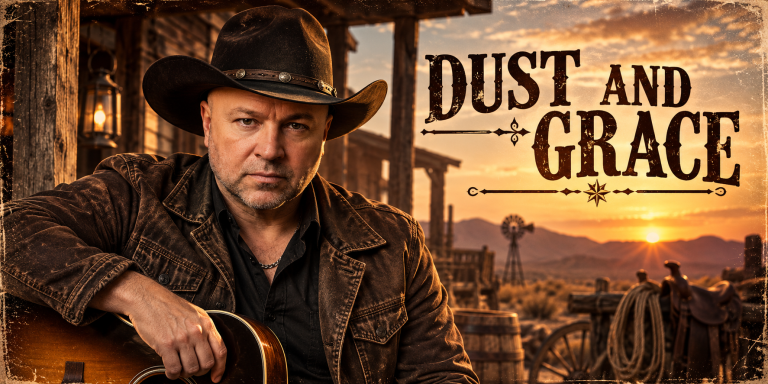
From this section