Ashes Awaken: Michael Stover on Christian Metal, Faith and AI-Assisted Recording
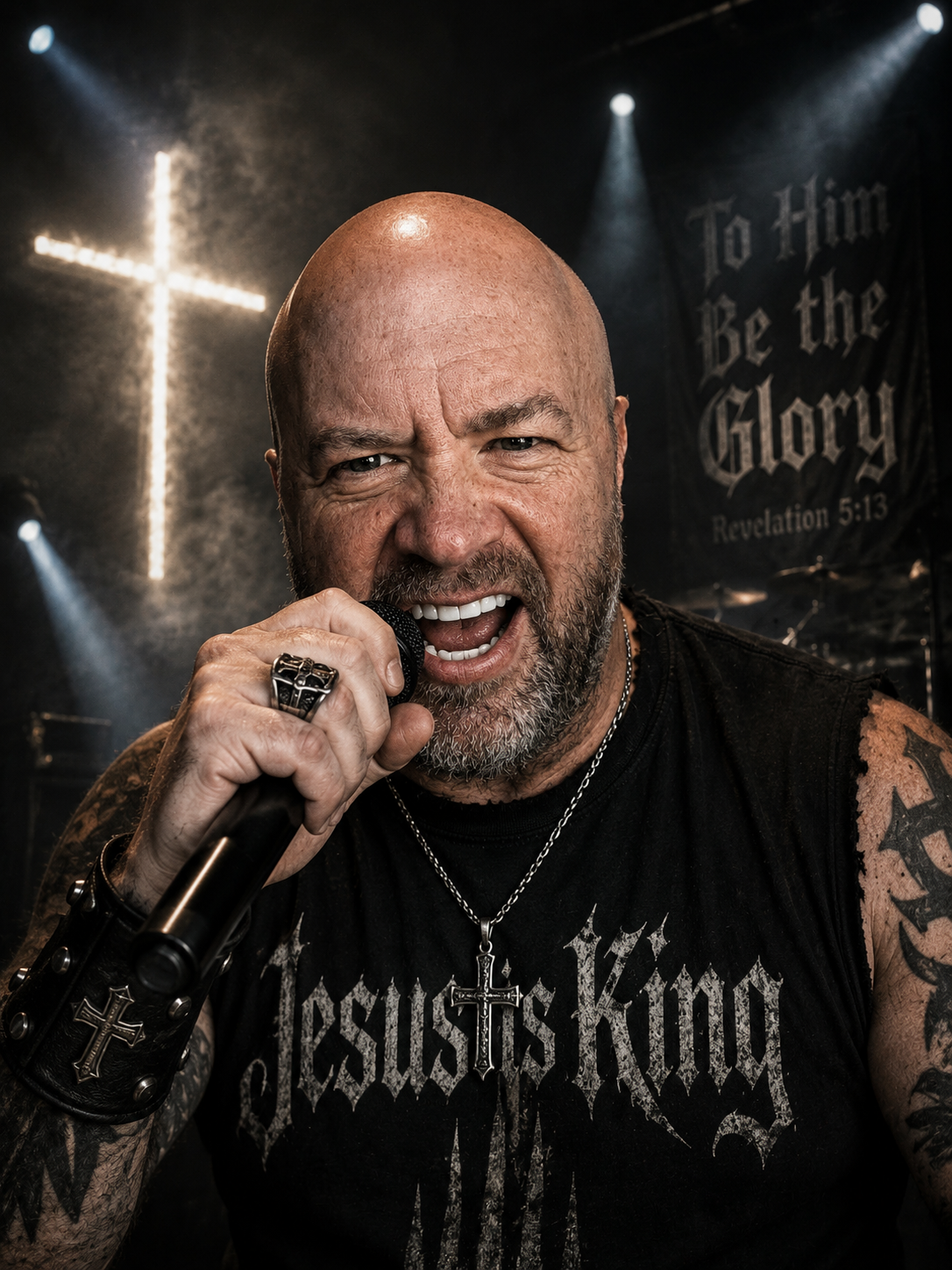
Ashes Awaken is where Michael Stover places his Christian faith inside the force of metal. Rather than treating heavy music as an unlikely vehicle for spiritual themes, he sees its intensity as suited to stories about temptation, doubt, surrender and redemption. The title “We Sold Our Souls to Heaven” deliberately reverses a familiar rock-and-roll expression: for Stover, the idea is not a literal bargain but a decision to give one’s life to Christ and find freedom through that surrender.
The project also puts an unusually explicit production question in front of listeners. Stover says he writes the music and lyrics and directs the creative decisions, while AI tools generate the recorded performance under his supervision. He describes that as a process of experimentation and refinement, not a substitute for having a song to communicate. We spoke with him about why he discloses the technology, where he draws the line between creative assistance and deception, how audiences have responded, and his hope of eventually hearing the material performed by a full human band.
Listen / Explore: Ashes Awaken
Explore the music and releases discussed in this interview.
EV:What is Ashes Awaken, and how is it different from your other projects?
Ashes Awaken is my Christian metal project. It gives me a place to combine my faith with the heavier music that I’ve always loved. With Michael St. Over, I can explore hard rock and more personal subject matter, and Dust and Grace gives me an outlet for country songwriting. Ashes Awaken is different because Christ is really at the center of it. I can write about redemption, spiritual warfare, temptation, brokenness, grace—all of those things—and put them inside this very aggressive musical framework. It’s heavy music with a message of hope.
EV:“We Sold Our Souls to Heaven” is about surrender, redemption and faith in Christ. What led you to write it?
The title came first. We’ve all heard the phrase “selling your soul to the devil,” especially in rock and metal, and I started thinking, why not turn that completely around? What if you “sold your soul” to heaven? Obviously, I’m not talking about literally selling anything. I’m talking about surrendering your life to Christ and allowing Him to take control. Once I had that idea, the lyrics came pretty naturally. I wanted the song to say that surrendering to God isn’t giving up your freedom. For me, that surrender is where real freedom begins.
EV:The campaign says the recorded performance was generated with AI under your
direction. Why did you choose to make it that way?
For me, it was another way of getting the music that was in my head out into the world. I’m a songwriter first. I hear the songs, I write the lyrics and music, and I have a very specific idea of what I want them to feel like. AI gave me another production tool to realize that vision. I don’t look at it as pushing a button and suddenly having a song. There’s a lot of experimenting, directing, rejecting things and refining things until I hear something that represents what I wrote.
EV:Which parts are entirely yours—music, lyrics, arrangement—and which did the AI tools
handle?
The song itself is mine. I wrote the music and lyrics, created the concept and determined the direction of the song. I make the creative decisions about structure, feel, dynamics, instrumentation and what ultimately stays or goes. The AI handles the generated performance— the actual realization of those musical ideas into the finished recording. I think that distinction is important. The technology is performing and helping produce something that originated with me creatively.
EV:How do you direct an AI performance to sound the way you hear the song?
It takes patience. You have to know what you want before you start. I’m thinking about tempo, guitar tone, vocal attitude, dynamics, where something needs to get heavier, where it needs space and what emotion the vocal needs to communicate. Then it becomes a process of refinement. If something doesn’t sound right, I don’t accept it just because the technology created it. I keep working until the performance gets as close as possible to what I’m hearing internally. My name is on the record, so ultimately I have to be happy with it.
EV:Why was it important to you to disclose that openly?
Because I don’t want to mislead anybody. I’d rather be completely transparent about how the record was made and then let people decide how they feel about it. AI in music is obviously controversial, and I understand why. But hiding it would only make that conversation worse. I wrote the song. I stand behind the song. And I’m also willing to tell people exactly how I brought it to life.
EV:How have listeners and other musicians reacted?
It’s definitely been mixed, which I expected. Some people are fascinated by it and want to know more about the process. Others are completely against AI being involved in music at all.
What I do find funny, though, is that some of the loudest critics of AI in music are the same people using AI to create their show banners, station promos, social graphics and other visual content. To me, that feels a little hypocritical. Why is music suddenly the one form of art where AI is completely hands-off, while AI-generated visual art is increasingly being accepted and used every day?
I understand the concerns, especially when it comes to copying artists, stealing voices or misleading people. I have concerns about that too. But if an artist is being transparent and using the technology as a tool to bring their own ideas to life, I think that deserves a more nuanced conversation.
At the end of the day, people are going to have their opinions, and that’s fine. What’s been encouraging is that once some listeners get past the technology discussion, they start talking about the actual song, the lyrics and the message. That’s what matters most to me.
EV:Where do you think AI belongs in independent music, and where shouldn’t it go?
I think it belongs wherever it helps an artist realize their own creative vision. Independent artists have always used whatever tools were available to them. Home studios, drum programming, digital editing and virtual instruments all changed what one person could create. AI is another major step in that evolution.
Where I have a problem is when someone uses technology to deliberately deceive people, imitate another artist without permission or claim authorship of something they didn’t actually create. There needs to be responsibility along with the technology. The tool shouldn’t become more important than the idea or the person using it.
EV:Would you ever record these songs with human players?
Absolutely. I would love to hear some of these songs performed by a full band. I don’t see the two things as mutually exclusive. An AI-assisted recording can be one version of a song, and a live band can bring an entirely different energy to it. If the right opportunity came along to put Ashes Awaken together as a performing band or re-record some of these songs with musicians, I’d definitely be open to it.
EV:What comes after the October 23 release?
“We Sold Our Souls to Heaven” is another step toward the next Ashes Awaken album, which I’m planning for 2027. There’s more music being developed, and I want to keep pushing the project both musically and lyrically. There are so many subjects within faith that heavy music is
uniquely equipped to address—addiction, temptation, doubt, spiritual warfare, redemption and what it really means to surrender your life to Christ.
But beyond the music, the main goal is to win souls for God’s kingdom and to give hope to people who feel hopeless. If one person hears an Ashes Awaken song at the right moment and it makes them believe that their life can change, that they’re not beyond redemption and that Christ is still there for them, then the music has done something meaningful.
At the same time, MTS and my clients always come first. That’s my day-to-day priority, and I squeeze my own music pursuits into whatever time I can find around that. But I believe deeply in the mission behind Ashes Awaken, so I’ll keep finding the time to make the music and get that message out there.
Ashes Awaken sits at the intersection of two conversations that are often kept apart: what faith-driven heavy music can say, and how an independent songwriter can use emerging production tools responsibly. Stover’s position is clear even where listeners may disagree with it. He wants the authorship and recording method to be transparent, and he wants the song’s message to stand on its own. With more music planned toward a 2027 album, the challenge ahead is to develop that identity while maintaining the candor he considers central to the project.
Photo credit: Michael Stover / MTS Management Group.
Signal this interview
Send it up if it hit, down if it missed. The most engaged pieces surface on Signal.
Keep reading
Back to Interviews ↗
From this section
Bonnie Milne on “Glimpses,” “Coco in Motion” and Writing Music From Life
October 22, 2026
From this section
Exposed Vocals Interview: AETHERFALL on PARALLAX and an 18-Album Science-Fiction Saga
October 22, 2026
From this section