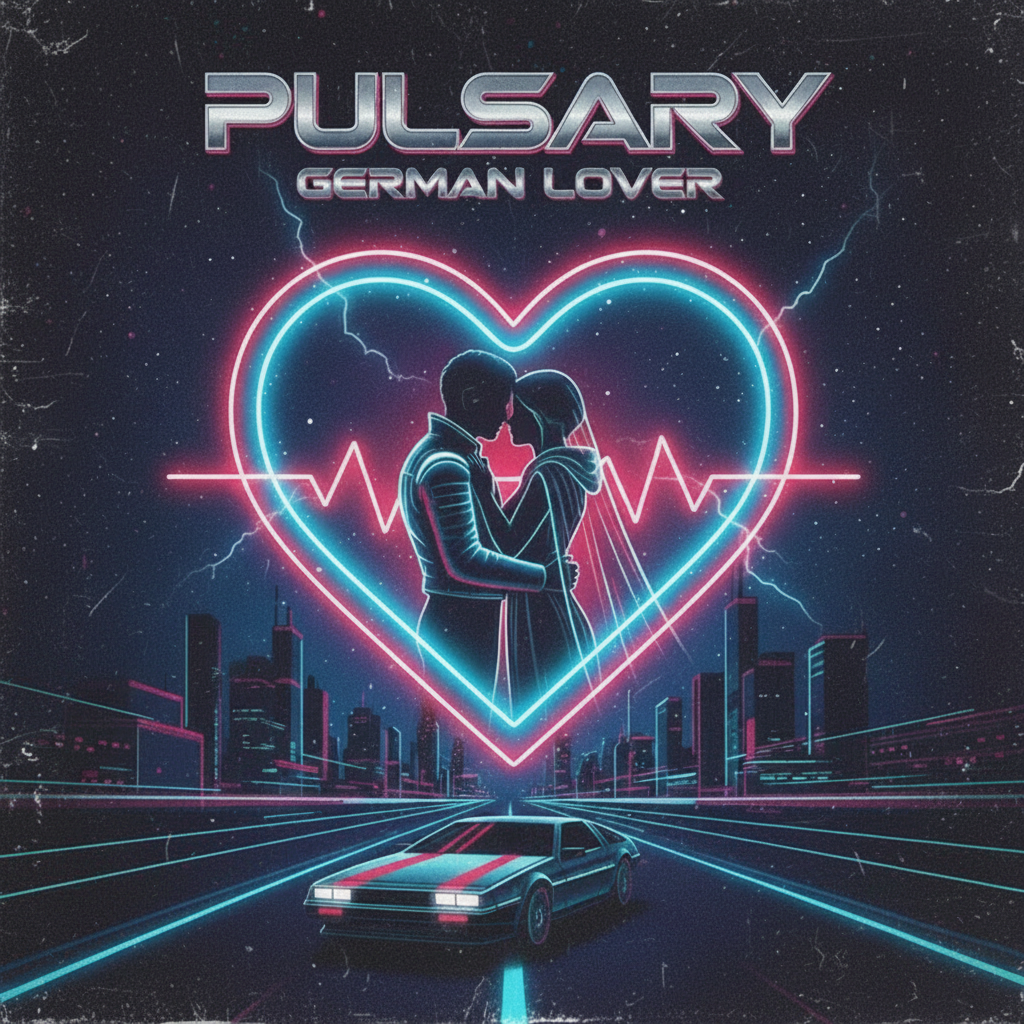
Pulsary is the name Richard Lisle chose for a dance project rooted in the trance and pop he grew up with. Its first release, German Lover, started as a song he wrote with David Johnston about thirteen years before returning to it. Earlier versions included two verses and a rap. The new version brings that idea down to about two minutes.
Lisle talks about what making music on his own changed, the pop and trance acts he keeps coming back to, and how he used his own vocal performance as the basis for the voice on the record. He also explains why another song from his back catalog is next in line.
EV: Why start a new project under the name Pulsary, and where does the name come from?
Pulsary: I wanted to have a dance pseudonym as a bit of fun and came up with a name that evokes pulsing beats, energy, and space. Kinda like a throwback to 90s dance acts.
EV: What were you making before Pulsary, and what made you want a fresh identity?
Pulsary: I’ve been in bands and composed music for years, but because technology and AI are so advanced, it’s a lot quicker and cheaper just to do my own thing and have some fun.
EV: Pulsary sits between trance and pop. What does each side give you?
Pulsary: Pop has always been my escapism; I have very eclectic music tastes, from Kylie to The Killers. I’ve always loved trance and can find some songs emotional with the various chord structures and melodies. I think this relates to learning classical music when I was younger.
EV: Where did “German Lover” begin: a melody, a sound, a story?
Pulsary: Its actually started out about 13 years ago when I used to make music with a friend. It’s gone through various demos. The original is much longer with two verses and a rap! When I re-approached it I really wanted to buy into that 2 min song for the tiktok age.
EV: Who is the German lover?
Pulsary: Ah that’s for me to know !
EV: Walk us through how you produced the track. What’s in your setup?
Pulsary: I generally use logic as the main source with various specific trance plug ins. I used an AI software with the vocals. What was great was that distrokid the distributer were able to master for me which again cuts costs down.
EV: Did you write and sing it yourself, or work with a vocalist or co-writer?
Pulsary: I wrote German lover 13 years ago with a friend David who has a credit as a co writer. I came up with the melody and chord structure. The vocals are actually my singing then using AI to convert to a female vocal. Its very strange as it kept my intonation and breath etc.
EV: Which trance and pop artists shaped the Pulsary sound?
Pulsary: Definitely a throwback to 90s dance acts and Djs such Ian van Dahl, Paul van dyke, space brothers but with pop sensibility of kylie, robyn , Madonna.
EV: What did you learn from releasing your first track as Pulsary?
Pulsary: It was really fun and to get feedback from others, a lot of people were saying it should have been the United Kingdom’s entry into Eurovision which I take as a huge compliment.
EV: What’s next: more singles, an EP, live sets?
Pulsary: Next on the agenda is reworking an old song I released under a different pseudonym into a trance epic.
Pulsary’s next project is a trance rework of a song Lisle released under another name. Watch German Lover or find Pulsary on Spotify.
Signal this interview
Send it up if it hit, down if it missed. The most engaged pieces surface on Signal.