
“SumuHood” began during meditation, but the story inside it reaches back to Zenareeta’s childhood. Her mother had once built a life around radio, television and song before setting that career aside to raise her daughter. Years later, as Zenareeta found her own voice and earned national radio support in India, that sacrifice took on a new meaning: not a closed chapter, but a musical inheritance still moving forward.
Exposed Vocals caught up with the Mumbai-based singer-songwriter, composer and author to talk about the family nickname behind the title, the melody that arrived fully formed, the memory of watching her mother sing, and the responsibility she feels to keep pursuing music for as long as she can.
Watch “SumuHood”
The Interview
Exposed Vocals: What does the title “SumuHood” mean to you, and when did you know it belonged to this particular tribute?
Zenareeta: Sumu is my mother’s family-given nickname. So the word “SumuHood” naturally came to my mind immediately after the song was written and composed spontaneously during meditation. I did not plan on it.
Exposed Vocals: What are your earliest memories of your mother as a singer rather than only as your mother?
Zenareeta: Watching Mom sing on stage during social functions when I was three. I attended the music classes Mom used to teach, also at the age of three, and did some unsolicited singing during the class! Or I remember when she would hum and sing happily at home.
Exposed Vocals: When did you fully understand what she had given up professionally to raise you, and how did that realization change your relationship with music?
Zenareeta: One day when I was ten, Mom told me that she said no to many career-defining opportunities after she was pregnant with me, and especially after I was born following many miscarriages. I was so shocked to hear it that it has haunted me deeply my whole life ever since. She decided to raise me and be there for me in my childhood instead of leaving me alone to focus on her music career by moving to a different city miles away. Dad was always busy with work; he traveled constantly and sometimes only came home five days a month.
My whole life, I’ve argued with her decision to leave behind her thriving music career. She has always answered, “I cast the pearls away (music) for a diamond (me).” These are the exact lines from the lyrics: “Cast the pearls away for a diamond, threw it happily to raise my moon moon, didn’t care then, don’t care now.” They bring out her point of view.
So I knew since that day that when I pursue music, I’ll pursue it until my last breath. Nothing will ever come in the way.
Exposed Vocals: Did writing the song bring gratitude, guilt, responsibility—or some combination of all three—to the surface?
Zenareeta: I felt joyous and tearful at the same time after the song was written and composed.
Exposed Vocals: As your own work began receiving national radio support in India, did that milestone feel like an echo of the broadcasting world your mother once occupied? What parts of your musical instinct do you recognize as inherited from her?
Zenareeta: The national radio support was a big surprise because there are very limited opportunities for English-language indie musicians in India. Most indie and mainstream music, including reality singing competitions, is primarily dominated by Hindi and other local languages. English songs would get you disqualified, so I’m ineligible for the majority of the opportunities for singers here. Finishing in Red FM’s Top 3 Dance Songs of 2025, and receiving other features on Red FM and Big FM, truly was a blessing and a surprise. I realized that even with such limited opportunities, I could now call myself a radio-featured singer like Mom, who once sang classical Hindi and Bengali songs on the radio.
I’ve inherited almost the whole of her skills and her mind. The one place I struggle is my anger issues, which she jokes I inherited from my dad!
However, there is one skill of hers I don’t have. She had an extraordinary talent for listening to a song that played just once on the radio and immediately writing the lyrics while remembering the entire melody. She would then sing the song many times while playing her harmonium, having successfully memorized it—just like that, without the luxury of a single replay. Isn’t that unbelievable?
Exposed Vocals: How did you keep the arrangement emotionally personal without allowing the tribute to become overly sentimental?
Zenareeta: That’s because I did not meddle with the song when it was conceived. I honored the first draft as it came. I have never sat down to write or compose a song. During meditation, I heard and conceived the song in my mind with my own vocals, fully finished lyrics, composition and even the production—basically a finished song. Imagine hearing a finished song in your mind during meditation; that’s what it was.
I immediately recorded and wrote it down faithfully. Then, reflecting on what I had just written, I broke into tears and thought, “Wow, those lines surely sound like my mom. Wow, this is perfect as it is. I can’t wait to share it with Mom tomorrow morning!” I sat with the song for a whole year in case I wanted to make any changes before working on it with the producer. But no instinct to change it ever came, so the final song is the same as my first draft.
Exposed Vocals: Was there a lyric, image or musical decision that was especially difficult to complete because it felt too close to home?
Zenareeta: It’s not during the song’s creation that I face this; it is usually when I’m recording the songs in the studio. During the first take, I always cry—it has been true for all my songs. It’s very difficult not to get emotional then. I also cry when I hear the finished, mixed and mastered song, or when someone plays it at full volume on the speakers. I get tearful even now.
Exposed Vocals: How did your mother respond when she first understood what “SumuHood” was saying about her life and sacrifice?
Zenareeta: We cried together. She said the song lyrics accurately described her point of view. She also told me that she’s never heard of any artist who wrote an autobiographical song for their mother.
Exposed Vocals: Beyond this release, what kind of musical legacy do you hope the two of you are now creating together?
Zenareeta: I don’t think much about legacy. All my life, I’ve dreamed of walking the path of music until my last breath; it has fulfilled my life. I’m grateful every day because I’m fully aware of how rarely one gets the privilege to pursue music full time. I know I’m a temporary guest on Earth, and my songs will live beyond my death. My songs are my only temporary footprints in a temporary world, in this temporary universe, and these songs have honored me by blessing my existence by being birthed through me.
What makes “SumuHood” resonate is the way it treats legacy as something lived rather than displayed. Zenareeta’s mother stepped away from one musical path, but her voice remained present—in childhood memories, in discipline, in melody and in the daughter who now carries that story into public life. The song does not erase the sacrifice; it lets the next generation answer it.
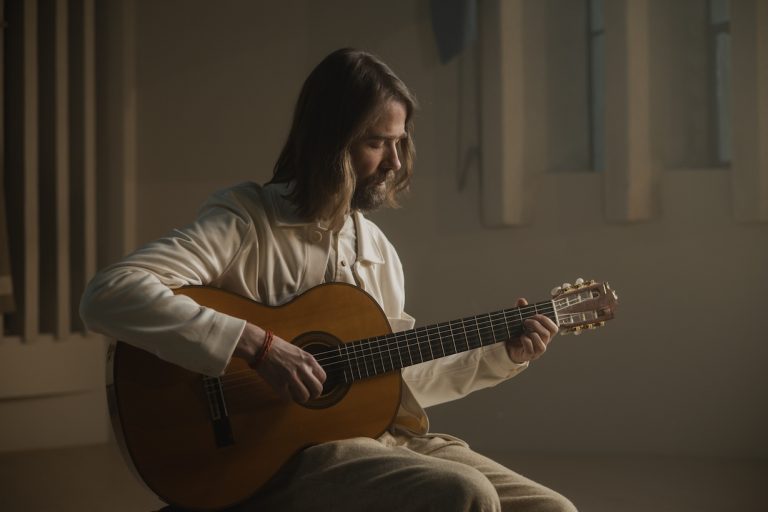
Featured photo by Aashish Shrivastav, used with permission.
More from Zenareeta on Exposed Vocals
Read our first feature on “SumuHood”
Keep the Signal Moving
Hear the song
Stream “SumuHood” on Spotify →
Watch the story
Watch the official “SumuHood” video →
Follow Zenareeta
Connect on Instagram →