Some songs begin as ideas. “Child’s Prayer” began with a story Zarema could not shake: a young refugee girl who survived an airstrike, lost her mother and one of her legs, then looked to the brightest star each night to speak to the mother she had lost. The Los Angeles-based singer-songwriter, who is of Crimean Tatar descent and was born in exile in Soviet Uzbekistan, carried that story into a song shaped by grief, displacement and a child’s need to keep a connection alive.
Produced by Kitt Wakeley and recorded with the Royal Philharmonic Orchestra at Abbey Road Studios, “Child’s Prayer” eventually grew far beyond its intimate starting point without losing it. In the conversation below, Zarema discusses the moment that led her to write the song, how her own family history shaped her response, and what she hopes listeners carry with them after the music ends.
Exposed Vocals Interview: Zarema on “Child’s Prayer”
1. You first encountered the young girl’s story while working on a documentary. What was it about that specific moment—her looking for her mother in the stars—that stayed with you?
I wrote this song after working on a documentary about refugee children severely affected by war and was particularly struck by the story of a young girl who had lost her mother in an airstrike, and also lost her leg to amputation. Her grandmother, in trying to comfort her, told her that her mother now lives at the brightest star, so each night this little girl would look up at the stars to talk to her mother.
This was so poignant and I was so moved by her tragedy and her tender innocence in desperately trying to connect with her mom, that I had to step away from my work on the documentary to just sit and cry. The very next day I began writing this song.
I am so grateful to world-class conductor, Cliff Masterson, and all of the wonderful musicians in the Royal Philharmonic Orchestra who contributed their skill and mastery to my latest labor of love, “Child’s Prayer”.
“No Child’s Heart Should Beat in Fear and No Child’s Eyes Should Ever See The Horrors of War”.
2. Your father encouraged you to write the song the following morning. Why do you think he immediately understood that music was the right place for this story?
My father knew that I have for a long time used music as a means for expressing my emotions. He’s a very sentimental (and musical) person and has always been supportive of my music. In fact, he has a beautiful singing voice himself, and it’s because of his own childhood dream of playing the violin that I started studying violin as a child!
3. You wrote from the perspective of a child living through unimaginable loss. What responsibility did you feel while trying to honor her voice without claiming an experience that belonged to her?
I could imagine her perspective and I wanted to depict her vulnerability, tenderness and innocence. No one could ever fully understand her feelings in those awful circumstances, and I would certainly never pretend to fully understand them, myself.
4. How did your own childhood understanding of Crimean Tatar exile and oppression shape the emotional language of “Child’s Prayer”?
I myself, along with my entire family, having been born in forced deportation, as part of a persistently marginalized minority, and subjected to oppression, injustice, and humiliation, have always felt very vulnerable and sensitive to the many cruel and unjust ways other people are sometimes treated, especially children. I could never stand to watch any child suffer indignities or be made to feel inferior or insignificant based on their race, religion, or country of origin. The emotion of “Child’s Prayer” just came naturally to me.
5. Did the melody arrive differently because the song began with grief rather than with a conventional songwriting idea?
I think any sort of emotion that I’m feeling or channeling influences the tone of the melodies that come to me. That certainly was the case with “Child’s Prayer”.
6. What did Kitt Wakeley hear in the original version, and how did his production change the scale or emotional direction of the piece?
Kitt envisioned an amazing production, but he also dreamed-up having the Royal Philharmonic Orchestra play the piece. That clearly introduced a drastic change in the scale AND emotional expression of the song!! I am so grateful to him, and to the Royal Philharmonic Orchestra and Cliff Masterson, their amazing conductor, for bringing tremendous substance and gravitas to this project and to the worthy cause of orphaned and injured refugee children.
7. When you learned that the Royal Philharmonic Orchestra would record the song at Abbey Road Studios, what did that moment mean to you?
I got very emotional. Watching videos of the engineer, members of the Royal Philharmonic, and that legendary studio, itself, was overwhelming.
8. Orchestration can make emotion feel enormous. How did you and the team keep the arrangement focused on the intimacy of one child speaking to her mother?
The orchestra managed to give the piece such breadth without it losing its intimacy. The arrangement grows naturally, and the emotional impact comes from the accumulation of color and dynamics rather than excess. Kitt’s production is beautiful and the orchestra has a lot of depth and dimension, but the various sections remain clear and well balanced. There’s also that polished, cinematic quality that is often associated with Kitt’s production, while still preserving warmth and humanity. On top of the orchestra, he added the violin, playing as if to express the little girl’s voice, in its sad and plaintive tone.
9. You have worked across several languages, countries, music, acting, and voiceover. How has moving between cultures and forms shaped the way you tell stories through song?
I think those experiences gave me breadth of perspective and understanding of both the similarities and the differences of people everywhere. The stories I tell tend to have a somewhat universal appeal, and transcend both countries and cultures.
10. Beyond people listening, what response do you hope “Child’s Prayer” creates—awareness, compassion, action, remembrance, or something else?
All of those. My recent songs were written about refugee children, based on their true stories. My hope is that people who listen to these songs are inspired to pay more attention to the plight of innocent and injured refugee children everywhere and to have a lot more empathy and compassion for their worthy cause.
Zarema’s “Child’s Prayer” is available now. The song turns one child’s story into an appeal for attention without losing sight of the individual life at its center—a balance Zarema says she hopes can create greater empathy for refugee children living with injury, displacement and loss.
Listen to “Child’s Prayer” · Zarema official website
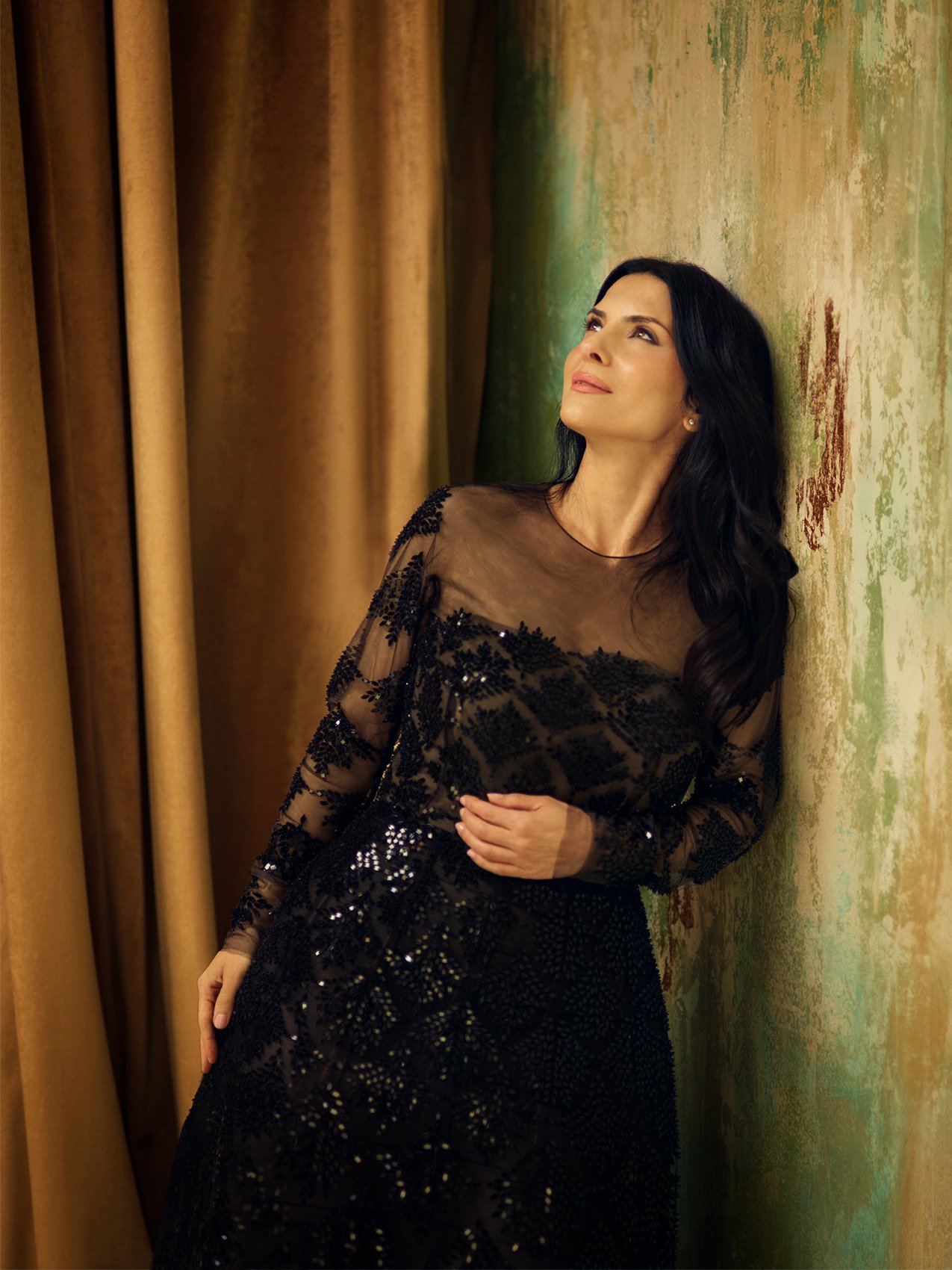
Press image supplied by LPR Agency. Used with permission.