
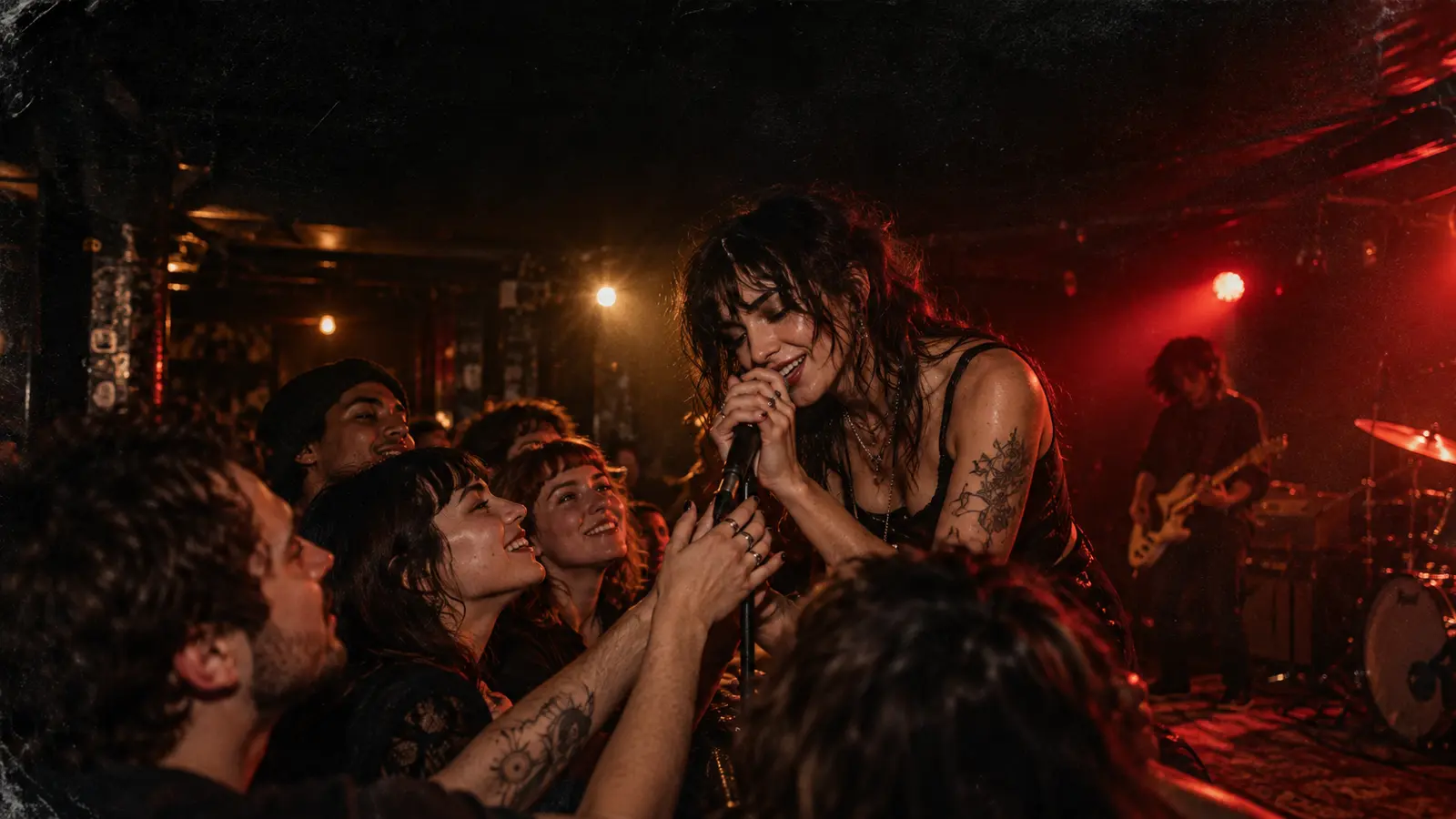
One hundred thousand views can look like momentum while producing almost none. The number rises, the screenshot travels, and for a few hours the artist feels the relief of visible proof. Then the next song arrives and the room is empty again. No ticket buyers. No messages asking when the next release drops. No one carrying the lyric into their own life. This is not an argument against reach; every artist needs discovery. It is an argument against treating all attention as equal. A real fan is not simply a person who has heard you once. It is someone whose behavior begins to repeat: they listen again, follow the story, save the song, open the email, watch the full video, tell a friend, buy something when they can, or show up when the distance makes sense. Those actions may never create an impressive public counter, but together they form the earliest version of an economy around the music. One hundred people who know why they care can provide more useful feedback, more dependable energy, and more word-of-mouth than a feed full of anonymous impressions. They also give the artist something algorithms cannot reliably manufacture: a base that survives when distribution changes. Platforms rent attention. Relationships carry it from one release to the next.
Building the first hundred is less glamorous than chasing a viral moment because it requires names, memory, and follow-through. Start by identifying the people already leaning in. Who replied without being asked? Who came back for a second song? Who brought a friend to the last show? Who has shared the video, joined the mailing list, or asked a specific question about the work? Treat those signals as the beginning of a community, not as minor engagement beneath your status. Give people a dependable way to stay connected outside a feed: an email list, an artist profile, a direct text channel used with restraint, or a site that always points to the current release. Speak to them like human beings. Thank them. Tell them what you are building before the rest of the world sees it. Invite them into decisions that are appropriate to share—a cover option, a show city, a piece of the story behind the song—without turning every interaction into unpaid marketing labor. Then create moments that reward return: a stripped performance, a thoughtful interview, a live room, a physical item, a behind-the-scenes note, or early access that feels personal rather than automated. The first hundred should not be managed like leads in a spreadsheet. They should be recognized as the first people who decided the work meant enough to come back.
The paradox is that this slower approach often creates the reach artists were trying to force. People share what helps them say something about themselves. They advocate for artists who have made them feel seen. When the foundation is real, a larger moment has somewhere to land: new listeners find an active story, credible coverage, connected releases, and existing supporters demonstrating that the music has a life beyond the artist’s own claims. That is why professional presentation matters even at a small scale. A clear profile, strong photographs, playable music, video, press, and contact information tell an interested person that there is more to enter. It is also why the artist must resist the temptation to abandon loyal listeners every time a new metric appears. Do not make the first hundred feel like a waiting room for the hundred thousand. They are the beginning of the actual career. Learn what brought them in, what makes them stay, and which parts of your voice they repeat back to you. Those patterns will sharpen the work without forcing it into a trend. Empty views can make an artist look large for a day. Real fans make the artist less alone, more informed, and harder to erase. Build for the people who return, and let the numbers become evidence of the relationship—not a substitute for it.