Exposed Vocals • Interview
Tokyo electronic artist tkawai discusses revisiting compositions from 1985–1994, the human sensibility running through HUMAN B-SIDE, and returning to music after nearly three decades.
The title HUMAN B-SIDE suggests the side of a person that usually goes unheard. What does a ‘B-side’ mean to you, and which side of being human did you want this album to bring forward?
Looking back at the history of musical instruments, I imagine their origins in the human voice, the movements of our hands and feet, and our interactions with nature, such as trees and water. From those beginnings, musical instruments have continued to evolve. Today, as digital technologies expand and AI becomes increasingly integrated into music, I feel we are once again being asked what it means to be human in musical expression.
When I revisited the music I had created nearly 40 years ago, I realized that my own sensibilities and creative impulses were still there, unchanged despite the passage of time and the evolution of technology. This realization became the concept behind HUMAN INSIDE.
HUMAN B-SIDE, on the other hand, draws inspiration from the B-sides of old vinyl singles. Those B-sides often featured slightly unusual songs or alternative versions—works that were not necessarily meant to take center stage, but that could be more experimental and free.
HUMAN B-SIDE expresses that less visible side of myself: something a little unconventional, but also freer, bolder, and more adventurous.
Walk us through how the album came together: where and when were the songs written and recorded, and who else, if anyone, was in the room with you?
The original compositions were created between 1985 and 1994 at my home, using sequencing and multitrack recording techniques.
In the beginning, I worked with a CASIO synthesizer equipped with a built-in sequencer, synchronized with a drum machine. Over time, my setup evolved to include Roland multitimbral sound modules, a KAWAI sequencer, and eventually an AKAI sampler and a Macintosh computer. Although the equipment and production environment changed over the years, I composed and recorded almost everything entirely on my own.
Many of these tracks remained unreleased, preserved on cassette tapes and MiniDiscs. Yet they never really disappeared from my mind. For decades, I carried the desire to revisit these recordings, recreate them, and eventually share them with the world.
In recent years, my long-standing questions about human sensibility and expression through technology have grown deeper. At the same time, advances in technology, particularly generative AI, have opened up possibilities for creative expression on a scale I had never imagined before.
These two developments came together at just the right moment. I finally found the motivation to return to a musical project I had been putting off for so long, and began bringing these recordings back to life last year.
Which track on HUMAN B-SIDE changed the most between its first idea and the final version, and what happened to it along the way?
The track that changed the most was “To the Light.” I originally composed it nearly 40 years ago as a short, roughly 40-second piece of electronic music, full of rapid changes, quirky rhythms, and a somewhat playful, restless character.
Across HUMAN INSIDE and HUMAN B-SIDE, some tracks remain remarkably close to their original versions, while others have undergone dramatic transformations. Among them, “To the Light” has evolved the most.
When reimagining the track, I began by stepping back and looking at its overall sonic landscape, rather than focusing on individual measures or sections. I carefully selected and reorganized the sounds, introduced repetition, and expanded the music along the time axis.
Through this process, I began to discover something I had not recognized in the original short piece: a continuous groove running through the entire composition, and a larger, slowly undulating wave of musical movement.
This experience arose from an unexpected encounter between my long-standing questions about creative expression and the possibilities offered by contemporary technology. For me, it was a particularly meaningful and valuable discovery.
Where are you based, and how has the place you live, its sounds, people and pace, found its way into your music?
I’m currently based in Tokyo, and my everyday life revolves around areas such as Shibuya, Shinjuku, and Setagaya. Tokyo is an incredibly crowded city, where time itself often seems to move at a faster pace.
When I step back and look at the city from a broader perspective, I realize that countless people are constantly creating and releasing new music. Yet it is virtually impossible to discover and listen carefully to everything within the limited time we have.
This urban environment creates a certain sense of urgency, rooted in an awareness of the finite nature of time. I believe this feeling has influenced both the length and structure of my music. Most of my compositions are very short, ranging from less than a minute to just over two minutes.
Although some pieces, such as “To the Light,” have been expanded beyond their original duration, I generally prefer to refine my compositions through repeated editing, reducing unnecessary repetition and concentrating their musical elements.
For me, this approach is about increasing both expressive density and efficiency within a limited span of time. Ultimately, I see music as a channel through which I can communicate a small part of my own human sensibility.
How did music first enter your life, and which artists, records or moments set you on the path toward the music you now make as tkawai?
My first encounter with music was, in a sense, a passive one. As a child, I began taking Electone lessons at my parents’ encouragement. Looking back, I think the fact that it was an electronic organ rather than a piano played an important role in my later fascination with electronic music.
My first truly active engagement with music, however, probably began when I discovered Yellow Magic Orchestra (YMO) in the late 1970s.
Throughout the 1980s and 1990s, I became fascinated by electronic games, personal computers became increasingly accessible, and electronic musical instruments evolved at an astonishing pace. Sounds that had previously been impossible to produce, and even sounds I had never imagined, were suddenly becoming a reality. It felt as though I was breathing in the spirit of the times, experiencing these changes as they unfolded.
Beyond music, one of the people who has had the greatest influence on my creative outlook is Osamu Tezuka. I have loved manga since childhood, and I still hold him in the highest regard.
He was a trained physician, an extraordinarily prolific creator, an innovator who transformed manga and animation, and someone deeply committed to nurturing future generations of artists. I continue to be inspired by the remarkable breadth of his creativity and the fact that one person could accomplish so much across so many different fields.
What keeps you making music today, and what do you hope a listener carries with them after hearing this album from start to finish?
Actually, I haven’t been making music continuously throughout my life. I spent about ten years creating electronic music during the 1980s and 1990s, followed by a break of nearly three decades before finally returning to it.
There were several reasons why I stopped, but one of the most significant was the disappearance of the production environment I had relied on. At the time, I was using Opcode software on Mac OS 9. As both the operating system and the software were eventually discontinued, I found myself losing the interface through which I could turn my creative ideas into something tangible.
Over the following years, I experimented with various music production tools, but none of them felt truly intuitive to me. The process of translating the music in my mind into actual sound remained frustrating and stressful.
What finally brought me back was the evolution of creative tools and platforms. For the first time in many years, I felt that the environment had caught up with what I had always wanted to do. I could finally experiment freely and boldly, and I became completely absorbed in bringing the HUMAN INSIDE project to life.
The starting point was a collection of compositions I had created 30 to 40 years earlier. Looking back, some of them may seem rather naive or awkward, but I can still recognize a continuous thread of my own sensibility running through them, unchanged by the passage of time.
I hope that listeners who experience HUMAN B-SIDE from beginning to end will sense something of that human warmth within the imperfections, along with a strangely comforting sense of unease and nostalgia.
What comes next for you after HUMAN B-SIDE, whether that is new songs, live performances or collaborations you are hoping to make happen?
First of all, I’d really like to know how people feel when they listen to my music. I see this interview as part of that process.
What interests me most right now is discovering how my musical expression is communicated, experienced, and interpreted by people from different backgrounds. Through their feedback, I hope to gain a better understanding of how my music reaches others and what it means to them.
As for making music, there are still many compositions from the 1980s and 1990s that I would like to revisit and reimagine. Some were never preserved on cassette tapes or other recordings, yet I can still hear them vividly in my mind, as if they were playing somewhere inside me.
For now, I want to bring as much of this music as possible into the world, giving form to the ideas and sounds that have remained within me for so many years.
By stepping back and looking at these works with a little more distance, I hope to gain a more objective understanding of what makes my music uniquely my own. From there, I’d like to discover where the next stage of my creative journey might lead.
Explore tkawai
HUMAN B-SIDE on Bandcamp · HUMAN INSIDE · Spotify · Apple Music
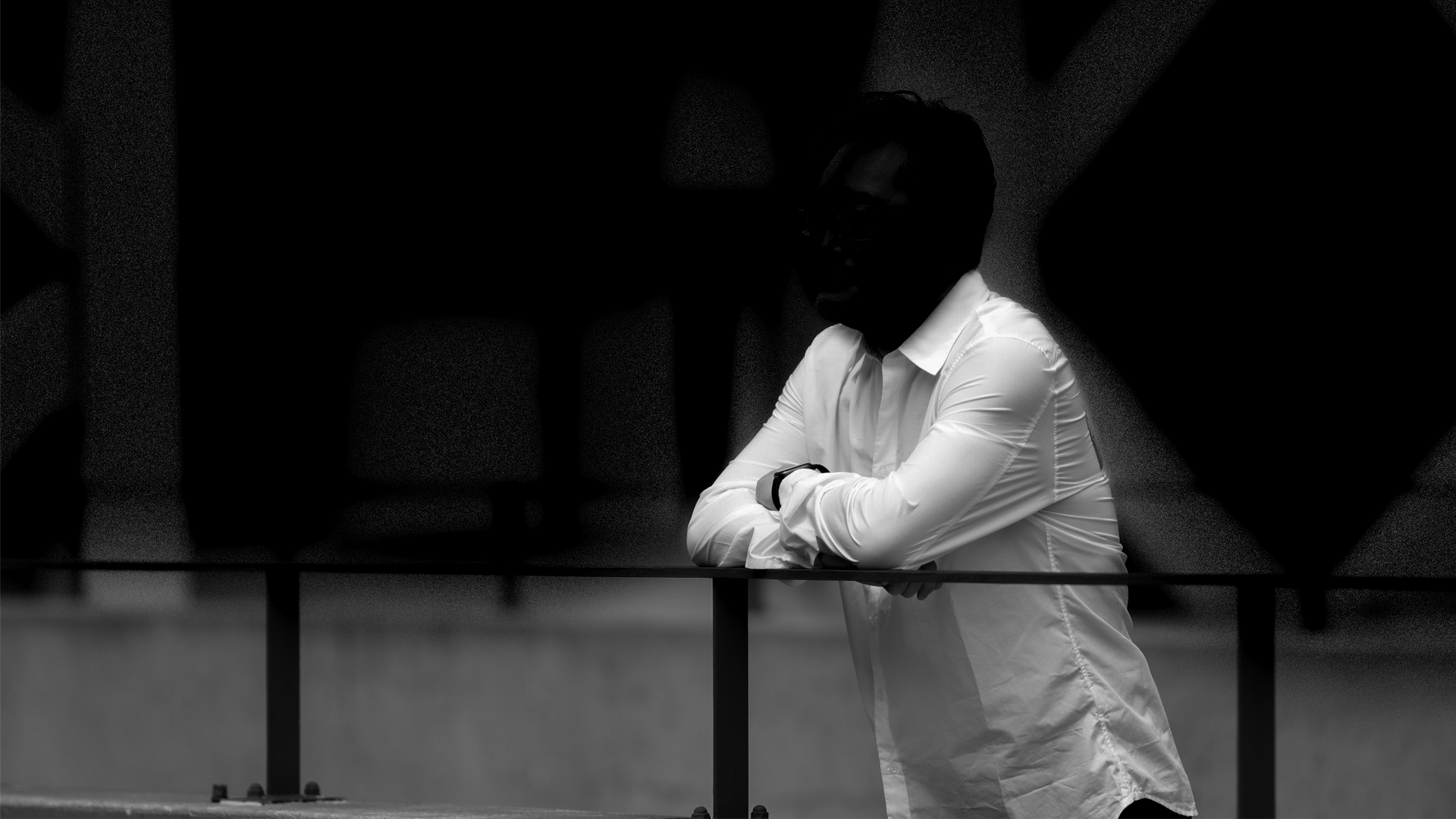
tkawai — Photograph used with permission.
Signal this interview
Send it up if it hit, down if it missed. The most engaged pieces surface on Signal.