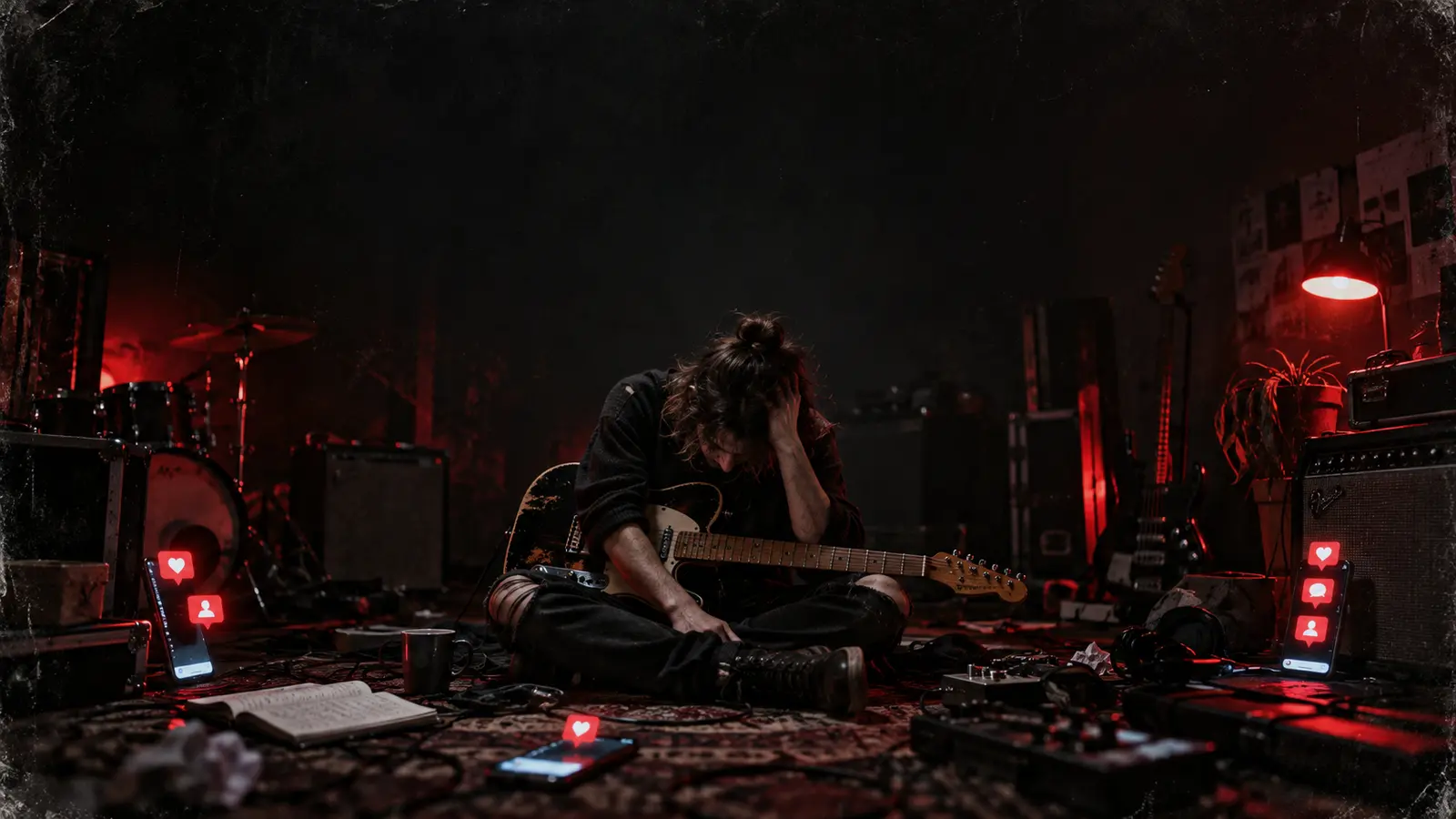
Somewhere along the way, independent artists were handed a second job and told it was the price of admission. Write the song, record it, pay for the mix, plan the release, rehearse the show—and then become a full-time content factory that never sleeps. Post the morning routine. Post the studio clip. Post the countdown. Post the reaction to the countdown. If a day goes quiet, the fear arrives immediately: the algorithm will forget you, the audience will move on, the release will die. That fear is useful to platforms because anxious creators produce more inventory for them. It is far less useful to an artist trying to protect the concentration, curiosity, and emotional stamina that meaningful work requires. Visibility matters, but visibility without anything distinct behind it is just motion. An artist can publish thirty pieces of content in a month and still leave no clear impression of who they are, what they sound like, or why anyone should return. The demand to be constantly visible also rewards the easiest version of creativity—the fast opinion, the copied format, the performance of productivity—while the slower work of finding a lyric, rebuilding a chorus, or learning how to command a room happens off-camera. When artists start measuring a productive day by what entered a feed instead of what strengthened the music, the tool has quietly taken control of the mission.
A better system begins by separating career activity into three levels: the work, the story around the work, and the distribution of that story. The music is the center. Everything else should point back toward it. That means an artist does not need seven unrelated posts every week; they need a small number of strong moments that reveal process, personality, progress, or purpose. One rehearsal can become a short performance clip, a still image, and a sentence about what changed in the arrangement. One interview can become several thoughtful excerpts because the source material actually says something. A review, live video, lyric explanation, or fan response can keep a release moving without forcing the artist to manufacture a new identity every morning. This is where planning beats volume. Build a release bank before launch: clean photos, vertical and horizontal video, a concise bio, a few honest stories, links that work, and a professional place where a curious listener can understand the whole picture. Then choose a rhythm the artist can sustain when life gets difficult. Three purposeful posts and one direct message to supporters can be more valuable than fourteen disposable uploads. The goal is not to disappear between releases; it is to stop confusing presence with noise and to make every public moment carry a piece of the same recognizable world.
The most durable artists treat attention as a relationship, not a daily debt. They know when to speak, when to repeat an important message, and when to go back into the room and make the next thing better. A sustainable cadence also leaves space for the unglamorous work that algorithms cannot measure: answering the person who bought a shirt, following up with the venue that took a chance, updating an artist profile, learning who returned for the second single, and turning one piece of coverage into a credible asset for the next opportunity. None of that requires an artist to vanish from social media. It requires social media to become one part of the operation instead of the foreman standing over it. If daily posting genuinely energizes you and produces work your audience recognizes, keep it. If it is hollowing out the reason you started, reduce the frequency and raise the intention. The audience does not need proof that you were online today. It needs a reason to care when you are. Protecting the music is not laziness, and stepping away from a manufactured content quota is not failure. The grind is not performing exhaustion in public. The grind is building a body of work, a reputation, and a community strong enough that your career does not collapse the moment you stop feeding a machine.