Orthodox Tactics on NOT FOR SALE, Conscience and the Cost of Belonging

Orthodox Tactics approaches Greek-language cinematic R&B and atmospheric trap as a place to examine conscience, mercy and the pressure to trade principle for acceptance. The anonymous Greece-based project connects the albums KYRIE ELEISON, ETHOS and LOGOS through those questions, with “NOT FOR SALE” focusing the conflict on the cost of belonging.
With the project’s visual anonymity preserved and its supplied editorial portrait credited exactly as requested, Orthodox Tactics discusses the song’s moral tension, the role of Greek in the writing, the relationship between sound and film, and why conviction must remain open to compassion and examination.
EV: What question about conscience first led you to make NOT FOR SALE?
ORTHODOX TACTICS:
I kept returning to a question that is uncomfortable precisely because it concerns something deeply human: How much of ourselves are we prepared to surrender in order to be accepted?
I don’t believe the desire to belong is a weakness. We enter this world dependent on others. Long before we understand dignity, independence or conviction, we understand the need to be loved, recognised and included. Belonging is not a superficial ambition; it is one of the conditions through which we first come to understand ourselves.
That is what makes the question difficult.
The greatest compromises do not always begin with greed or dishonesty. Sometimes they begin with loneliness. Sometimes with the fear of disappointing someone. Sometimes with the genuine desire to provide for people we love. An opportunity appears, and accepting it seems to require only a small adjustment to something we once considered non-negotiable.
The danger lies in how reasonable that first adjustment can appear.
I began thinking about the distinction between being accepted for who we are and being accepted on the condition that we become someone else. Both may look like belonging from the outside. Only one allows us to remain present within our own lives.
NOT FOR SALE was born from that distinction.
It is not an argument against ambition, success or connection. It asks whether those things retain their value when obtaining them requires us to betray the very principles by which we would have judged them worthwhile.
Because there is a particular tragedy in finally being welcomed somewhere, only to discover that the person who longed to belong is no longer the person who arrived.
EV: What does refusing to compromise cost the character or voice at the center of the song?
ORTHODOX TACTICS:
The cost is what gives the refusal its meaning.
It is easy to celebrate principles when observing them demands nothing from us. The true test comes when a person must choose between something they deeply desire and something they believe they have a responsibility to preserve.
And I think we should be careful about romanticising that choice.
Refusing an opportunity does not necessarily produce peace. It may produce disappointment, uncertainty, exclusion or regret. The character may watch others receive what he wanted. He may question himself. He may never know whether another opportunity would have followed had he made a different decision.
There is no guarantee that the world will recognise his sacrifice, much less reward it.
That uncertainty matters to me. If every principled decision were followed by an obvious victory, integrity would become another method of obtaining what we want. The refusal would simply be a transaction with a delayed reward.
But conscience is not an investment strategy.
Sometimes the only thing a person preserves is the ability to live honestly with the decision they made. That may sound modest compared with everything they have lost, yet it is not insignificant.
At the same time, I don’t believe refusal alone makes someone virtuous. A person can preserve a principle and become cruel toward those who failed to do the same. If conviction produces contempt rather than understanding, something important has already been surrendered.
That is the deeper tension in NOT FOR SALE: remaining faithful to what matters without allowing the sacrifice itself to become a source of pride.
Strength should not require us to lose our humanity.
EV: How did you choose the musical arrangement and vocal approach to carry that tension?
ORTHODOX TACTICS:
I think music can communicate the weight of a decision long before the listener has understood every word.
For NOT FOR SALE, the contemporary language of cinematic R&B and atmospheric trap provides a particular emotional vocabulary. Low frequencies can suggest weight. Rhythm can create insistence. Space can make an unresolved thought feel more present than another layer of sound would.
What interests me is the relationship between pressure and restraint.
A moral conflict is not necessarily loud. Some of the most consequential moments in a person’s life happen almost silently: an offer is made, a decision is expected, and somewhere between the two, a person recognises what accepting might mean.
I wanted the musical expression to leave room for that inner conflict rather than present conviction as a continuous display of force.
The vocal approach belongs to the same consideration. There is a difference between delivering words with intensity and allowing their meaning to create intensity. Not every line needs to sound triumphant. Sometimes a restrained declaration can carry more gravity because it suggests a person who understands the consequences of what they are saying.
My background in Byzantine music also taught me something important about listening, although Orthodox Tactics does not reproduce that tradition musically: technical execution and the communication of meaning are not necessarily the same achievement.
The contemporary arrangement has its own identity. The deeper concern is whether every element serves what the words are trying to confront.
Ultimately, I don’t want the music merely to celebrate the courage of saying no. I want it to make the listener feel why saying yes might have been easier.
Without that tension, the choice loses its humanity.
EV: What does writing in Greek allow you to communicate that would be lost in a straightforward translation?
ORTHODOX TACTICS:
Language does more than communicate what we think. It carries something of how we learned to think in the first place.
Greek gives me access to an emotional and cultural vocabulary shaped by family, memory, responsibility and inherited understandings of dignity. Those experiences are not exclusively Greek. What differs is the way a culture teaches us to recognise and express them.
Consider a word such as αξιοπρέπεια — dignity. Its definition can be translated, but its emotional force is often bound to the circumstances in which we first heard it spoken. Perhaps in relation to a parent’s sacrifice, a promise kept, or the expectation that one should remain honourable even when no one is watching.
Words accumulate the lives in which they have been used.
There is also something particularly meaningful in the Greek word λόγος, which informs the title of the third album. It can encompass word, reason, meaning and the idea of giving an account. These are related but not interchangeable ideas. Together, they suggest that what we say, what we believe and how we justify our actions ought to have some relationship with one another.
That relationship interests me enormously.
The second NOT FOR SALE film closes with:
«ΜΗΝ ΠΟΥΛΗΘΕΙΣ ΓΙΑ ΝΑ ΣΕ ΔΕΧΤΟΥΝ.»
“Don’t sell yourself to be accepted.”
The English translation conveys the argument. But the Greek phrasing also carries a particular intimacy and severity, as though the warning were being offered by someone who understands both the temptation and its possible consequences.
I don’t use Greek to make universal questions inaccessible. Quite the opposite. I believe a work can become more human by remaining truthful to the particular language and experience from which it emerges.
Translation can carry the meaning outward. The original language preserves something of where that meaning learned to speak.
EV: How do you balance telling a story with expressing a conviction directly?
ORTHODOX TACTICS:
For me, the difference is between asking someone to understand a principle and asking them merely to agree with it.
A direct statement can identify what a person believes. But it cannot, by itself, communicate the full difficulty of living according to that belief.
If I simply tell a listener not to compromise, I may have stated a conviction without acknowledging the circumstances that make compromise attractive.
What if the person is afraid? What if the opportunity could change their family’s circumstances? What if their desire for acceptance comes from years of feeling unseen?
Those questions do not automatically justify surrendering one’s principles. But refusing to acknowledge them would make the moral argument incomplete.
Storytelling allows the listener to enter the difficulty before encountering the conclusion.
A character must be more than an illustration of a correct decision. He must remain recognisably human, capable of hesitation, disappointment and contradiction. Otherwise, the story risks becoming a sermon in which every event exists merely to prove that the speaker was right.
I want the conviction to provide the work with direction, but I want the story to preserve the dignity of those who may struggle with it.
That balance is important because meaningful art should be capable of reaching someone who does not already agree with its premise.
A listener might recognise their own compromise in a character’s hesitation. They might remember an opportunity they accepted, or one they refused. They might feel affirmed, challenged or even uncomfortable.
All of those responses can matter.
I don’t believe art must abandon its convictions to make room for interpretation. I believe it must take human complexity seriously enough that its convictions are worth examining.
EV: Where does NOT FOR SALE sit within ETHOS, and how does it connect with KYRIE ELEISON and LOGOS?
ORTHODOX TACTICS:
The three albums are connected by an understanding that human beings are neither defined entirely by their failures nor made virtuous simply by declaring the right principles.
KYRIE ELEISON begins with mercy.
That beginning is essential. Before speaking about character, responsibility or the necessity of standing firm, I think we must acknowledge human frailty. We fail one another. We disappoint ourselves. We carry wounds we did not choose and sometimes inflict wounds we later struggle to comprehend.
Mercy does not mean pretending that wrongdoing has no consequences. It means refusing to believe that a person’s worst moment must be the final definition of who they are.
Without that recognition, moral conviction can become merciless.
ETHOS asks what follows from mercy.
If we are capable of being forgiven, what responsibility do we have to change? If our choices shape other people’s lives, how should we conduct ourselves when no one is there to reward us for doing what is right?
Character is not merely what we profess. It is what repeated decisions gradually make of us.
This is where NOT FOR SALE belongs. It asks whether our values remain present when preserving them carries a personal cost.
But the third album, LOGOS, introduces another necessary dimension: the relationship between our words, our reasoning and the order we attempt to bring to our lives.
A person can sincerely believe they are principled and still misunderstand their own motives. They can use noble language to defend an unworthy action. They can speak beautifully about responsibility while avoiding the responsibilities immediately before them.
Reason must therefore examine conviction, not merely defend it.
And words must remain answerable to conduct.
The albums are not a ladder leading toward moral perfection. They describe obligations that must coexist.
Mercy without responsibility can become an excuse. Responsibility without mercy can become cruelty. Reason without humility can become an instrument for justifying whatever we already wished to believe.
The relationship also appears between individual songs.
If NOT FOR SALE asks what we must refuse to surrender, STOLEN COLOURS, from LOGOS, asks what happens when something precious within us has already been diminished by suffering and fear.
One concerns preservation. The other concerns restoration.
To me, those questions belong together. We need the strength to protect what is good, but also the compassion to recognise that not everyone reaches a difficult moment with the same strength remaining.
Ultimately, KYRIE ELEISON, ETHOS and LOGOS are three movements within one responsibility: to receive mercy with humility, to act with character, and to ensure our words and reasons remain worthy of the lives they influence.
EV: When developing the song and its visual story, which came first—and what changed as the two met?
ORTHODOX TACTICS:
The song came first, within ETHOS. The visual narrative developed afterward.
What changed was the opportunity to place an internal moral conflict into recognisably ordinary circumstances.
Principles can sound absolute in a song. Daily life is rarely so accommodating. The choices that shape a person’s character do not always arrive as unmistakable confrontations between good and evil.
Sometimes they arrive as a conversation across a table. An offer. A promise of recognition. A chance to belong.
I wanted the films to inhabit that more difficult territory.
Contemporary Athens became the setting because these questions belong to the present. They are not relics of a more honourable past, nor do they require sacred architecture or historical imagery to acquire meaning. They exist in the ambitions, disappointments and compromises of everyday life.
There is also a deliberate relationship between the first two films.
The first begins with the words:
«ΔΕΝ ΤΟ ΝΙΩΘΕΙΣ ΜΟΝΟ ΕΣΥ.»
“You’re not the only one.”
The second closes with:
«ΜΗΝ ΠΟΥΛΗΘΕΙΣ ΓΙΑ ΝΑ ΣΕ ΔΕΧΤΟΥΝ.»
“Don’t sell yourself to be accepted.”
I consider that order meaningful.
Before asking someone to stand firm, we should recognise the burden they may be carrying.
Before offering a warning, we should make it clear that struggling does not make someone uniquely weak or alone.
In that sense, the films echo the relationship between KYRIE ELEISON and ETHOS: recognition and compassion should precede moral instruction.
The second film’s movement from an offer toward refusal, and back into the world of work, is important for another reason.
There is no need for the character to receive a grand reward for making the decision. Life continues. Responsibility continues. The work remains.
That is closer to how integrity often operates.
The camera allowed me to explore something the song alone could not express in quite the same way: the dignity of a decision whose significance may never be fully visible to anyone except the person who made it.
EV: How does visual anonymity shape your creative choices and the relationship you want with an audience?
ORTHODOX TACTICS:
I have always considered an important distinction between allowing the work to be seen and requiring its maker to become the centre of attention.
The guiding principle of Orthodox Tactics is simple: the work before the maker.
But I don’t regard anonymity as a virtue in itself.
An artist can be completely visible and deeply sincere. Another can remain hidden and still become preoccupied with cultivating an image of mystery. Concealment does not automatically produce humility.
The real question is what the decision is intended to protect.
For Orthodox Tactics, anonymity establishes a boundary between the significance of the work and the public identity of the person responsible for it.
In practical terms, it changes the visual language. When a face is not available to carry every emotion, attention moves toward gesture, posture, distance, environment and the relationship between a person and the space surrounding them.
But there is a more important consequence.
I want a listener to encounter a song about their parents and think about their own parents. To hear a question about conscience and examine a decision they have made. To recognise something of their own experience without first being asked to admire the person who created the work.
Anonymity can help leave that space open.
It also creates a responsibility for me.
If I speak about conviction without applause, I cannot reasonably demand recognition as proof that my convictions matter. If I question the exchange of personal identity for acceptance, I must remain willing to accept the limitations that come with keeping my own identity secondary.
That does not mean rejecting audiences or recognition. It means remembering what recognition is for.
Ultimately, I do not want the absence of a face to become the story.
I want the music to leave something present in a person’s life after the identity of its maker has ceased to matter.
EV: How do you make room for listeners to question or interpret the work differently from you?
ORTHODOX TACTICS:
By recognising that having a conscience does not exempt us from the responsibility to examine it.
That may be one of the most important distinctions running through the entire project.
A person can mistake pride for principle. Fear can disguise itself as caution. Stubbornness can appear to us as integrity, just as surrender can be justified under the comforting name of compromise.
The fact that we believe something sincerely does not mean we have understood it completely.
This is why I don’t want NOT FOR SALE to become an invitation to condemn everyone who has made a different choice.
Someone might listen and ask whether refusing an opportunity was genuinely honourable or simply an expression of pride. They might argue that compromise is sometimes an act of love, particularly when other people depend on us.
I take those questions seriously.
There are compromises that betray a principle, but there are also sacrifices of personal preference made in service of a greater responsibility. Recognising the difference requires discernment, not slogans.
I think a useful question to place before any declaration of conviction is: Whom does this decision serve, and who will carry its consequences?
Another is whether we are prepared to extend to others the understanding we hope to receive when we ourselves fall short.
Those questions do not weaken conviction. They protect it from becoming self-serving.
There is also a spiritual dimension to this for me. Mercy is not simply something we ask to receive when we have failed. It is something we become responsible for extending when someone else’s failure is placed before us.
That is a much harder obligation.
I welcome thoughtful disagreement because it can reveal where an argument needs greater honesty. I am not interested in reducing every moral question to personal preference, but neither do I believe confidence should be confused with wisdom.
The measure of conviction is not how effectively it silences opposing voices.
It is whether it can withstand examination without surrendering either its principles or its humanity.
EV: What are you developing next, and which public links would you like readers to explore alongside this conversation?
ORTHODOX TACTICS:
My focus remains on developing the world surrounding the three albums and allowing their individual stories to reveal the relationships between them.
The NOT FOR SALE cinematic campaign remains an important part of that work. I am interested in how its central question can continue to develop beyond the initial act of refusal.
Because refusal is not the end of a moral life.
After saying no to something that compromises us, we still have to decide what we will say yes to. We still have to build relationships, carry responsibilities, practise compassion and remain open to the possibility that we ourselves have misunderstood something.
I think that is where the most demanding part of conviction begins.
LOGOS also continues to offer a different perspective on these questions. Songs such as CRITERION examine how we measure human worth, while STOLEN COLOURS considers what suffering can obscure within a person and the possibility of recovering what has been lost.
These are not separate concerns.
A person’s worth cannot be reduced to what they acquire. Their identity cannot be reduced to what they have suffered. And their character cannot be measured solely by what they claim to believe.
If there is a thought I hope readers carry beyond this conversation, it is that integrity should never become an excuse to withdraw our compassion.
There is little meaning in defending what is good if, in the process, we forget how to recognise the humanity of the person standing before us.
The work is continuing, but I am less interested in presenting it as a series of announcements than in allowing its questions to remain alive.
For readers wishing to explore the music and its wider context:
Official website — Music, films and the three-album narrative
ETHOS — Spotify
https://open.spotify.com/album/2L7gZsGDQpOMHJZeXZJ0Y7
LOGOS — Spotify
https://open.spotify.com/album/560CveYLSnNmq43ZCLK27B
NOT FOR SALE — First-person essay, FVTV Media
https://fvtvmedia.com/stories/orthodox-tactics-not-for-sale
Can Musical Tradition Survive Without Being Copied? — Good Hours
https://goodhoursmag.com/can-musical-tradition-survive-without-being-copied/
Instagram — Orthodox Tactics
https://www.instagram.com/orthodoxtactics/
Thank you again, Randy, for approaching the project with questions that invite reflection rather than simply promotion.
I believe music should be capable of entertaining us, but I also believe it can accompany us into the moments when we must decide what kind of people we wish to become.
That is the responsibility I hope Orthodox Tactics continues to honour.
Orthodox Tactics leaves the conversation where the larger project lives: not with an easy verdict, but with the harder work of holding principle, mercy and responsibility together after the music ends.
Editorial portrait: Orthodox Tactics.
Signal this interview
Send it up if it hit, down if it missed. The most engaged pieces surface on Signal.
Keep reading
Back to Interviews ↗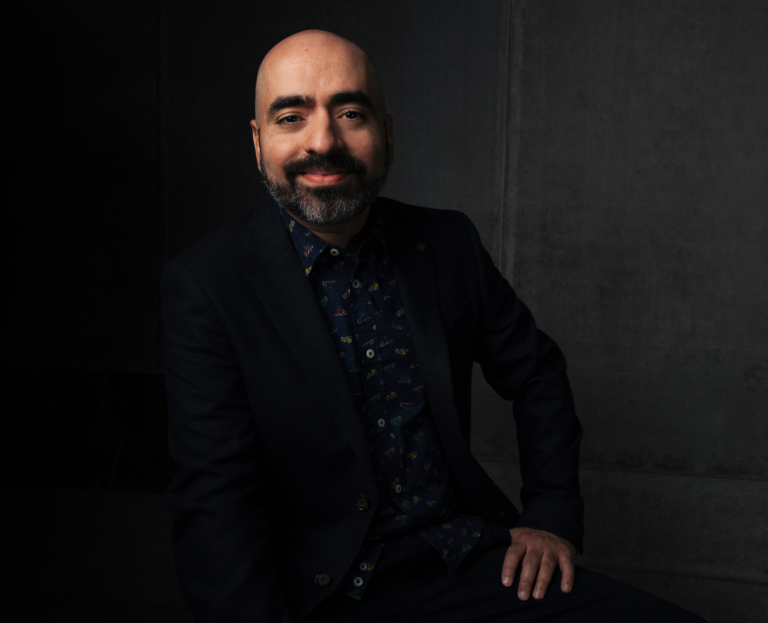
From this section
Exposed Vocals Interview: Sandro Morales-Santoro on Scoring Horror Without a Picture
October 28, 2026
From this section
Arcylo on Choose You, an Alien Identity and the Human Heart Behind It
October 28, 2026
From this section