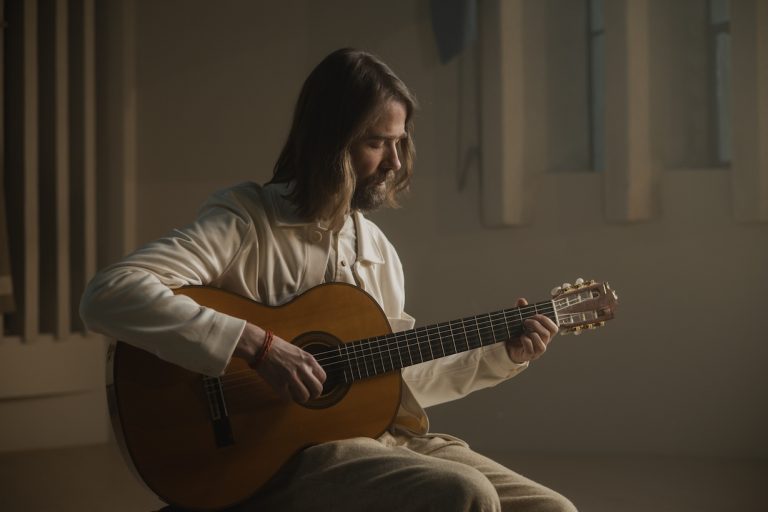
Some bands skip the nostalgia and go straight to the source. Cassius Wolf & Das Abs — the project of Cassius Wolf and Don Watson — spent the formative years of their musical lives inside Eric’s, the Liverpool club that functioned less like a venue and more like a pressure cooker for what became one of the most concentrated creative scenes in British music history. Echo & the Bunnymen, OMD, The Teardrop Explodes, Pete Burns, Ian McCulloch — these weren’t influences Cassius and Don absorbed from a distance. They were colleagues, contemporaries, faces at the bar.
Now, with An Afternoon in Bedlam due May 29, the duo are releasing that era’s music on its own terms — restored from early 80s cassette recordings, reinterpreted with contemporary production, and sent out into a world that has been quietly circling back to exactly this kind of sound. The timing, it turns out, was always going to be right. They just had to wait for everyone else to catch up.
At a Glance
Eric’s
Liverpool — Where It Started
45+
Years of Creative Bond
“It was a very creatively competitive environment and I think that’s why the music has stood the test of time. Everyone tried to be better than everyone else.”
— Cassius Wolf
EV
You met at school at 11 years old and officially formed the band in 1978. What kept the creative bond between you alive across all the years in between?
CW
Good question. When we first met, we had a shared love of music. Don’s older brother, Keith, was a DJ and he had an amazing record collection from the 1960s. Even then, Don had a wide taste in music and a great knowledge of obscure psychedelic bands. After leaving school we both worked at Eric’s and we’ve stayed friends ever since. We always got together around something musical, so when Don moved to within 5 minutes from me just after Covid and his house had a soundproof studio in the garage, it didn’t take long for us to work together again.
That studio in the garage is where An Afternoon in Bedlam began to take shape — but the raw material came from much further back. Working at Eric’s in the late 70s and early 80s put Cassius and Don at the centre of something that most people only ever read about afterward.
EV
Working at Eric’s in Liverpool placed you right at the center of one of the most important music scenes in British history. What was it actually like being inside that environment day to day?
CW
It was very inspiring. Roger Eagle was the genius behind the whole scene. He knew how important it was to develop an original subculture and he personally encouraged people like Pete Burns, Ian McCulloch, Bill Drummond and many more to form bands and be themselves. It was a very creatively competitive environment and I think that’s why the music has stood the test of time. Everyone tried to be better than everyone else.
Roger Eagle’s instinct — that a scene built on originality rather than imitation would outlast anything built on trend — proved correct in ways even he might not have predicted. The cross-pollination with Manchester was part of that story too.
EV
Echo & the Bunnymen, OMD, The Teardrop Explodes — you were surrounded by all of that as it was happening. Did you know at the time that it was something special, or does that only become clear in retrospect?
CW
The original movement was Eric’s-Factory. Roger and Tony Wilson had the idea for a North West music scene across Liverpool and Manchester. We would travel over to early Factory gigs at the Russell Club and bands from Manchester like Joy Division, the Fall, the Durutti Column were Eric’s regulars. At the time it all seemed natural and when your mate’s band got featured in NME or was on TV it just seemed mundane. Obviously with hindsight you can appreciate the cultural significance and how lucky we were to be a part of it. Bill puts it down to Carl Jung’s creative energies being focused on Mathew St. The amount of successful bands was certainly disproportionate to the size of the venue.
Decades later, those cassette recordings from the early 80s became the foundation of the new album. Hearing them again for the first time in years was its own kind of reckoning.
EV
The album is built around restored cassette recordings from your early 80s sessions. What was it like hearing that material again after all this time — did it sound like you remembered it, or did it surprise you?
CW
I was one of the first people in Liverpool to get hold of a Tascam 4-track portastudio recorder. I admired artists who were self-produced multi-instrumentalists like Matt Johnson or even Mike Oldfield. I was very focused on making original sounding music so there was a lot of experimentation. Going back to those songs we had to sort out which were the most complete and representative of that particular era for the first release to the public. There are a lot more songs to be discovered and more music from later recordings that sound pretty good so we’re not short of material.
“It’s like restoring a painting or an old photograph — you have to keep the essence of the original intact or you will lose all its meaning.”
— Cassius Wolf
EV
You’re reinterpreting those original recordings with contemporary tools while maintaining full creative control. Where do you draw the line between restoration and reinvention?
CW
Exactly — we’ve drawn a fine line between keeping the original sounds and bringing more contemporary elements to the music so that to modern ears it becomes more relevant. It’s like restoring a painting or an old photograph: you have to keep the essence of the original intact or you will lose all its meaning. Music production techniques have changed so much in recent years that you have to keep hold of all the human aspects and emotions that make good music and not let the technology drive the creative process.
That tension between preservation and renewal runs through the album’s emotional core too. The songs on An Afternoon in Bedlam were written from a very specific place in time — and performing them now, or presenting them now, means carrying that distance.
EV
“Tell Me” captures a restless in-between feeling rooted in both youth and emotional complexity. How does it feel to present material that came from such a different moment in your lives?
CW
An Afternoon in Bedlam is a collection of songs that represents our youth and the angst that accompanies that time. Over the years those emotions change but they definitely remain deep in your DNA so it’s easy to capture the feelings that went into the creation. A lot of my friends are still performing songs regularly that they wrote in their twenties, especially if they were hits. We made a conscious decision at the start of the project that we would not perform live unless there was a sufficient demand — and we are seeing that growing, so maybe we’ll be looking at live work again one day.
The reference points for the album span a particular tension — between the melodic discipline of post-punk’s most accessible moments and its most restless, avant-garde edges.
EV
You draw from The Cure and Depeche Mode on the darker romantic side and Can and The Velvet Underground on the experimental side. How do those two impulses coexist in the same record without pulling it apart?
CW
I like hooks and melodies so I tend to go for memorable riffs and phrases, whereas we both like the more avant-garde sounds of Can, Pere Ubu, or Captain Beefheart. If we can capture the energy and originality of those bands and the post-punk ethos of the wonderful songs of the Cure or Depeche Mode then we’re in the right place.
That instinct — that melody and experimentation aren’t opposites — is exactly what defined the best music to come out of Eric’s. It also sits at the heart of what Cassius and Don are calling PCore: a framework for understanding what it means to keep going.
EV
You describe yourselves as part of PCore — a movement celebrating artists who continue pursuing creative ambitions later in life. What would you say to an artist who feels like they missed their window?
CW
PCore refers to the punk attitude that remains with artists who may feel that they underachieved with their musical aspirations the first time around. Often it was not a lack of talent that held these artists back, merely the lack of the right support or development that was required from record companies in order to bring work to the public. With the Internet, it is no longer necessary to have a huge record company advance in order to reach your audience. If people are prepared to work hard and engage with their audience they will find that there is still a great appetite for new music at all levels.
“Being able to release our music at this time has been a liberating experience and so much fun. We don’t have any pressure or expectations.”
— Cassius Wolf
EV
An Afternoon in Bedlam is a great title. Where did it come from and what does it say about what’s on the record?
CW
In Victorian times people who were suffering with mental illness did not receive treatment — instead they were locked away, often for life, inside institutions. It was a common practice for people to pay an entrance fee to go into these institutions as a form of entertainment. Bethlem Royal Hospital was England’s first asylum for the treatment of mental illness, and for many years a place of inhumane conditions — the nickname of which, Bedlam, became a byword for mayhem or madness. It was also a popular London attraction for the morbidly entertained. To spend an afternoon there would be being entertained by madness — hence the title.
It’s a title that earns its weight. There’s something in the combination of spectacle and suffering, of being both inside and outside the chaos, that maps onto what post-punk was always doing at its best — holding a mirror up to the world’s disorder without flinching from it.
EV
After all this time — what does it feel like to be introducing this music to a new audience who wasn’t there the first time around?
CW
Being able to release our music at this time has been a liberating experience and so much fun. We don’t have any pressure or expectations. The music is only available for streaming — there are no financial constraints so we are able to give it free to the people who will really appreciate it and the context, which is amazing.
That last word — liberating — lands differently when you know the history. Cassius Wolf and Don Watson spent decades inside one of the most creatively pressurised environments British music has ever produced, made recordings that never found their audience, and held onto them anyway. An Afternoon in Bedlam is the sound of what happens when patience and punk attitude turn out to be the same thing.