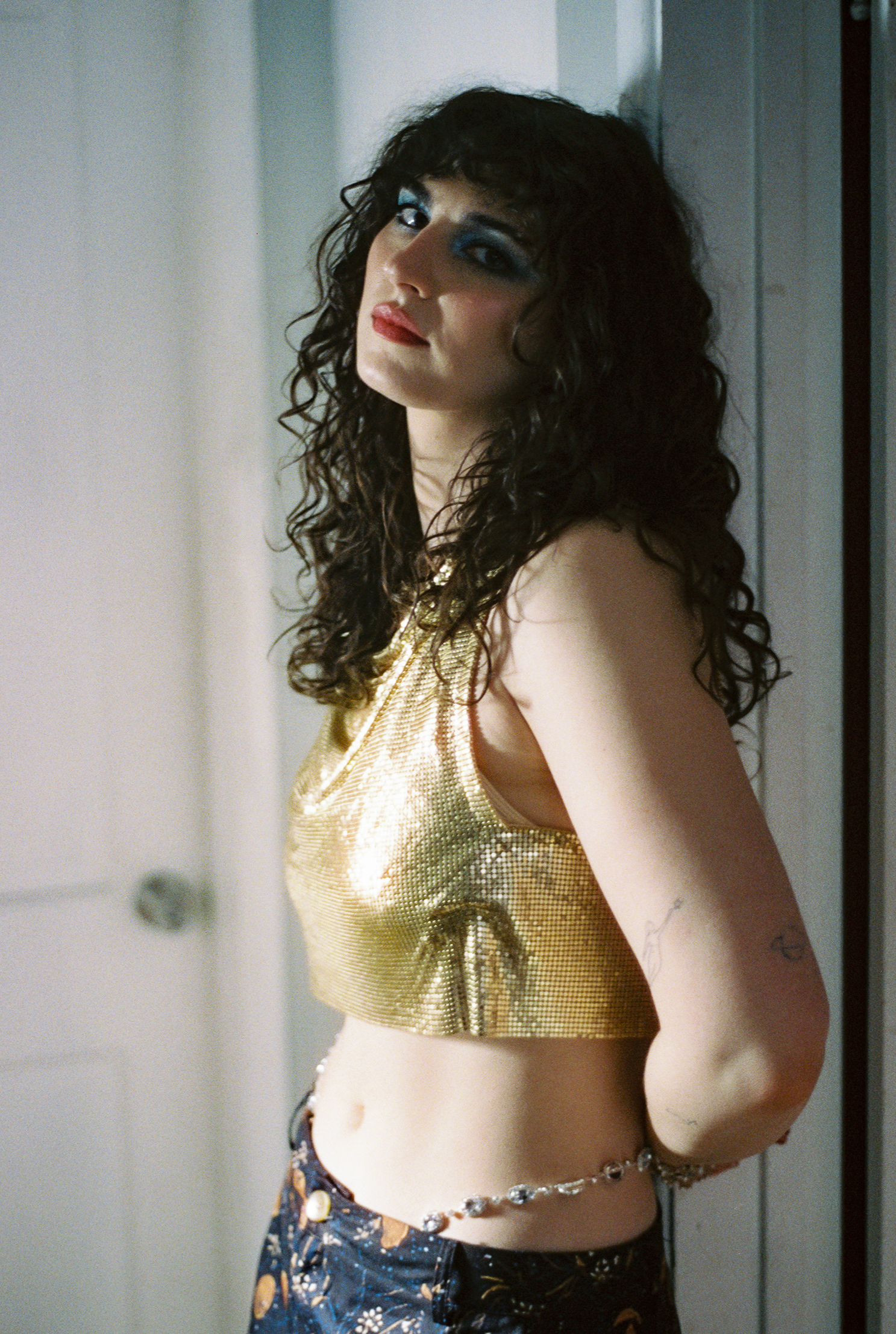
Rachel Bochner is a Brooklyn indie-pop songwriter whose album I Guess A Sure Thing Couldn’t Go Down Gently follows the end of a relationship she entered at 16 and left almost a decade later. EV readers first met the record through our Found in the Inbox feature, which looked at how its songs hold grief, guilt and queer self-recognition in the same frame.
Here Bochner goes further into that story in her own words. She talks about why the breakup and her identity could not be told as separate records, the songs “Devil,” “Furniture” and “Happier You’re Gone (SASE),” and why none of the album was written to make her look good.
EV: At what point did you realize the breakup and your queer identity were actually part of the same record?
Rachel Bochner: I think I knew pretty early on that they were inseparable, even if I didn’t fully understand how to articulate that yet. The breakup was the catalyst, but it wasn’t necessarily the whole story. I had entered that relationship when I was 16, and almost a decade later, I was coming to terms with the fact that the person I had become was fundamentally different from the person who had entered it.
I think there’s a tendency to separate a breakup from the personal growth or self-discovery that might surround it, but for me, they were intertwined. I wasn’t just grieving a person or a relationship. I was grieving an entire future I’d imagined for myself, a version of myself that no longer felt authentic, and the realization that some of the things I had understood as givens in my life were actually never right for me. Once I started writing, it became impossible to tell one story without telling the other.
EV: Was there a song where guilt gave way to clarity for the first time?
Rachel Bochner: I think “Happier You’re Gone (SASE)” represents that shift most clearly. It’s one of the later songs I wrote for the record, and it came from a place of having a little more distance from everything. I was over a year out from the breakup, feeling much more affirmed in myself and my identity, and able to look back at the person I had been with a little more compassion.
The title came from a dream I had about running into a past version of myself at a cocktail bar in Brooklyn. I remember waking up and thinking that I was happy she happened, but I was much happier she was gone. There’s something really freeing about being able to acknowledge that a version of yourself was necessary to get you where you are, while also recognizing that you don’t want to be her anymore. I wouldn’t say all the guilt magically disappeared, but there was definitely a shift from punishing myself for the past to feeling grateful for how much I’d grown.
EV: How did writing the album change the story you were telling yourself about the relationship?
Rachel Bochner: Before writing the album, I think I was telling myself a pretty one-dimensional story in which I was the villain, point blank. I was so consumed by the guilt of hurting someone I loved that I struggled to make room for the circumstances that led me there. It felt easier to take responsibility for absolutely everything than to sit with the much more uncomfortable reality that relationships (with people, with your sense of self) can be complicated, people can change, and sometimes doing what is right for you means you will be remembered as the villain in someone else’s experience.
Writing this record forced me to look at what happened from different angles. I could acknowledge the ways I hurt someone without dismissing the years of love and friendship that existed alongside that hurt. I could recognize that I had made mistakes while also recognizing that leaving was necessary. I think the biggest thing I learned is that two seemingly contradictory things can be true at once. Something can have been real and meaningful, and still not be something you can continue choosing.
EV: Which song was hardest to finish because it was still too close emotionally?
Rachel Bochner: “Devil” really required me to sit with some very uncomfortable feelings. “Devil” explores the guilt I carried surrounding the breakup and this almost masochistic willingness to let someone else see me as the villain if that made things easier for them, or perhaps for me. It was one of the first songs I started writing, and I think one of the most emotionally taxing ones to finish. I think the hardest part wasn’t necessarily writing about what happened, but allowing myself to be honest about the less flattering parts of my own experience. It’s easy to write a song where you’re the wronged party. It’s much harder to write one where you’re examining your own shortcomings, avoidance, and complicity. I can confidently say that no part of this album was curated to make me look good, because I wanted it to be an honest representation of an incredibly complex, but shockingly common, experience.
EV: Did coming to terms with your identity change the way you heard songs you had already written?
Rachel Bochner: Absolutely. I think there were experiences and emotions that I understood intuitively before I had the language to identify what was actually happening. Once I began understanding my sexuality more fully, I could look back at certain moments and recognize things that I hadn’t been able to name at the time. There’s something strange about revisiting writing or memories with an entirely new understanding of yourself. You aren’t necessarily changing what happened, but you’re changing the context through which you understand it.
EV: What does the album title mean to you now that the record is complete?
Rachel Bochner: The title comes from a lyric in “Furniture,” and I really feel that it ended up being the perfect encapsulation of the record. I navigated that relationship believing it was a sure thing. It was safe, familiar, and something I had imagined my entire adult life around. It was all I knew, and for so long, it was impossible to imagine my life without it. It’s not particularly fun to admit you were wrong about something. But it’s devastating when the thing you were wrong about also comes with the consequences of hurting people you care about and blowing up your entire life. The wordiness of the title feels very right to me, too.
EV: How did you decide what needed to stay raw and what needed more polished production?
Rachel Bochner: We approached the production in a way that worked in tandem with the emotionally heavy lyrical content. A lot of these songs are sad, but not in a stripped back, single acoustic guitar or somber piano part and vocals. The songs are loaded – there is an urgency and inevitability of the emotions behind them. I love the contrast of having something really devastating to say over a song that makes you want to drive around with the windows down and sing at the top of your lungs – sometimes that is exactly how you need to get those feelings off your chest. And then sometimes you need a song like Furniture, where every vocal layer and piece of ear candy was intentionally placed to communicate just how fucking devastating listening to that song should feel.
EV: What do you hope another listener going through a similar period recognizes in themselves by the end?
Rachel Bochner: I hope they recognize that they’re allowed to offer themself some grace. Life is complicated. You can love someone and know that staying would be crueler than leaving. You can feel guilty about hurting someone without hating yourself for pursuing your own truth and happiness. You can grieve a life you once wanted while feeling genuinely excited about the life you’re moving toward. I especially hope that anyone navigating their sexuality or coming into themselves later in life feels a little less alone. There’s so much shame that can come with realizing something about yourself that, in hindsight, feels like it should have been obvious. I hope people can extend themselves more patience and care. You don’t have to have everything figured out, and you don’t have to make sense of every part of your past before you’re allowed to move forward.
Bochner’s answers describe a record that refuses the easy version of its own story, where leaving can be necessary and still cost something. I Guess A Sure Thing Couldn’t Go Down Gently is streaming on Spotify. Find more at rachelbochner.com, and follow Rachel Bochner on Exposed Vocals for what comes next.
Signal this interview
Send it up if it hit, down if it missed. The most engaged pieces surface on Signal.