Bonnie Milne on “Glimpses,” “Coco in Motion” and Writing Music From Life
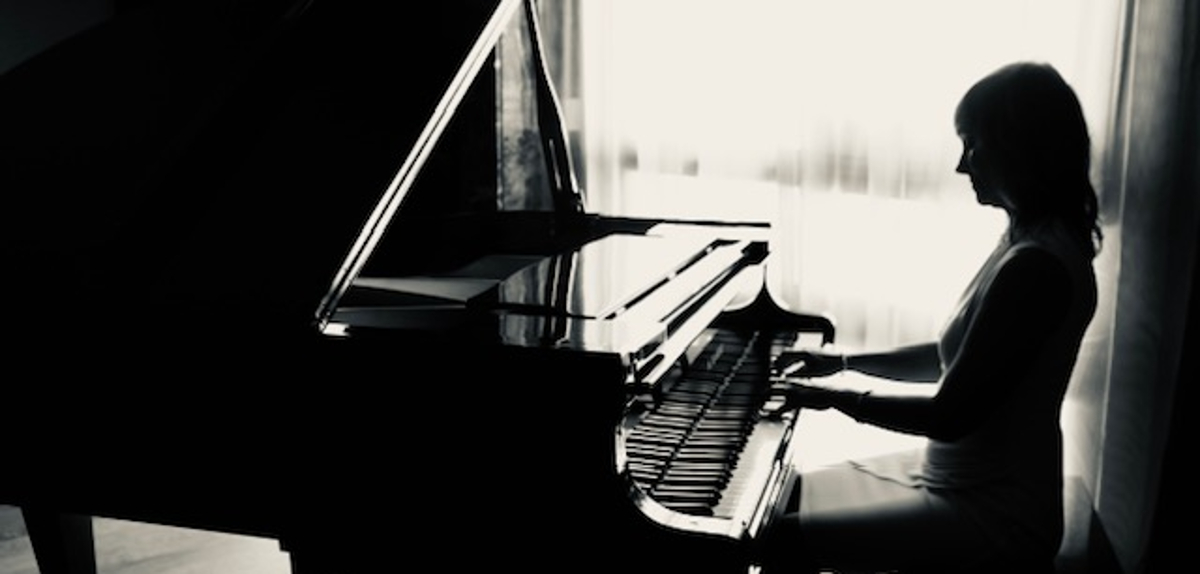
Bonnie Milne writes instrumental music the way other songwriters keep a journal. The Canadian pianist and composer builds each piece around a specific moment from her own life, then hands it to a small ensemble to give it more voices. “Glimpses,” released through MTS Records in September, grew out of a sunny morning in her backyard; EV’s review heard it as a piece about memory that keeps moving rather than freezing in place. Her follow-up, “Coco in Motion,” is a portrait of her eldest son, a child who was, in her words, “always on the go.”
That close link between life and composition makes Milne an unusually clear guide to how wordless music tells a story. In the conversation below she explains how a melody arrives before she finds it on the keys, what cellist Kevin Fox, violinist Drew Jurecka and percussionist Dave Hewitt each added to “Glimpses,” why she writes on a Chickering quarter grand bought from a 91-year-old who taught lessons for sixty years, and how she knows when a piece is finished.
Listen / Explore: Bonnie Milne
Hear the music discussed in this interview.
EV: “Glimpses” holds onto a moment without freezing it. What memory or image started the piece?
Bonnie Milne: I was enjoying a coffee in my backyard on a beautiful sunny morning and a glimpse of my sons laughing and having fun on their waterslide happened. There was a feeling of gratitude and longing, which I believe the first few chords of Glimpses captures.
EV: How do you compose instrumental music that tells a story without words to carry it?
Bonnie Milne: When I sit at the piano, I hear the music first and then find it on the piano. It is often representative of what is happening in my life at the time or associated with an emotion or memory. Somehow that tells a story on its own.
EV: What did Dave Hewitt, Kevin Fox and Drew Jurecka each bring to the recording?
Bonnie Milne: I have previously worked with Kevin and Dave before on other compositions. They both have the ability to contribute the tone, mood and rhythm I am seeking. Kevin’s soulful cello playing adds harmonious sound and countermelodies.
Dave’s percussion adds warmth and depth and feels like a warm hug in the slower section. I think that adding percussion to classical pieces can be tricky, however, he knows how to do this to make it complementary to my music.
Drew’s violin brings a higher brilliant countermelody, sometimes playful, and sometimes intense.
EV: How much of the arrangement was written down, and how much came from the players in the room?
Bonnie Milne: Although I wrote the piano, cello and violin parts, Kevin added the perfect harmonies and techniques and Drew, the exact feeling I was hoping for with the violin. Dave has the ability to create the percussion part, adding the rhythmic feel that complements the other parts perfectly.
EV: Who or what is Coco, and how did “Coco in Motion” find its rhythm?
Bonnie Milne: Coco, is the name I call my son, Cohen. From childhood he was always on the go! The rhythm of the piece follows his life experiences.
EV: Which instrument do you write on first, and how does that shape the music?
Bonnie Milne: I am a pianist, so I write the melody first on my beautiful Chickering quarter grand piano that I purchased from a 91 year old who taught lessons for 60 years. The other instruments become countermelodies and harmony.
EV: How do you decide when a piece is finished, rather than still changing?
Bonnie Milne: That is the question a composer struggles with! I would say that when I no longer hear anything past a certain point, the piano part is done and then I add the other instruments.
EV: What is the difference between writing for yourself and writing for an ensemble?
Bonnie Milne: I have only written a couple of pieces that are fully for myself on the piano. I enjoy writing for an ensemble or adding the other parts immensely, seeing what sounds most harmonious.
EV: Where do you most like your music to be heard: on headphones, in concert, or somewhere else?
Bonnie Milne: The experience of hearing my music in headphones is fabulous and most efficient.
EV: What are you composing now, and what should listeners watch for next?
Bonnie Milne: I am composing 3 pieces currently, one is for my youngest son. In the near future, I would like to compose a piece on my harpsichord which I have not done as of yet.
What stands out in Milne’s answers is how little she separates the music from the life around it. A waterslide, a son’s restless energy and a piano with its own history all become material, and the ensemble’s job is to widen those moments without crowding them. She is already working on three new pieces, one for her youngest son, and hopes to write for harpsichord for the first time. If “Glimpses” and “Coco in Motion” are any guide, the next works will again start with a single, closely observed moment.
Read more: our review of “Glimpses” and “Coco in Motion” in Found in the Inbox.
Photo: Bonnie Milne by Karen Rose Photography, supplied by MTS Management Group and used with permission.
Signal this interview
Send it up if it hit, down if it missed. The most engaged pieces surface on Signal.
Keep reading
Back to Interviews ↗From this section
Exposed Vocals Interview: RIZZ SA on Ambition, Soweto and the RizzVerse Movement
October 22, 2026
From this section
Exposed Vocals Interview: AETHERFALL on PARALLAX and an 18-Album Science-Fiction Saga
October 22, 2026
From this section