Holding the Moment Without Freezing It: Bonnie Milne’s “Glimpses” in Review
Exposed Vocals Music Review
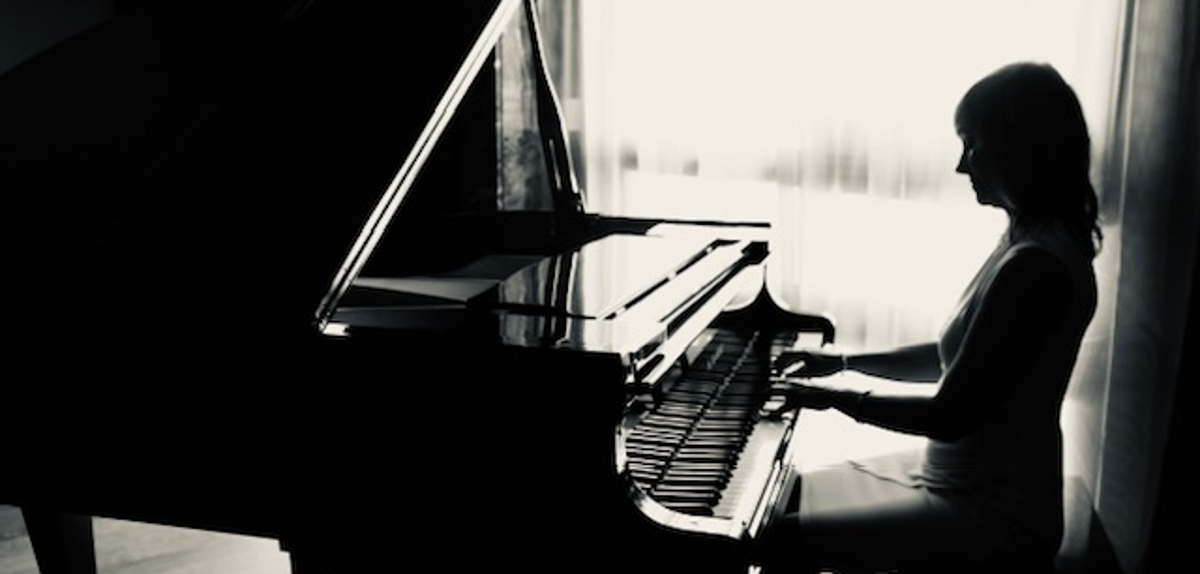
The Canadian composer and pianist frames the instrumental as a reflection on time shared with family and genuine friends—moments whose beauty becomes inseparable from the knowledge that they cannot last. That idea gives the composition a clear dramatic purpose. Its slower, contemplative opening establishes space for gratitude and longing, while the eventual move into an allegro section turns remembrance into forward motion. The structure matters because “Glimpses” is not only about looking back; it is about what memory asks us to carry forward.
Contrast does the storytelling
Milne’s movement between major and minor chords supplies the piece’s central tension. Warmth and sadness do not arrive as separate scenes. They coexist, which is closer to the way meaningful memories actually behave. Instead of assigning one emotion to the past, the composition allows comfort, absence and appreciation to press against one another. That push and pull gives the piece a narrative arc without requiring lyrics to explain it.
The ensemble expands that arc without displacing the piano at its center. Kevin Fox’s cello is positioned as the emotional foundation, supplying accompaniment and countermelodies. Drew Jurecka’s violin adds another voice—playful and yearning by design—while Dave Hewitt’s timpani-like drum line changes function as the arrangement develops, warming the quieter passages before helping drive the faster section. Recorded at Villa Sound in Collingwood, Ontario, with engineer Adam Fair, the collaboration is organized around contrast rather than spectacle.
“Glimpses” treats memory as movement: tenderness gathers weight, and reflection eventually has to travel somewhere.
Restraint keeps the idea intact
Instrumental music built around memory can easily become over-signaled, with every arrangement choice insisting on how the listener should feel. “Glimpses” takes the stronger route conceptually. Its emotional information is carried by harmonic motion, tempo and changing instrumental roles. The composition leaves room for a listener’s own family, friendships and vanished moments to enter the frame. That openness is the single’s clearest strength.
The result fits Milne’s broader identity as a composer who uses melody and classical language as tools for emotional accessibility. The strongest positioning for “Glimpses” is not simply “calming piano music.” It is a compact contemporary instrumental narrative about the double truth of memory: the people and moments we treasure are temporary, yet the act of remembering them can create fresh momentum. In that sense, the allegro is more than a change of pace. It is the piece’s answer.
Verdict: “Glimpses” succeeds by refusing to simplify remembrance into either comfort or sorrow. Milne’s design gives both emotions room, then lets rhythm carry the composition beyond them. It is a thoughtful, disciplined release whose lasting impression comes from the transition between holding on and moving forward.
Keep the Signal Moving
See how EV profiles and Signal work
Editorial coverage, releases and activity are designed to build one continuing professional identity.
Explore more EV artist stories
Move from one feature into interviews, reviews and new releases across the platform.
Build the next release into your EV footprint
Use the next release, review or campaign to continue the same professional identity.
Continue the artist’s story
Bonnie Milne on Exposed Vocals · Claim this artist profile
Campaign materials shared by MTS Management Group. Explore the campaign hub for more published artist stories.
Photo by Karen Rose Photography; photo supplied by MTS Management Group and used with permission.
Signal this review
Send it up if it hit, down if it missed. The most engaged pieces surface on Signal.
Keep reading
Back to Reviews ↗
From this section
Forget Them Wendy on “Apple Pie,” Impermanence and Finishing the Album
October 14, 2026
From this section
Found in the Inbox: Alexandra Crisan Gives Silence a Shape on Cold Betrayal
October 12, 2026
From this section