A song can wait thirty years without losing its reason to exist. For Ned Hill, “Little Miss Cairaco” became the starting point for Saw Jesus at the Park, a six-song EP that brings an older piece of his life into conversation with newer writing about division, exhaustion and the search for relief.
Working again with producer Dave Coleman, Hill kept the arrangements close to the songs as he first wrote them. In this Exposed Vocals interview, he discusses the trust behind that partnership, the humor of the title track, the Nashville players who shaped the record and the hard work that still makes songwriting worthwhile.
Listen to Saw Jesus at the Park
Listen on Spotify, Apple Music and other platforms through Ned Hill’s official release page
Ned Hill: The Exposed Vocals Interview
“Little Miss Cairaco” sat with you for roughly 30 years. What made this the moment to finally record it, and how did that song unlock the rest of the EP?
Well, I always knew I wanted to do a proper recording of the song at some point, but never found a spot for it on any of my previous recordings. At my age, it felt like the time was now. I brought the song to producer Dave Coleman and he was onboard. Once I knew we were going to record it, I decided to write some songs around it. “Why in the World”, “Drive”, and “Saw Jesus at the Park” came relatively quickly.”Goodbye Everything” was a tune I had written the year previously and seemed to fit. We then rounded out the EP with the CCR cover.
The title track imagines Jesus at a park, exhausted by the world and asking for a light. Where did that scene come from, and what truth were you trying to reach through the humor?
The thought of humanizing Jesus, (not unlike Joan Osborne’s “One of Us”) and having him being seen walking his dog in the park, appealed to me. I thought he must be exhausted and exasperated about what’s going on. Someone who maybe needs a drink or, in this song, a joint. The truth being that the division and anger amongst us that is perpetuated by our leadership is exhausting to all of us I think, perhaps even Jesus.
“Why in the World?” and “Drive” look directly at a turbulent moment. How do you write about social anxiety without letting a song become a lecture?
For me, the key to that is leaving some of the lyrics open to interpretation. A little dance between the literal and the poetic, I think, keeps it from slapping you in the face.
Your earlier work often leaned harder into loud, Replacements-inspired rock. What did the Americana setting allow you to reveal in these songs that volume sometimes covered up?
My earlier work, in particular the songs I wrote in Ned Van Go, were informed by the bandmates around me. I’d bring a song in and let them tear it apart and build it back up. We were a band.This can be exciting and rewarding for all involved. The volume issue was a live performance thing with some complaining that they could not understand the lyrics. The way I write a song now in the singer-songwriter/Americana setting hasn’t really changed. The only difference is that the original arrangements stay pretty much the same as originally written, with some input from producer Dave Coleman.
You reunited with Dave Coleman at Howard’s Apartment Studios. What does Dave understand about your writing and performance that makes the partnership work?
I’ve known Dave for over fifteen years. My old band Ned Van Go and his band The Coal Men used to do shows together from time to time. So he knew me and my writing style well before we started working together. After Ned Van Go disbanded, we happened to see each other at Kroger. There, he suggested that I should do a record at his studio. I agreed and we’ve now done three records together. Dave is a great talent: singer-songwriter, guitar player, and producer. For me, he provides what I think is essential, and that is trust. I know I can lean on his guidance.
Did recording an old song beside newer material change the way you heard your younger self as a writer?
Well, it takes me back to where I was then. I was still living in Horse Cave, KY, a couple years away from moving to Nashville. My girlfriend at that time had broken up with me and I was pretty miserable. I also was pouring through a Beatles discography and picking up what I could. I can hear that influence when I listen to “Little Miss Cairaco”. That tune has eleven, I believe, chords in it, none of them minor chords. I had never written anything like that before or since then. I hear someone still yearning to be better at his craft.
The EP brings together a deep Nashville cast. Which contribution surprised you most once the arrangements began taking shape?
I’ve been lucky enough to play with some great players. That, in itself, is not surprising considering the great pool of players here. My association Dave Coleman and my violin player Tina Simpson has been particularly important to me since they not only great players but great friends. But the contribution that surprised me the most was that of drummer Chris Benelli. I had never played with Chris before doing this recording. I knew I needed someone with a deft hand to handle these new songs. Dave suggested Chris and brought him in. What he did on this record was spot on for what was required. From the percussive sound in “Why in the World” to the straight ahead rockin’ style in ”Hey Tonight”, what he did on this record was pretty impressive. The guy’s a really good drummer.
What made CCR’s “Hey Tonight” belong on this particular record, and how did you make it feel like part of your own world?
That cover was just lying around at Dave’s studio. We had gotten together a few months before the recording to just mess around on something. Dave suggested “Hey Tonight” which surprised me. I mean, I had the single as a little kid. So I said, heck yeah, and so we recorded our own little version and left it there. So when we were filling out this record, I felt like we needed another rocker. I remembered our version “Hey Tonight” and so we decided to finish it out with rest of the guys in the band. This version, I hope, is different enough from the original (there’s no topping John Fogerty) to make it fresh but close enough to make it very familiar. And since I grew up with CCR and have always loved them, this music has always been part of my world.
After decades of writing and performing, what still makes a song feel unfinished—or worth chasing—until you get it right?
I have written a lot of songs over the years. And generally, when I start a song and get a third to halfway into it, I’ll usually finish it out, even if know it’s really not that good. I chalk that up to my momma’s country work ethic that somehow got into me. The process of writing a song is really not that enjoyable to me. I find it, for the most part, difficult to get it right. The joy comes when I’ve battled through the process and feel like I got to where I was trying to get to.
When listeners reach the end of Saw Jesus at the Park, what do you hope stays with them beyond the wit and the melodies?
When they get to the end, I hope there’s something that makes them want to listen to it again. A feeling, a lyric that stood out, the musicianship. You just want it to mean something to somebody. For me, that’s the goal. That’s the joy.
Hill’s answers return to a clear measure of success: a song that means enough to someone that they want to hear it again. Across old material, newer observations and a familiar CCR cover, that is the thread he continues to chase.
Keep the Signal Moving
Explore Ned Hill’s release and more independent artist interviews on EV.
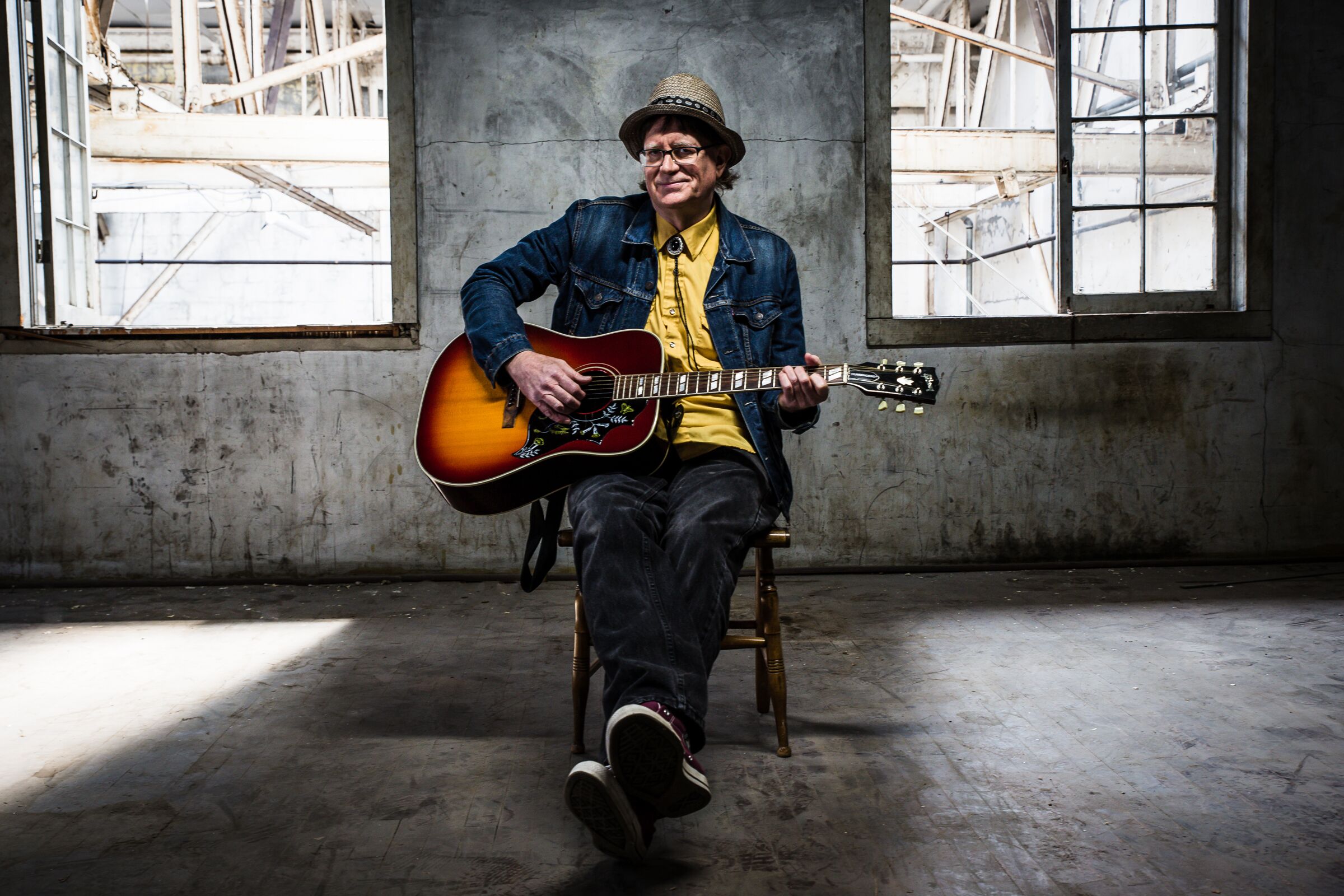
Saw Jesus at the Park was released September 18, 2026. Photo by Scott Willis; original image jpeg25.jpg supplied by Michael J. Media Group and used with permission.