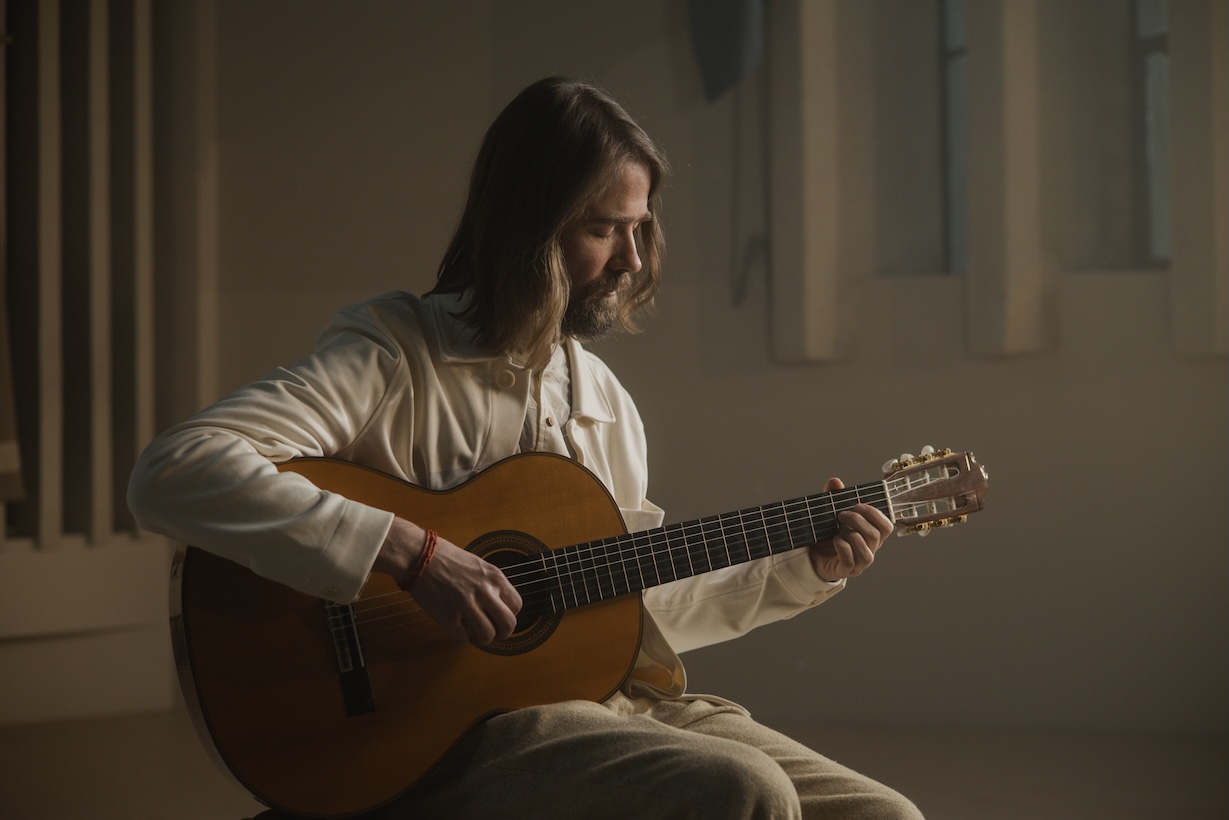
Bram Stadhouders has spent more than two decades pushing the guitar outward—through electric work, improvisation, contemporary ensembles and hundreds of performances around the world. His new project, Braem, moves in the opposite direction. The debut album Filum, arriving October 30 through Télès Music, strips the process back to classical guitar, a quiet room and the space between notes.
Recorded in a single day without effects, the ten-piece album grew from a retreat from city life and a return to the instrument Stadhouders knew in childhood. On five tracks, viola adds a restrained lower layer, but the center remains intentionally exposed. We spoke with Bram about what quiet gave back to him, why silence can function as composition, and what he deliberately left out of Filum.
Exposed Vocals Interview: Braem on Filum
After hundreds of performances and years of electric work, what did the classical guitar give back to you that you had stopped hearing elsewhere?
Space, mostly. In electric and improvised music there’s always something happening, always another idea to chase. With just the acoustic guitar I had to sit with less, and that made me listen differently. Music started to feel like something you experience, not something you analyze.
What changed in your playing when you moved from city life to the cabin?
There was nothing to react to. No band, no stage, no electric guitar even. Just one acoustic instrument and a quiet room. Ear Point, the first piece I wrote there, came directly out of that situation. It set the tone for the rest of the album.
Why did it matter that Filum was recorded in one room, in one day, without effects?
Because I wanted the record to sound exactly like the playing was: direct, one instrument, one take, no corrections or layering added afterward. If we’d spread it out over weeks or added production, it would have become a different, more polished kind of record. This one needed to stay close to how the pieces actually sounded in the room.
How do you decide when silence is part of the composition rather than simply the space between notes?
If I remove a silence and the phrase still makes sense, it was just a pause. If removing it changes what the phrase means, then it’s part of the music, and I keep it in. It’s a practical distinction, not a mystical one: does the silence do something, or is it just a gap.
What does the viola add on the five tracks where it appears?
A lower, sustained layer underneath the guitar. I recorded all the guitar parts first, and on five tracks something still felt incomplete. Roosmarijn’s viola fills that gap without taking over, it stays in the background and supports the guitar rather than competing with it.
Does “presence beyond the noise” describe the music, your life, or both?
Both, honestly. The world is loud right now, and my own life was loud for a long time too: touring, performing, always something next. Filum is what was left once I took a step back from that. So the calm in the music reflects a real change in how I was living.
What did you deliberately leave out of this record?
Effects, overdubbing, editing tricks, the electric guitar. Anything that would add distance between what I played and what people hear. It’s one person and one instrument, nothing extra layered on top.
When someone reaches the end of Filum, what do you hope has changed in the way they are listening?
I hope they’ve slowed down a bit without really noticing it happening. That for those thirty minutes they were somewhere quieter than where they started, and that they take a bit of that with them afterward.
A Record Built by Subtraction
Filum is less about abandoning Stadhouders’ earlier musical life than testing what remains when its usual machinery is removed. The most revealing part of his process may be his definition of silence: not atmosphere for atmosphere’s sake, but something that earns its place only when removing it changes the meaning of a phrase. That same discipline runs through the record’s one-day session, absence of effects and restrained use of viola.
Photo credit: Hessel Stuut. Image published with permission.