Exposed Vocals Interview
Califani’s story stretches from Melbourne and a Balkan musical household to acting training, Los Angeles studios and a rap identity built around forceful delivery. Born Stefani Samac, the Australian artist of Macedonian and Croatian heritage adopted the name Califani as she began recording in California, creating a line between her personal life and the performer she was becoming.
Her first recording, “Straight Like Dat,” introduced that confidence, but the next chapter is focused on a new club record with an old-school California bounce. Exposed Vocals spoke with Califani about the name, the beat-first creative process, how acting shapes her delivery and why she believes the full combination of her background, voice and performance instincts makes the project distinct.
What did the name Califani unlock for you creatively that Stefani Samac alone did not?
I was already confident as Stefani Samac, so Califani didn’t create that confidence. What it gave me was a separate identity in music. I’d never gone by another name before, and having an artist name made starting my rap career feel more official. It also gave me some separation between my personal life and performing.
Max Lux gave me the name in 2020 while I was working on my first project. Honestly, I wasn’t completely sold on it at first because the names I’d been considering were in a different direction. Then he explained it: “Cali” from California and “fani” from Stefani. That made sense to me. I was starting my rap career in California, and the name represented both where I was building it and who I already was.
Creatively, it gave me a name to build that identity around. I didn’t have to become someone else to be Califani—it was still me, with a name that connected my own story to the place where this part of my life was beginning.
How do your Australian upbringing and Macedonian-Croatian roots show up in your instincts as a writer and performer?
My mother is from Macedonia, and my father was born in Zagreb, Croatia. Growing up in Australia, our home was full of Balkan music. Ceca, Mile Kitić, Toše Proeski and Colonia were some of the artists I listened to on repeat. That music was part of everyday life for us.
But my connection went beyond listening. My father, Tomislav Samac, helped organise Australian visits and performances for Balkan singers. He handled bookings, logistics and communication with their management. Some of those working relationships became close family friendships, so I got to know performers in ordinary, personal settings while I was still a little girl.
I remember being around seven, at a car wash with my dad and Martin Vučić, and Martin squeezing my cheeks. Toše Proeski was also a close friend of my parents, especially my father. Dad organised his Melbourne performances, and I remember him visiting our home in 2002. Those are childhood memories of people we spent time with, before I fully understood their public significance.
By the time I started formal drama classes at Screen Actors Australia in Melbourne at ten, entertainment was already a familiar world. Looking back, I realise I’d spent my earliest years around music, performers and the work that goes into bringing an event together—before consciously deciding I wanted to perform myself.
That’s where I see the influence most clearly. My Australian upbringing and Macedonian-Croatian roots are intertwined: I grew up in Melbourne with that Balkan musical world around me. I wouldn’t force a connection and say every lyric or beat comes directly from my heritage. It’s deeper in my relationship with performing. Music was something people close to me actually did, and eventually I wanted to find my own place in it.
When you moved into the Los Angeles music world, what felt immediately natural—and what did you have to learn on your own?
Being around artists felt familiar. Through my father’s work, my acting background and eventually my life in Los Angeles, I’d been around performers since childhood. The excitement was finding out what I could do myself.
In 2018, before I started making my own music, I co-owned the largest studio room at 17 Hertz in North Hollywood with Eric “iShowOff” Cunningham. Clients who booked our room included Ne-Yo, The Game, Tekashi 6ix9ine and Kodak Black, whom I dealt with personally. We also threw Christmas and New Year’s parties, with guests including Kyle Massey and Chris Massey. I was already involved in that world before stepping up to the microphone.
Rapping felt immediately natural. From my first recording, I felt comfortable with the delivery and energy. My acting training may have helped, but I can’t separate exactly how much came from that and how much was instinct. I just knew I’d found my lane.
Rap suits my personality: I’m independent, outspoken and willing to stand up for what I believe in. When I deliver something hard, I feel it. That intensity is already part of me. People sometimes see a white woman from Australia and don’t expect the force of the performance. I enjoy that moment when their expectations shift.
Becoming the artist meant taking on a different responsibility. Now people were waiting for me to show up prepared, record and deliver. Being comfortable in the room was already there. Being accountable for what I brought to it—that was my job.
“Straight Like Dat” introduced a confident, direct side of your sound. What does that song still tell listeners about the artist you are now?
That attitude definitely still represents me. “Straight Like Dat” was the first song I ever recorded on a microphone, and I finished it in about an hour, two at most. I went in and delivered it in a voice that felt right for the track.
What surprised me was the reaction. People kept asking, “Where are you on the song?” At first, I didn’t understand the question. Then I realised they thought they were listening to a man rapping—they genuinely hadn’t recognised me. There was no Auto-Tune. That was my voice and the way I chose to perform.
I took it as a huge compliment to my ability to do something people weren’t expecting. It surprised my team as well. For a first recording, discovering that side of my voice was exciting.
That song still tells listeners that I’m confident in my delivery and willing to explore what my voice can do. The attitude was there from the beginning, and it’s still there now.
You’ve described the next track as a club record with an old-school California, C-walk-style pulse. What attracted you to that rhythmic language?
It’s the bounce, the energy and the way I imagine people moving to it. I want a rhythm that makes you react physically, whether you’re in a club or sitting in your car. That old-school California feel gives me that.
But my connection to it also comes from living here. I’ve spent time around people from different neighbourhoods and backgrounds, including friends of Nipsey Hussle. A lot of the people who have treated me like family in Los Angeles come from communities that outsiders often judge without knowing the people in them. Those friendships are a meaningful part of my life here.
I’ve also lived on the east side and experienced frightening situations, including gunfire on my street. That’s part of my experience, but what I want to express in this record is the energy and connection I feel to California. There are people, friendships and everyday memories behind my love for that sound.
With this track, I want to bring my own voice to that bounce and make something people genuinely want to move to.
Because the new song is still taking shape, what usually comes first for you: the beat, a visual scene, a hook, a character or a line you cannot let go?
For me, the beat comes first. I’ve always said you could have Michael Jackson in the studio—who, to me, is the greatest musician of all time—with the best lyrics in the world, but if the beat doesn’t make you feel something, the song isn’t going to hit the way it should. I need to feel that energy before anything else.
Then come the words. I want lyrics with personality, something memorable that makes you think, “I haven’t heard it put like that before.” The beat gets my attention, and the words need to live up to it.
Once the beat and lyrics come together, I start seeing the whole thing visually: what I’m wearing, where the scenes take place and how I want the song to come across. But when we actually shoot, my performance is very instinctive. I usually don’t rehearse my movements. As soon as the camera rolls and someone says “action,” I freestyle the performance and let my body respond to the music.
Usually, I get the performance I want on the first take, or within the second or third. If something needs adjusting, we work from there. I have a vision going in, but I leave room for whatever comes naturally in that moment.
How does your acting background affect the way you build a song’s point of view or deliver a verse?
I believe my extensive acting background is one of the things that sets me apart as an artist. It gives me a range in my vocal delivery and music videos that comes from years of stepping into characters and making their emotions believable.
As a little girl at Screen Actors Australia, I won the trophy for best monologue of the year across the entire school, competing with children, teenagers and adults. I performed a monologue about a character whose mother was dying from cancer. I began crying during the performance, and I remember having the whole room’s attention. Even then, I could feel the power of making people emotionally connect with a story.
I also believe a lot of my talent is natural and God-given. It cannot be taught, and it cannot be bought. Training helped me develop it, but that instinct was already there.
When I record, I love exploring different voices, emotions and characters. That’s my favourite part: deciding who’s speaking, what she’s feeling and how those words should come out. The same lyrics can feel completely different depending on how you deliver them. That’s where acting becomes such an important part of my music, and it’s a big part of what makes performing exciting for me.
What separates genuine West Coast influence from imitation, and how are you making that influence your own?
For me, genuine influence comes from a connection to the music while still bringing your own personality and experiences to it. I’ve lived on the West Coast for at least eight years, so that sound is part of my everyday life. But what comes out when I rap is a mix of everywhere I come from and everything I’ve listened to.
The funny thing is that people often ask if I’m from New York or Brooklyn, and I’ve never even been there. I’ve heard Brooklyn, California and even British—which I think is people picking up on my Australian accent. People hear different things in my voice, and that’s part of what makes it distinctive.
I grew up with an Australian accent and Macedonian-Croatian influences around me, then developed my rap delivery while living in America. I also listen to a lot of Nicki Minaj and 50 Cent, so perhaps that helps explain the New York connection people hear, although I can’t say for sure.
What makes it Califani is that combination: strong, powerful vocals, a confident delivery and an accent people can’t quite place. I can bring all of that to a classic California beat and still sound like myself.
What do you want the first thirty seconds of the new record to make someone feel in a club or in their car?
I’m a billion percent confident in the energy of this record. From those first thirty seconds, I believe people are going to want to move and start feeling themselves. You know when a song comes on and suddenly you feel like you’re the centre of the room? That’s the feeling I’m going for.
I picture girls dancing and guys blasting it in their cars, driving down the freeway, feeling pumped up. I want that confidence to be contagious. Whatever kind of day you’ve had, you put this track on and feel like you own the moment.
When this next chapter is fully recorded and released, what do you hope people understand about Califani that they may have missed before?
I want people to understand that I’m one of one. I genuinely don’t believe the industry has seen someone quite like me before. That’s a big statement, and I’m serious about putting the work behind it.
It’s the whole combination: my voice, my acting ability, my personality and the life I’ve lived. An Australian woman with Macedonian-Croatian roots who found her rap voice in California, with a delivery people can’t quite place. Every part of that comes with me when I step up to the microphone. I believe what I bring is something you haven’t seen before.
And I do this for the love of the game. The money, fame and attention would be extras. I’ve had the instinct to perform since I was a little girl, and I take my craft seriously because it means something to me.
With this next chapter, I want people to hear that individuality and feel the conviction behind it. I’m one of one—and I intend to make that clear every time I release a record.
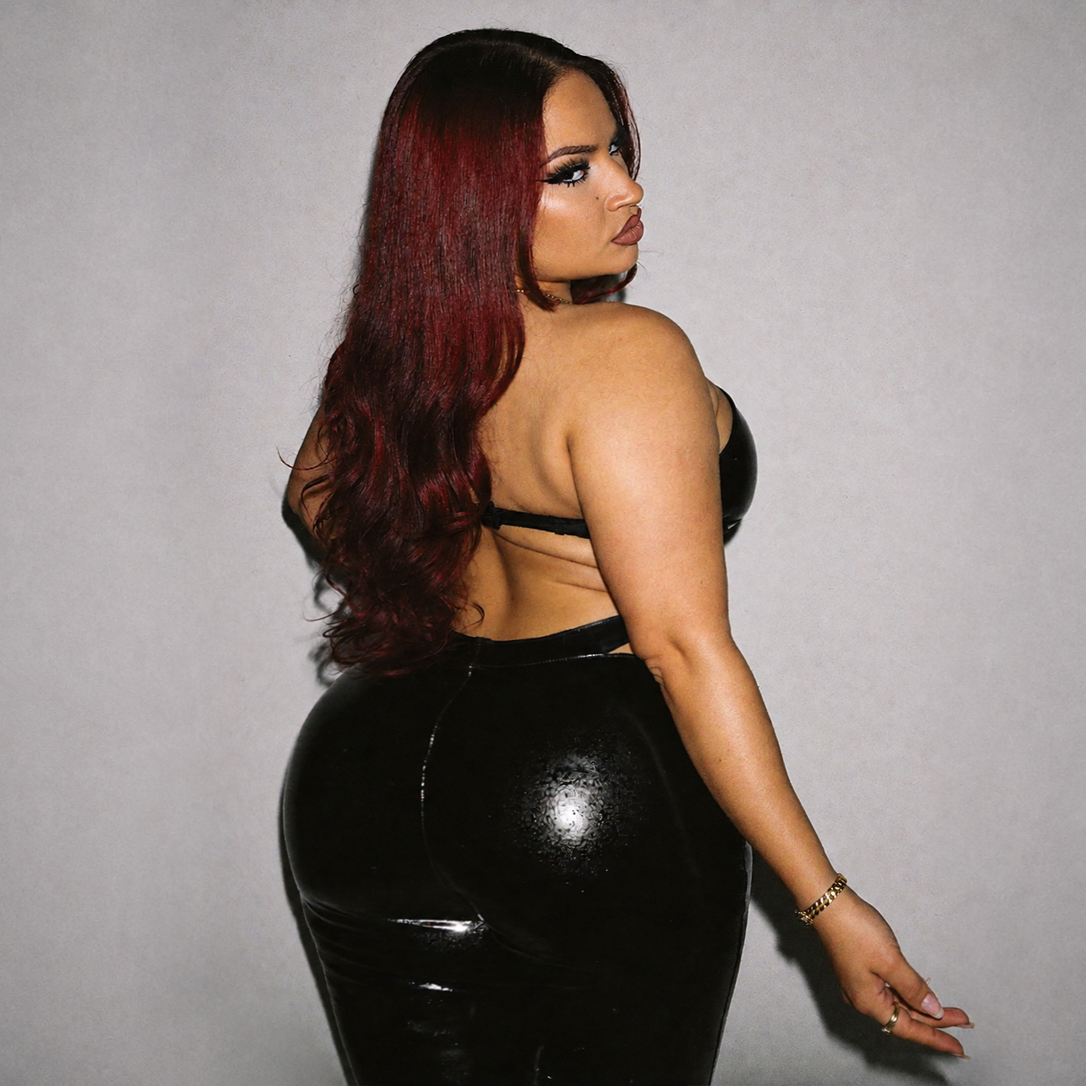
Photo: Vincent Egezi (@vincentegezi).
Califani’s current catalog, including “Straight Like Dat,” is available on Apple Music as she continues developing the next release.
Keep the Signal Moving
Hear Califani on Apple Music
Start with “Straight Like Dat” and follow the catalog as the next club record takes shape.
See how EV profiles and Signal work
Editorial coverage, releases and activity are designed to build one continuing professional identity on EV.
Put the next record in front of EV
When the new track is ready, continue the story with release-focused coverage instead of starting over.