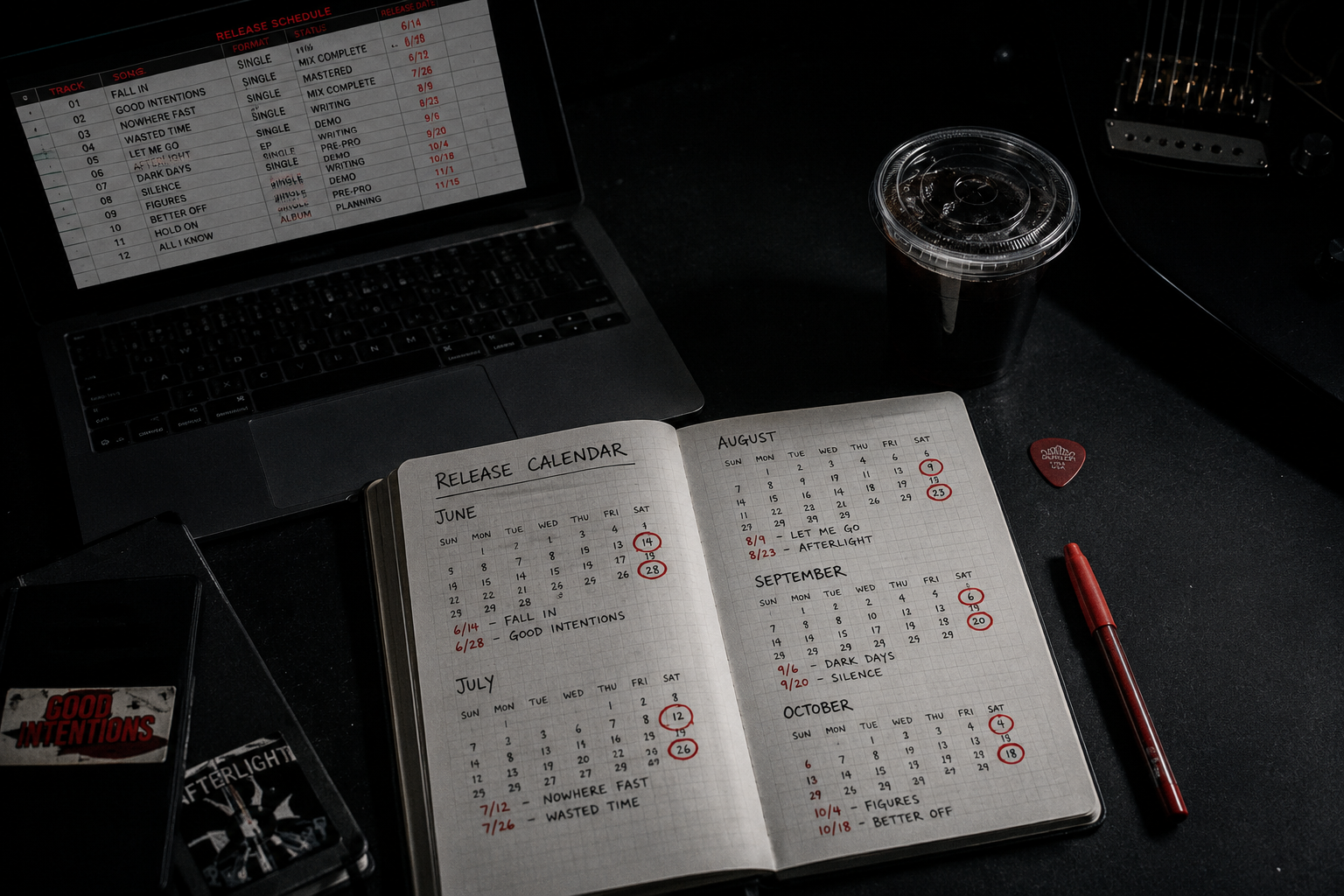
Let’s get one thing straight: the label isn’t what you’re missing. The artists who get signed aren’t the most talented ones in your city — they’re often just the most organized. They show up consistently, they have a plan, and they execute it whether anyone is watching or not. That consistency is what gets noticed. That’s what gets remembered.
What separates an independent artist who is actually building something from one who is spinning their wheels isn’t talent, isn’t connections, and isn’t budget. It’s a system. A repeatable, boring, unglamorous system that runs even when you don’t feel like it. This is what that looks like.
The artists who are actually moving forward aren’t waiting for permission. They’re running an operation. A small one — but an operation.
— Randy / Exposed VocalsWhat a System Actually Is
A system isn’t a complicated thing. It’s just a set of decisions you’ve already made, so you’re not making them over and over when you’re tired or uninspired. It answers the questions that kill momentum: What am I releasing next? When? Who am I telling about it? How am I building toward the release after that?
Without a system, every release is a scramble. You finish a song, you throw it up, you post about it twice, and then you go quiet for four months while you figure out what’s next. That cycle doesn’t build anything. Your audience — the one you’re trying to grow — needs reasons to pay attention, and inconsistency is the fastest way to give them permission to stop.
With a system, you’re never starting from zero. You know what’s coming. You know when. And you’ve given yourself enough runway to actually do the work of getting people to care before the release hits.
Inconsistency isn’t just a content problem. It’s a trust problem. Every time you go dark, your audience quietly learns not to count on you.
— Randy / Exposed VocalsThe Four Pillars
Every working independent artist system runs on the same four things. The details vary. The structure doesn’t.
Your release is not the content. Your release is the destination. Everything between now and that date is what gets you there.
— Randy / Exposed VocalsThe Press Outreach Loop
This is the piece most independent artists skip entirely, or do once and give up on. Press outreach isn’t a one-time event — it’s a loop. You pitch, you follow up, you track what lands, you refine the pitch, you pitch again. Every release cycle you get a little better at it. Every piece of coverage you earn makes the next pitch slightly easier because you have something to point to.
The pitch itself is not complicated. Two or three sentences about who you are and what you’re releasing. A real streaming link — not a download, not a file, a link. One line about why it fits the outlet you’re pitching. That’s it. Blogs and music sites are run by real people who are busy and getting a lot of email. The pitch that respects their time is the one that gets read.
The Part Nobody Talks About
Here’s the honest version: you will build this system and it will feel like nothing is happening for a long time. That’s not a sign it’s broken. That’s just what the early stages look like. The artists who stick with a consistent release and outreach cadence for twelve to eighteen months almost always have a different story to tell at the end of that period than artists who released something great once and then waited.
A label would give you infrastructure, budget, and connections. It would not give you discipline. It would not give you the habit of showing up. Those things are yours to build, and the window is right now — before you sign anything, before you get the budget, before anyone is paying attention. Because the system you build when nobody is watching is the same one that will carry you when they finally are.
You don’t need a label. You need a system. Build it this week.
Ready to get your music in front of an audience that’s paying attention? Submit to Exposed Vocals and let’s talk about what you’re building.