Building a Record in Motion: Maiah Wynne on Hotel Rooms, Self-Production and “Into The Waves
Exposed Vocals Interview
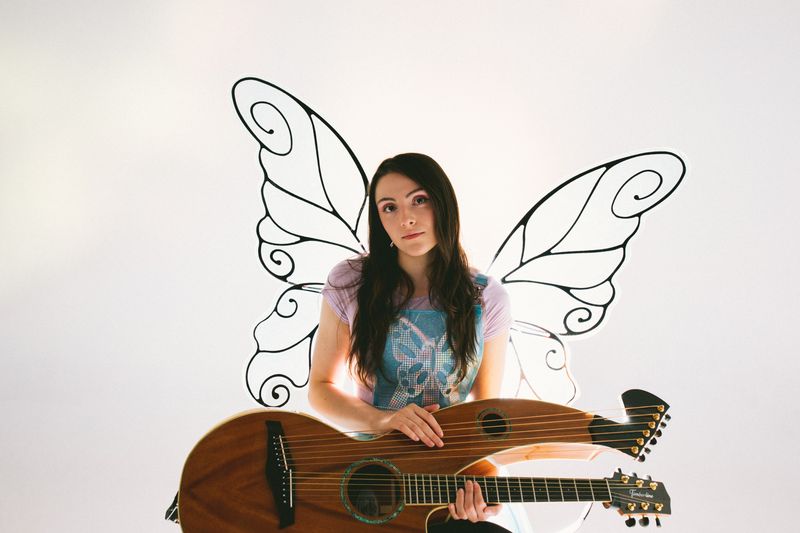
Into The Waves is a record shaped by movement: international touring, relocation, a return to school and the slow work of rebuilding after isolation. Maiah Wynne carried that uncertainty into hotel rooms and temporary recording spaces, reducing songs to their essential parts while teaching herself how to produce the music she could already hear in her head.
Exposed Vocals caught up with Maiah Wynne as Into The Waves arrives via Kscope Records to discuss the discipline hidden inside a DIY process, the balance between color and restraint, the long life of “See The Water,” and the lessons she carried from Envy of None and Alex Lifeson into her own evolving creative world.
Into The Waves was created during relocation, touring, returning to school and rebuilding after isolation. When did you realize those changes belonged in one record?
I think the connection happened naturally because these events were all happening during the same period of my life. Music became a source of solace in the chaos, and these themes threaded together in the music as they did in my life.
You often recorded in hotel rooms with a laptop. What did that temporary environment bring out of you that a conventional studio might not have?
I think the best thing it brought out in me was focus. It forced me to prioritize the most important parts of the song and get each track down to its base parts.
You perform more than a dozen instruments on the album. How do you know when a song needs another color and when it needs restraint?
This is something I am still learning. I think my first album leaned more toward excess color, and on this record I leaned more into restraint, especially on the newer tracks. However, there are still moments I felt I could add more and moments I felt I did too much. It’s such a fine balance, and one that is so subjective it is hard to master.
“Breathe” turns emotional overload into something meditative. Did writing it give you distance from that feeling or take you deeper into it?
Writing it helped me process it in a healthy way. The music allowed me to become just distant enough to observe it without being swallowed by it.
“Music became a source of solace in the chaos.”
“See The Water” began when you were sixteen. What did your present-day self hear in that younger voice that made the song worth returning to?
That song has always stood out. Over the years, it has been a crowd favorite at shows, and it also is one I often return to because it is one of my only dulcimer songs. But beyond that, it is a song that has grown with me over many years, and I felt like it deserved a more permanent place in my discography.
How did producing the album yourself change the way you heard your own songwriting?
Learning to self-produce has been a really rewarding process because I view it as an extension of the songwriting process. Every instrument and effect and filter and dynamic choice is an integral part of the song. I love it and am excited to continue my education in music production because I think it will allow me to create the music as I truly envision it from beginning to end. It hasn’t exactly changed the way I hear my own songwriting, but allowed me to execute parts of my songwriting I hadn’t been able to create fully before.
Your work moves between intimate folk, alternative rock and art-pop. Do you think about genre while creating, or only after the song has found its shape?
I like to let every song be whatever it wants to be, and I leave the door wide open when it comes to genre. I think the music feels more authentic to me that way. There are no limits or preconceived ideas of what it should be.
What has working with Alex Lifeson and Envy of None taught you that carried into this solo album?
I developed a lot of my vocal production skills while working on and recording my parts for the Envy of None records. Those skills definitely carried into my album work. I have learned a lot from Alex over the years, but I think the biggest lessons have been in experiencing the music. Feeling it, leaning into the joy of it, allowing a song to be whatever it is, and being open to anything.
You also direct and edit visual work around the music. How does an album’s visual identity begin for you?
I often have visuals that appear in my mind while I am writing music. Those ideas develop over time as I work and record and sometimes, if I am lucky, I am able to execute a version of those ideas and turn them into a music video. I have learned a lot of video editing skills over the years, having to DIY so much, but I also have worked with a lot of talented people who have helped me make some really beautiful videos on very small budgets. It’s a fun and challenging process each time and often comes with a lot of compromises to the original ideas I had. I think “See The Water” is the video on this record that ended up the closest to how I envisioned it from the beginning, and that feels really gratifying.
When Into The Waves arrives on September 25, what do you hope listeners recognize in their own periods of uncertainty and change?
I hope people can relate to both the triumphs and the struggles. I hope they recognize their own strength and resilience.
Keep the Signal Moving
See how EV profiles and Signal work
Editorial coverage, releases and activity are designed to build one continuing professional identity.
Explore more EV artist stories
Move from one feature into interviews, reviews and new releases across the platform.
Build the next release into your EV footprint
Use the next release, review or campaign to continue the same professional identity.
Signal this interview
Send it up if it hit, down if it missed. The most engaged pieces surface on Signal.
Keep reading
Back to Interviews ↗
From this section
Exposed Vocals Interview: Taylor McCluskey on Live Rooms, Glen Robinson and Remembering Susan Moss
October 20, 2026
From this section
Silva Lining Band on Family, Lisbon and the Story Behind “That Night”
October 19, 2026
From this section