Pain and Hope Can Exist at the Same Time: Frank Vasquez on Recovery, Songwriting and Rebuilding
Exposed Vocals Interview
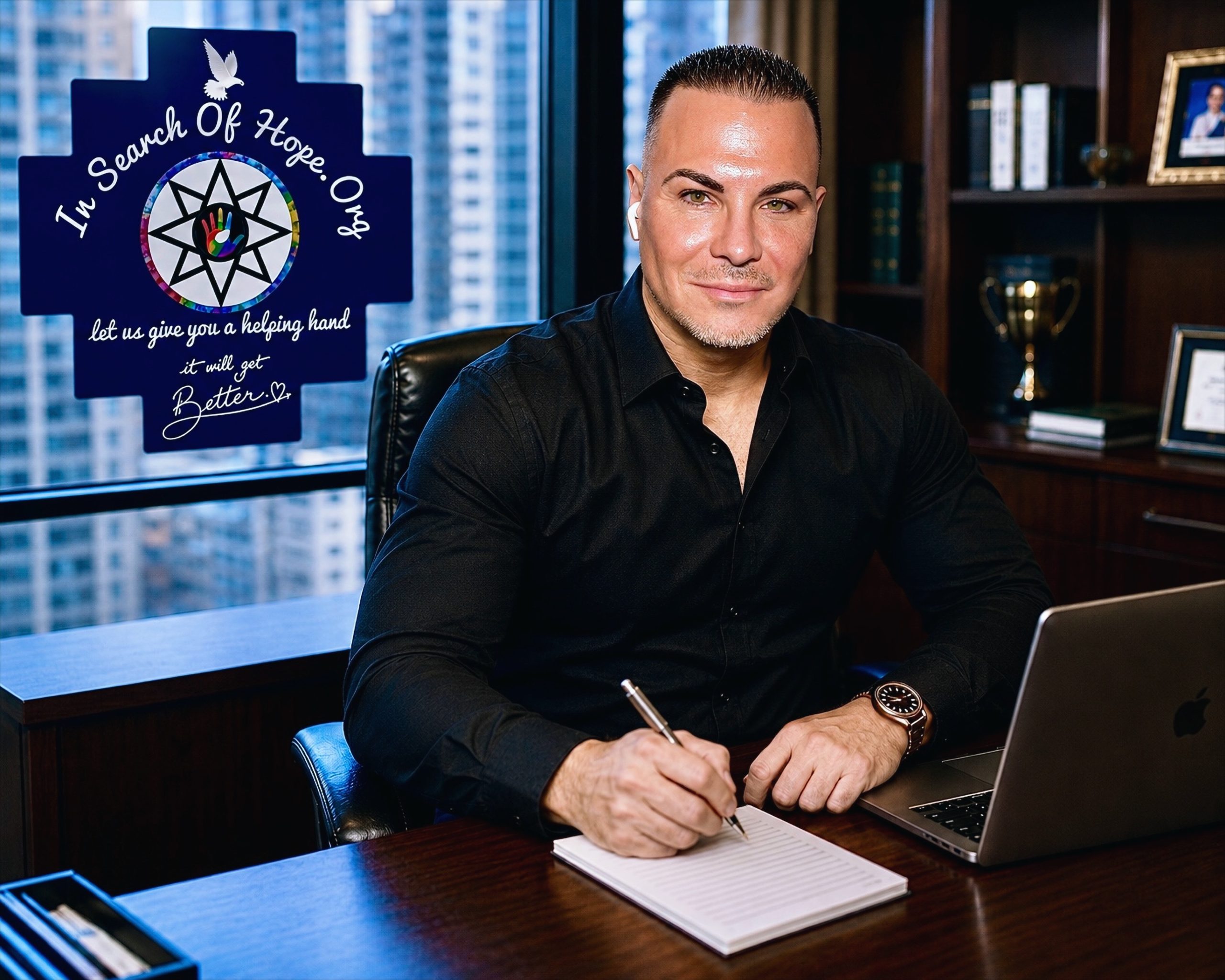
For Frank Vasquez, songwriting is not a slogan about healing; it is one part of a much larger rebuilding process. The Trenton singer-songwriter and producer has lived through a hit-and-run and traumatic brain injury, then carried the lessons of recovery into music, social work, relationship books and In Search of Hope, the nonprofit he founded to help underserved people understand the systems shaping their lives.
Exposed Vocals caught up with Frank Vasquez following the release of Seven Deadly Obsessions to talk about emotional truth, the difference between documenting pain and understanding it, the discipline of producing his own work, and why hope does not require denying what happened.
You describe songwriting as therapy rather than a tagline. When did writing songs first become something you depended on rather than simply enjoyed?
There wasn’t one exact moment when I decided music would become therapeutic. It developed as I realized there were emotions I could understand internally but couldn’t always explain adequately in ordinary conversation.
After everything I had experienced—physical trauma, loss, relationships, heartbreak, recovery—there were feelings that needed somewhere to go, and writing gave them that place.
Eventually, songwriting became less about making a song and more about translating an emotion. Sometimes I could take something painful, put it into words and melody, listen back to it, and experience it differently. The pain wasn’t necessarily gone, but it was no longer trapped inside me in the same way.
That is what I mean when I describe music as therapy. I don’t mean that it replaces professional therapy. I mean that creative expression became one of my personal coping mechanisms—a way to process feelings and pain, and sometimes find a little light inside something very difficult.
After the traumatic brain injury you mentioned, what changed most about the way you approached creativity and rebuilding your day-to-day life?
Almost everything had to be reconsidered.
Before the accident, I had a very different understanding of myself and what my future would look like. After the hit-and-run and traumatic brain injury, I had to deal with physical limitations, cognitive changes, communication difficulties, depression, and the reality that I wasn’t simply going back to my previous life.
Recovery taught me to appreciate progress differently. Things that once seemed small became accomplishments. I also became much more conscious of how fragile identity can be. If you lose abilities, relationships, plans, or pieces of the person you thought you were, you eventually have to ask: Who am I now?
Creativity became part of answering that question.
I learned that rebuilding isn’t always about becoming the person you were before. Sometimes it is about accepting what has changed, discovering what remains, and building something meaningful from there. That philosophy eventually influenced my education, my social work, In Search of Hope, my books, and especially my music.
Heartbreak and healing are recurring themes in your music. What have you learned about writing honestly without turning a song into a diary entry?
That’s an important distinction.
The emotion may be autobiographical, but the song shouldn’t require someone to know my biography in order to feel it. I may begin with something extremely personal—a memory, rejection, longing, regret, love, or something I wish I had said—but then I ask what is universal inside that experience.
Instead of writing, “Here is exactly what happened to Frank,” I want the listener to hear the song and think, “I’ve felt that.”
That’s when personal experience becomes art.
I also don’t believe healing means pretending something didn’t hurt. Sometimes the most honest line is uncomfortable. But honesty doesn’t require exposing every private detail—you can tell the emotional truth without telling every factual detail.
When you produce your own work, how do you know when an emotional performance is finished rather than simply technically correct?
Technical perfection and emotional truth aren’t necessarily the same thing.
A vocal can be perfectly timed and perfectly pitched and still leave me feeling nothing. Another performance may contain a little imperfection—a breath, some rasp, a hesitation, a slight break in the voice—and communicate much more.
I listen for whether I believe myself.
If I’m singing about heartbreak but it sounds like I’m reading instructions, it isn’t finished.
I pay particular attention to phrasing, breathing, dynamics, and where the voice becomes vulnerable. As a baritone, I don’t need to prove something by constantly reaching for higher notes—sometimes staying low, close, and intimate communicates much more.
When I stop analyzing the performance and start feeling what the song is saying, I’m usually getting close.
“Pain and hope can exist at the same time.”
What does the current Spotify release reveal about you that an older song would not?
Growth and greater self-awareness. Seven Deadly Obsessions, released September 17, 2026, is the clearest example of that so far—especially “The Version I Keep,” the song I chose to lead with because it captures where my writing is now emotionally and psychologically.
My newer work has become more intentional about the relationship between lyric, vocal delivery, arrangement, and psychology. I’m not simply asking whether a song sounds good anymore. I’m asking why a particular instrument enters at a particular moment, why the vocal should become intimate here, why silence belongs there, or why the chorus needs to feel emotionally different from the verse.
The newer music also reflects someone who has become more comfortable allowing vulnerability and strength to coexist.
Earlier work might have documented an emotion. The newer work tries to understand it.
You’re also an author of relationship books. Does writing long-form prose change the way you think about lyrics, structure or emotional clarity?
Absolutely. My books and songs approach some of the same human questions from opposite directions.
In long-form writing, I can examine an idea, explain its psychology, provide context, and develop it over many pages. A song may give me three or four minutes. That limitation teaches discipline—if I need an entire paragraph to explain a lyric, the lyric probably isn’t finished. I have to find the few words that carry the emotional weight of the larger idea.
Writing The Heart Recovery Guide and 10 Steps to a Healthy Relationship has also made me more conscious of emotional progression. Whether you’re writing a chapter or a song, people need movement: where are we beginning emotionally, what are we discovering, and where are we by the end?
How did your literacy nonprofit begin, and what part of that work has changed your understanding of communication?
In Search of Hope grew from lived experience and a desire to help people who can easily become invisible when they’re struggling.
Literacy and education are important parts of the organization, but our mission has expanded beyond traditional literacy—we work around community education, preventive mental-health awareness, legal literacy, advocacy, and practical resources, helping underserved people better understand the systems and circumstances affecting their lives.
The organization was also influenced by my own recovery and by meeting people whose struggles changed the way I understood resilience.
One lesson that has stayed with me is that communication isn’t simply giving someone information.
You can speak perfectly and still fail to communicate.
People need to feel that they are being heard, respected, and understood. Legal information, mental-health concepts, or relationship advice are useless if we communicate them in language people cannot connect with.
That lesson affects my social work, my books, and my songwriting.
Trenton has its own musical and cultural identity. How has where you come from shaped the way you see yourself as an independent artist?
Trenton exposes you to very different realities existing close together—different cultures, economic circumstances, struggles, languages, generations, and ways of seeing the world. That has influenced me more as a person than as someone trying to fit into a particular musical category.
I don’t want my music to belong only to one demographic. Pain doesn’t ask your race before it hurts you. Heartbreak doesn’t check your gender. Loneliness, love, grief, hope, and the need to belong cross cultural and social boundaries.
I may tell a story from my own perspective, but I want the emotional doorway to remain wide enough for someone very different from me to walk through it.
What has been the hardest part of rebuilding an independent music career around a life that already includes writing, nonprofit work and recovery?
Time, resources, and accepting my limitations.
I’m balancing recovery and disability with being a father, nonprofit founder, social-work professional, author, and independent musician. Each of those could consume someone’s entire life.
There are days when my ambition is greater than what my body or mind will allow me to accomplish. I’ve had to learn that consistency doesn’t always mean moving at the same speed every day.
Being independent also means learning things that have little to do with writing a song—production, distribution, promotion, visual presentation, technology, and the business side of music.
But there is also freedom in that. I’m not building this career because somebody told me what Frank Vasquez should sound like. I’m discovering it.
If someone discovers Frank Vasquez through this interview and listens to one song afterward, what do you hope they understand about the person behind it?
That the person singing has lived what he is trying to communicate.
I don’t want someone to hear my music and think, “This man has everything figured out.” I don’t.
I want them to recognize someone who has been hurt, loved, lost, made mistakes, questioned himself, rebuilt pieces of his life, and continued moving forward.
Perhaps most importantly, I want someone who is struggling to understand that pain and hope can exist at the same time.
You don’t have to deny what happened to you in order to move beyond it.
Sometimes you write it. Sometimes you sing it. Sometimes you talk about it. Sometimes you help somebody else through it.
But you keep moving.
That is the person behind the music.
Signal this interview
Send it up if it hit, down if it missed. The most engaged pieces surface on Signal.
Keep reading
Back to Interviews ↗
From this section
Harry Kappen on After the Crossing, Finding Balance and the Meaning of Home — EV Interview
October 20, 2026
From this section
Exposed Vocals Interview: Taylor McCluskey on Live Rooms, Glen Robinson and Remembering Susan Moss
October 20, 2026
From this section