Found in the Inbox: Five Independent Artists That Made Us Stop and Listen
In this story
Found in the Inbox • Issue No. 1
Five submissions, five different reasons to press play—from digital-age heartbreak and defiant self-belief to Bay Area thrash, unfinished relationships and a long-awaited return.
The inbox never really closes. Every week brings another stack of links, one-sheets, private streams and promises that the next song will be the one we cannot ignore. These five gave us a reason to stop scrolling.
Found in the Inbox is not a chart and it is not a contest. It is a recurring Exposed Vocals column for independent music that creates a reaction—a lyric that lands, a story that reframes the song, a performance that carries history, or an artist whose sense of identity is becoming impossible to miss.
This first edition moves across pop, R&B, progressive thrash and rock-and-soul songwriting. The selections do not sound alike, and that is precisely the point. Independent music is not a genre. It is the enormous space where artists make decisions before the wider industry decides whether to pay attention.
Here are five artists worth hearing this week.
Cathleen Ireland — “Do You Care”
There was a time when the end of a relationship meant distance, silence and perhaps a box of photographs pushed into the back of a closet. Now heartbreak has an interface. Someone can disappear from your messages, block your account and erase the visible evidence that you were ever part of the same life.
Cathleen Ireland builds “Do You Care” around that uniquely modern form of uncertainty. The Pittsburgh singer-songwriter is not only asking whether a former partner still feels something; she is confronting the unsettling gap between being removed digitally and remaining emotionally attached. Blocking can end access. It cannot command memory to follow.
That tension gives the song its strongest idea. Ireland pairs vulnerability with resistance, refusing to let rejection become the final definition of the relationship or of herself. Her music has long crossed pop, R&B, rock and adult-contemporary territory, and this subject gives those instincts a useful center: the hook can move, but the question underneath it remains uncomfortable.
Why it made the cut“Do You Care” recognizes that digital disconnection has not made heartbreak cleaner. It has only given people new ways to leave while giving the person left behind more places to search for an answer.
Sofia Gillani — “Don’t Forget Yourself”
“Don’t Forget Yourself” sounds like advice, but Sofia Gillani treats it as a command. The song pushes back against the slow process of becoming smaller for other people—the pressure to soften an ambition, dilute a personality or trade self-belief for acceptance.
The track first appeared on Gillani’s album Reconceptualize in May before receiving its own single and video campaign in August. That distinction matters because the song is not being introduced as a disconnected new idea. It is being pulled forward from a larger body of work as the statement Gillani wants listeners to carry with them.
Her approach brings avant-pop ambition into contact with drill-influenced rhythmic choices, while her delivery moves between melody and rap-shaped phrasing. What holds those elements together is not a neat genre label but attitude. Gillani writes, produces and promotes her work with a conspicuously independent hand, and the song’s message feels inseparable from that process.
Why it made the cutThe title works as both a personal reminder and an independent-artist manifesto. Gillani is arguing for self-preservation without confusing it with passivity.
Blind Illusion — “Smash the Crystal” (Live)
Discovery columns naturally lean toward youth and novelty, but independent music also includes artists protecting a history that never fit neatly inside the mainstream. Blind Illusion formed in the Bay Area in 1978, and “Smash the Crystal” reaches back to the band’s landmark 1988 album, The Sane Asylum.
The new version comes from Stage Flight: Live at the UC Theatre, recorded in Berkeley on April 25, 2025. The performance reunited the band with original vocalist David White during a night tied to Exodus’ Bonded by Blood celebration. Rather than presenting the catalog as sealed history, the recording puts it back where this music earns its meaning: in a room, at volume, in front of an audience.
“Smash the Crystal” is one of two advance tracks available publicly before the October release. It also provides the clearest bridge between the forthcoming live album and the record many listeners associate most strongly with Blind Illusion. That makes it more than an archival selection. It is evidence that underground music can survive lineup changes, lost years and changing scenes when the material still gives musicians a reason to return to it.
The complete eight-track live album arrives October 16, 2026. “Smash the Crystal” is available to stream now through the band’s official Bandcamp page.
Hear It on BandcampWhy it made the cutThis is not nostalgia included for its own sake. It is a living connection between the first wave of Bay Area progressive thrash and the audience still willing to meet that music on its own uncompromising terms.
Calla — “Halfway”
Relationships are often retold by whichever person speaks first. Calla’s “Halfway” begins with the need to answer back.
The song was written after an ex released music about the effort he believed he had put into their relationship. Calla saw another version of the story: a connection suspended somewhere between casual dating and actual commitment, with one person being asked to accept uncertainty as though it were enough. Her response is not simply that the relationship ended. It is that showing up incompletely still has consequences.
“I’m writing my version of the story,” she says in the release announcement. That sentence gives “Halfway” its editorial reason for being here. The point is not to determine which former partner wins an argument the audience cannot independently judge. The point is that songwriting gives both people the right to articulate what the relationship felt like from where they stood.
The Texas-born, Nashville-based artist brings a performance background shaped by music and movement. She competed in hip-hop dance, appeared on Season 24 of The Voice as a member of Gwen Stefani’s team, and later continued developing as a songwriter through a publishing deal and a HYBE writing camp. “Halfway” now introduces her forthcoming EP, Between 10PM & 4, a project centered on relationships, independence, faith and self-worth.
The promotional listening link supplied to press remains private and is intentionally not reproduced here. Follow Calla through her public channels for the release.
Why it made the cut“Halfway” understands that reclaiming a narrative does not require having the final word. Sometimes it means refusing to let somebody else’s version become the only one that exists.
Barth Beasley — “I Used to Be”
Barth Beasley’s return after eight years could have been introduced with a grand declaration. Instead, “I Used to Be” turns toward something intimate: two longtime friends gradually recognizing that the relationship they had been searching for may have been present all along.
It is a fitting premise for an artist whose career has been shaped by both movement and interruption. Beasley’s musical education stretched from church and classical piano to soul, pop and international performance. He later stepped away to raise his children, care for his mother and grieve his father. When songwriting called him back, it did not erase those years. It gave him somewhere to bring them.
Beasley calls his sound “Rock-n-Soul Pop,” a label that reflects the wide musical vocabulary surrounding him from childhood. Yet the value of “I Used to Be” is less about proving a category than honoring emotional patience. Friends-to-lovers songs can feel prewritten because the audience already knows the destination. This one is built around the realization itself: love is not always the dramatic arrival of a stranger. Sometimes it is the moment two people finally recognize who has remained beside them.
Why it made the cutA comeback does not need to announce that nothing has changed. Beasley’s strongest argument is that time away can deepen the life an artist eventually brings back to the song.
Five songs, five different kinds of independence
Independence can mean controlling every part of a visual identity, as it does for Sofia Gillani. It can mean reclaiming your side of a story, as Calla does. It can mean turning modern heartbreak into a song, protecting decades of underground history, or returning to music after life demanded your attention elsewhere.
The common thread is not budget, genre or career stage. It is intention. Each artist has identified something worth preserving—a voice, a memory, a catalog, a boundary or a second beginning—and built music around it.
The inbox will fill again tomorrow. These are the five reasons we are glad it does.
Keep reading
Back to Found in the Inbox ↗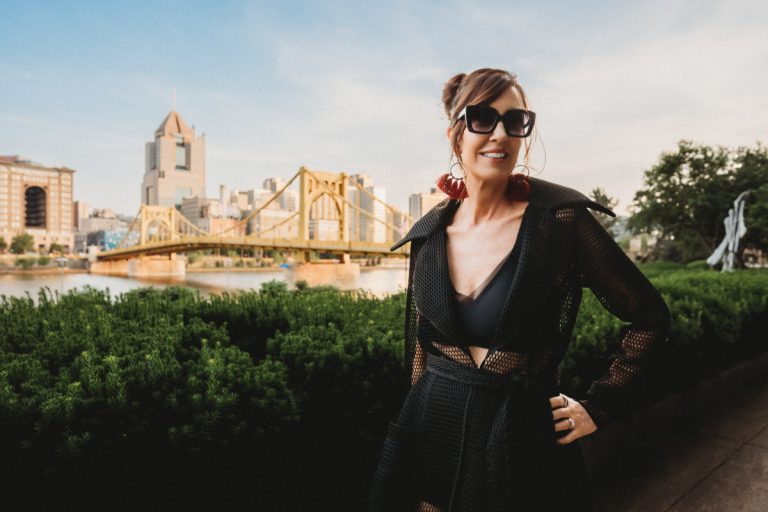
Also featuring this profile
Cathleen Ireland — Coastin’: Found in the Inbox
October 19, 2026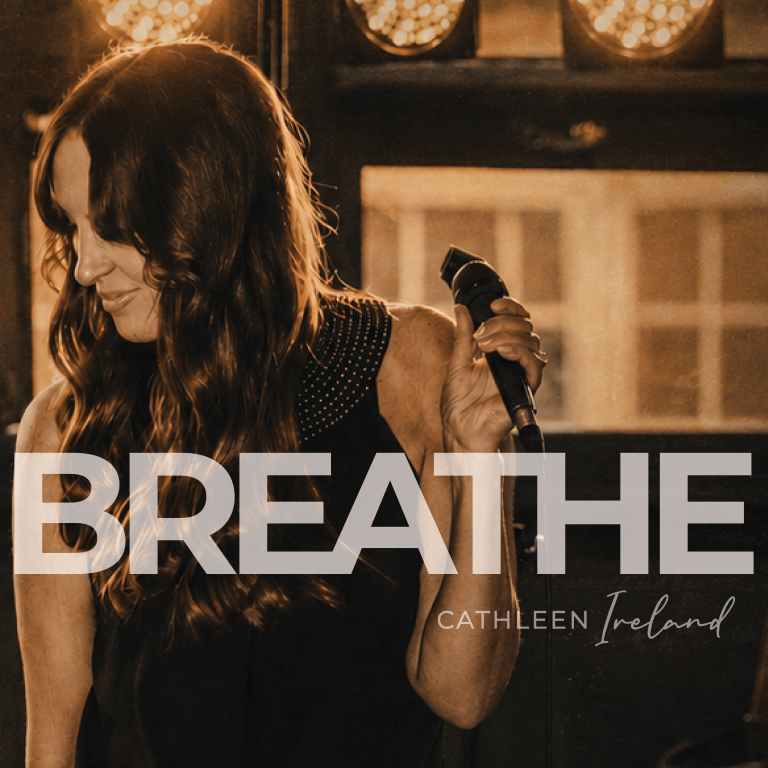
Also featuring this profile
Cathleen Ireland — Breathe: Found in the Inbox
October 19, 2026
From this section