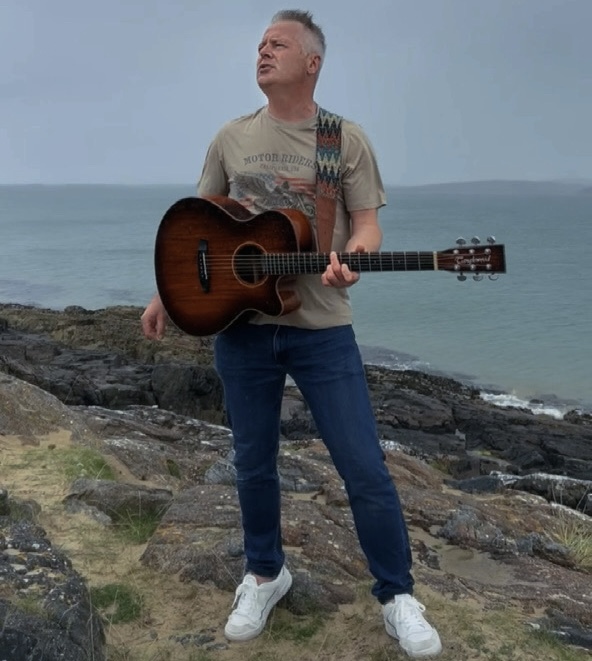
Photo supplied by The Sound Lab.
A first cover as a statement
Dysmusia’s submission to Exposed Vocals is brief, but it contains a specific decision worth exploring. Show Me The Way To Go Home is described as the Irish musician’s first cover release. The campaign supplied by The Sound Lab presents it as a longstanding pub song reworked in a folk-rock setting, placing a familiar title inside the artist’s own musical identity.
The word first matters here. Choosing an existing song is a different kind of introduction from writing a new one: the artist begins with material that already carries a history and asks how it can belong in the current project. The campaign does not provide a detailed account of the recording choices, so this feature does not invent changes in tempo, instrumentation or arrangement.
What it does provide is a geographical and stylistic starting point. Dysmusia is based between Antrim and Dublin, with his supplied biography connecting Antrim folk traditions to a more contemporary indie-rock edge. Rural roots and city creativity are the two settings used to describe that identity.
Antrim and Dublin in the artist’s introduction
Those places offer a useful context for a song whose title turns toward home. That connection is an editorial question raised by the campaign, rather than a claim about the artist’s private motivation. The source does not say whether he chose the song because of a particular journey, memory or relationship, and the distinction leaves room for his own account.
The campaign calls the original a century-old pub song and describes the new treatment as a folk-rock anthem. The age and musical description are presented here as supplied context, without treating promotional language as an independent assessment. For listeners, the official artist channel is the place to hear how the announced combination actually takes shape.
The current submission also gives the recording an ISRC, QT9XF2680757, connecting the familiar title to a particular release. That identifier is a small but concrete piece of context: the campaign concerns Dysmusia’s version, rather than the song in the abstract or another performer’s recording.
Following the work beyond the title
A first cover can also offer a route back to an artist’s original work. It provides a point of recognition for someone who has not encountered the name, while raising questions about which parts of the musician’s voice remain consistent across borrowed and self-written material. The available sources introduce that possibility without settling it.
The next useful conversation with Dysmusia would be about why this became the first cover, which elements he wanted to preserve and where the folk and indie-rock instincts met during recording. For now, the campaign gives an Irish artist a focused introduction: a known song, a clearly stated new setting and a musical identity shaped between Antrim and Dublin.
Artist and recording background is drawn from the campaign materials supplied by The Sound Lab.