Eivør on Tungl, a Round House on the Faroes and Reaching the Other Side
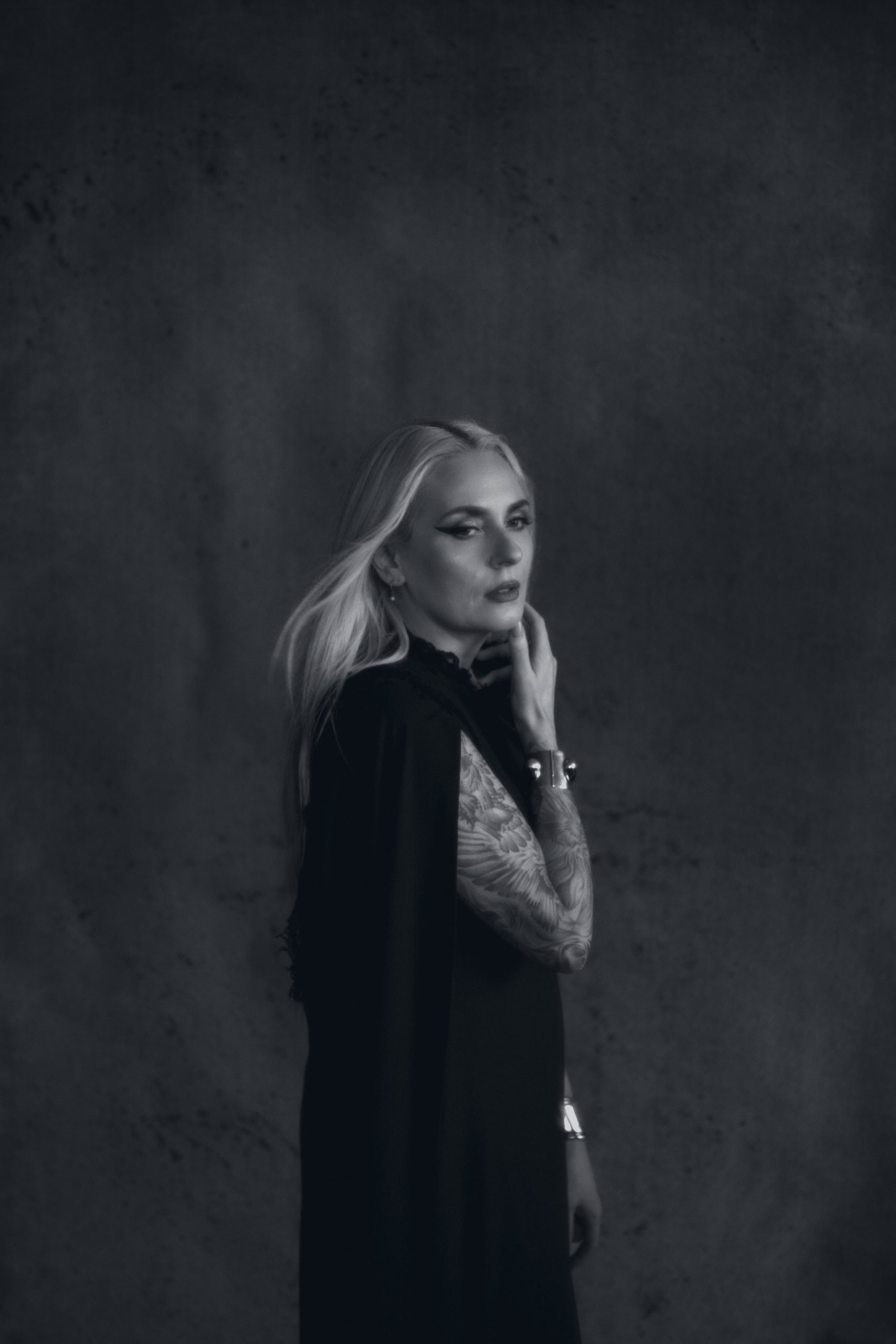
Faroese singer-songwriter Eivør made her album Tungl with her full band in a round house on the Faroe Islands, recording through two weeks of a stormy Nordic winter. Exposed Vocals first featured the album in Found in the Inbox. Here she talks about why the moon became the album’s title, rebuilding “Verjugarðar / Walls” from only its vocal melody, how “Hinumegin / The Other Side” turned from darkness to light, growing up in Syðrugøta, moving between Faroese and English, and what her work on The Last Kingdom and the God of War games brought back into her own songs.
Tungl takes its name from the moon. Was there a particular moment when that image became the right way to hold these songs together?
Eivør: Towards the end of making the album, I took some time to reflect on the themes of the songs and the overall mood of the music, which I had been living inside for quite some time.
It’s a bit like building a house and then finally stepping outside to see what you’ve created, to see its full shape for the first time. That’s when the title TUNGL came to me.
On this album, the moon represents our inner world, the light in the darkness, and the many emotional phases we move through in life.
You recorded with the full band in a house on the Faroe Islands. Can you take us inside one session when the room or the musicians changed where a song was going?
Eivør: Recording these songs was an experience like no other. The main studio in the Faroe Islands had just closed down, and a dear friend generously lent us her incredible house, which we transformed into a magical little studio cave for two weeks.
It’s no ordinary house. It’s round, almost like an igloo, with a beautiful, high, oval ceiling. We knew we could capture some wonderful sounds in there.
It was the middle of a dark and stormy Nordic winter, but inside there was this beautiful sense of calm as we sat in a circle, playing and recording together.
It was the perfect setting for this album, and in many ways, it felt like home.
What did you choose to leave in those performances that you might have corrected in a more controlled studio setting?
Eivør: Most of what we recorded in that house became the foundation of the album. We really wanted to make the most of the room and capture the energy of us playing together.
Later, we added strings, vocal harmonies, synths and other electronic elements, but the heart of these songs comes from those two weeks.
I think there’s something beautiful about capturing a moment rather than trying to make everything perfect.
Your music brings folk traditions and electronic production into the same space. On Tungl, how did you decide which sounds needed a human touch and which needed something less familiar?
Eivør: My creative process is very instinctive. I tend to follow whatever I’m drawn to rather than making too many conscious decisions about where a sound belongs.
My roots in Faroese folk music are a fundamental part of my inner soundscape, but I’ve always been curious about bringing different musical worlds together.
I think I’m constantly searching for that balance between something ancient and deeply rooted, and the excitement of discovering something entirely new.
What did growing up in Syðrugøta teach you about listening that still shapes the way you write?
Eivør: That’s a beautiful question.
One of the many things growing up in a small village by the sea taught me is that there’s music in silence just as much as there is in a storm.
I think that has stayed with me, and perhaps it’s one of the reasons I’m constantly drawn to those contrasts in my music.
When you move between Faroese and English, does the language change the melody or the emotional distance you have from a song?
Eivør: I’ve always thought of languages in terms of sound. To me, switching between Faroese and English is a little like switching between instruments. Each has its own musicality, rhythm and possibilities.
I don’t feel an emotional distance in either language. They simply offer different ways of expressing something.
When I’m writing, I try to let the song tell me which language it wants to be sung in.
Healer, Drekafljóð, Verjugarðar and Spøkilsir offer very different images to a listener. Which of those songs changed most between its first idea and the finished recording?
Eivør: I would say Verjugarðar / Walls changed the most.
I had more or less finished the song, but something still didn’t feel right. So I made a rather bold decision to mute the entire production and keep only the vocal melody.
I started building the song again from scratch, and somehow, that’s when everything finally fell into place.
Your work on The Last Kingdom and the God of War games places your voice inside someone else’s world. What habits from that work have followed you into your own songwriting?
Eivør: The worlds of The Last Kingdom and God of War felt strangely familiar to me, as they’re both deeply connected to Nordic heritage and mythology. I felt I could bring a lot of my own musical world into them.
At the same time, it was a completely new experience to bring emotional depth to a story and a world that already existed.
Working on soundtracks is a little like travelling into someone else’s universe. And when you return from that journey, you’ve learned something new, not only about that world, but also about yourself.
I think those experiences naturally find their way back into my own music.
Tungl’s themes include love, loss and renewal. Is there a song whose meaning shifted for you while making the album, and what caused that shift?
Eivør: There’s one song in particular where the lyrics changed quite dramatically during the process: Hinumegin / The Other Side.
Originally, it was a much darker song about moving through darkness. But once we’d recorded the music, I realised it wasn’t really about being inside the storm. It was about reaching the other side.
That completely changed the ending, and the final verse became this explosion of light.
I like to leave a little mystery in my songs, to give them room to breathe, grow and even change meaning over time.
When you bring this music to a live audience, what do you want to preserve from the house sessions—and what are you happy to let change?
Eivør: I always find it fascinating to see how songs evolve when you take them on the road. Recording in a studio and performing in front of an audience are two very different experiences.
Some things that work beautifully in the studio don’t necessarily translate to the stage, and vice versa. So I try to stay open to wherever the music wants to go.
Many of my songs expand and change over time, and I love that. No two shows are ever quite the same.
There’s something magical about those unexpected moments that can only happen when you’re completely present with the music and the audience. That’s something I never want to lose.
Photo: Adam Wamsley, supplied by Secret Service PR. Interview answers by Eivør.
Signal this interview
Send it up if it hit, down if it missed. The most engaged pieces surface on Signal.
Keep reading
Back to Interviews ↗
From this section
Exposed Vocals Interview: SONAIRE on Christmas Magic Forever, Christmas WTF?! and the Two Sides of December
November 2, 2026
From this section
Exposed Vocals Interview: Nilo Cosmo on “Not Your Ordinary Boy” and Refusing to Dream Smaller
November 2, 2026From this section