Tim Counts’ Wishing Well Connects Family Memory With the Work of Recovery

Tim Counts did not set out to write a concept EP. The six songs on Wishing Well, released in July 2025, began as individual stories drawn from people and events in his life. Considered together, they reveal a connection that goes beyond a shared Southern setting: the distance between living through something and learning how to tell the truth about it.
The Florida-born songwriter, now based in Fort Mill, South Carolina, calls his approach “Southern Storyteller Rock.” His influences include The Outlaws, Lynyrd Skynyrd and Tom Petty & the Heartbreakers, but the stories he shared with Exposed Vocals are specific to his own experience. A grandmother’s resilience, a former employee, a romance linked to an old British car, and his history of addiction and sobriety each provide a different point of entry.
Six songs from one life
In Counts’s account, the title track follows the beginning and escalation of his drinking and drug use. “Doin Fine” approaches the same history through a direct comparison between life before and after sobriety. Those subjects give the EP two different perspectives on change: the slow accumulation of choices and the possibility of looking back on them from somewhere else.
“He’s Alright” draws on a man who worked for Counts years ago, whose heavy drinking coexisted with an apparently untroubled way of getting through the day. Placed alongside the autobiographical songs, that character raises a useful tension. The outside appearance of coping does not necessarily reveal what a life contains. Counts can recognise a story in another person without treating that person as a substitute for his own.
“Orange Blossom Baby” takes its starting point from the woman who sold him a 1970 MGB. The relationship ended; the car remained. It is a small, concrete piece of history, but precisely that sort of detail gives a personal song somewhere to live. The EP’s concerns extend to affection, humour and the ordinary objects that outlast a chapter of our lives.
Keeping family history in view
Readers who encountered our earlier “Appalachian Girl” feature and interview will recognise another strand of Wishing Well. That song honours Counts’s paternal grandmother, while incorporating a few events from her sister’s life. He described the sisters as inseparable and explained that the stories were passed down within the family.
The distinction matters. This is remembrance built from testimony and particular lives, rather than a generalized picture of Southern endurance. Counts wanted to draw attention to women whose strength supported families and communities while receiving too little recognition. Within the wider EP, that family memory creates a counterweight to the songs about personal damage: a life includes the people who helped shape it, as well as the things its narrator must answer for.
Writing from inside the difficult years
“Dancin With the Devil’s Daughter” addresses what Counts describes as the hopelessness of alcoholism and addiction; he identifies the title’s central figure with cocaine. The lyric sheet he supplied uses religious imagery and repeated attempts at escape to describe a narrator who cannot find relief. Its movement returns to the same distress rather than supplying a convenient resolution.
That is a meaningful difference from “Doin Fine,” with its before-and-after perspective. A writer who has reached sobriety can still describe a point when that outcome was unimaginable. In his earlier interview, Counts spoke about gratitude for surviving and the hope that sharing difficult experience might help someone else recognise the possibility of change. The songs do not all have to occupy the same emotional moment for that larger purpose to be present.
Counts also said these pieces were written separately, with stylistic variety, rather than fitted to an album plan. The connection across Wishing Well comes from their author’s attention: to people he remembers, choices he can now examine, and details too personal to exchange for a generic story. Revisiting the complete EP offers a wider view of the songwriter introduced by “Appalachian Girl”—one in which recovery and family history belong to the same continuing life.
Artist-supplied photograph, used with Tim Counts’s permission. This feature draws on Counts’s correspondence, the lyric sheet he supplied and his earlier Exposed Vocals interview.
Keep reading
Back to Found in the Inbox ↗
From this section
Found in the Inbox: Phoebe Rea Finds Her Grandad in Everyday Life on “Meet Me There”
October 23, 2026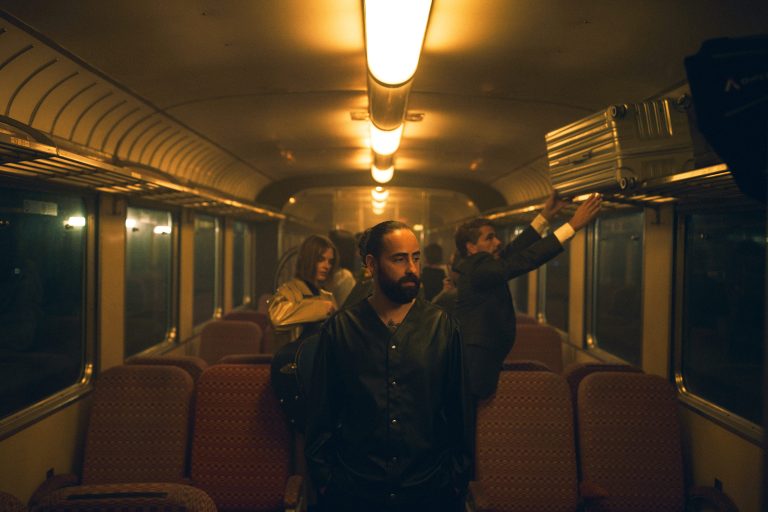
From this section
J.MYSTERY’s “Drifting Away” Asks How Love Survives Emotional Distance
October 23, 2026
From this section