Tim Counts Finds Truth in Southern Storytelling on Appalachian Girl
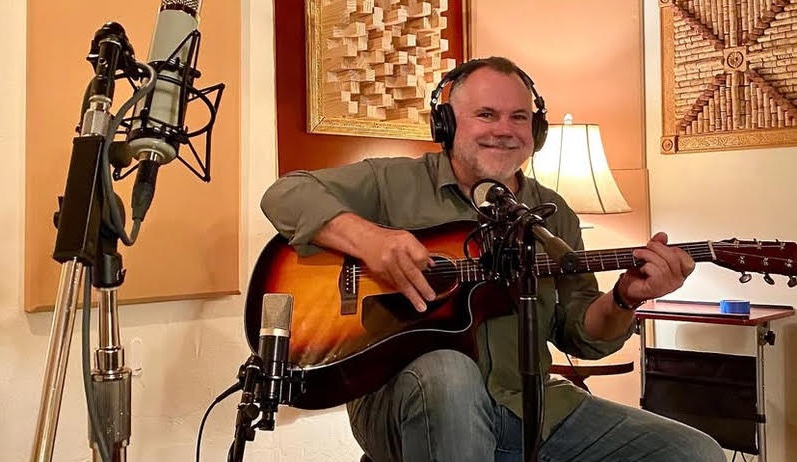
Tim Counts
Appalachian Girl
Some songs feel written. Others feel remembered. Appalachian Girl sounds like somebody opening an old family photo album and realizing the people inside it built more than just a family — they built an entire way of life.
There is a quiet confidence to Tim Counts that makes this music work. Nothing about Appalachian Girl feels manufactured or overly polished. It is Southern storytelling in the oldest sense of the phrase — lived experience turned into song by somebody more interested in honesty than perfection.
That distinction matters. In an era where so much Americana and Southern rock can feel performative, Tim Counts sounds genuinely rooted in the culture he writes about. You hear it in the details: family cemeteries, tattered quilts, Depression-era resilience, addiction scars, old Southern towns slowly changing around the edges. None of it sounds borrowed because none of it is.
Appalachian Girl succeeds because it never tries to mythologize its subject. Tim’s grandmother is not presented as some untouchable Southern archetype. She feels real — mischievous, resilient, faithful, scarred by hardship, and impossible not to admire. The song carries the weight of memory without drowning in nostalgia.
The strongest writing often comes from specificity, and Tim understands that instinctively. The imagery throughout the song feels inherited rather than invented. Even the most cinematic moments — like the backhoe striking a coffin during a family burial — land with emotional force because they actually happened.
That truthfulness becomes the emotional engine of the entire track. Appalachian Girl is not trying to reinvent Southern rock. It is trying to preserve something worth remembering before it disappears.
Appalachian Girl feels less like a performance and more like somebody sitting on a porch trying to make sure family history does not get lost.
The musical DNA here is unmistakable. You can hear echoes of Lynyrd Skynyrd, Tom Petty & The Heartbreakers, The Outlaws, and Blackberry Smoke woven throughout the record — not as imitation, but as lineage.
Tim describes his style as “Southern Storyteller Rock,” and honestly it fits perfectly. The arrangements avoid unnecessary flash. The guitars breathe. The production leaves room for imperfections, which ends up becoming one of the project’s greatest strengths.
Producer and engineer Rob Tavaglione deserves credit for understanding exactly what this music needed. Instead of sanding away every rough edge, he preserved the humanity inside the performances — the breaths, squeaks, and imperfections that remind you these are real musicians playing real songs rooted in lived experience.
That rawness gives Appalachian Girl its identity. The song never sounds trapped in nostalgia because the emotional core still feels present and alive.
What makes Tim Counts compelling is not technical perfection. He admits himself that he is not a formally trained vocalist and only considers himself an “adequate guitar player.” But that humility is exactly what gives these songs their gravity.
There is a long tradition of Southern music where emotional truth matters more than precision, where scars become part of the storytelling rather than something to hide. Tim’s openness about addiction, recovery, gratitude, and second chances gives the music a groundedness that cannot be faked.
Appalachian Girl ultimately feels like a song written by somebody who survived enough life to finally understand what is actually worth saying.
Appalachian Girl is a tribute to my grandmother. I borrowed a couple of the events from her sister’s life as well. They were inseparable and got into some pretty healthy mischief as I understand it. The whole song is true as each of the little stories were told to me by my grandmother.
She grew up in Appalachia and was one of the toughest, strongest people I’ve ever known. She lived through the Great Depression and was a breast cancer survivor back in the 70s. She was the very definition of a strong, faithful, southern woman.
All too often it seems that the women of that area and that era are overlooked. Their strength and resilience were the bedrock of many families and communities. I wanted to tell a little bit of her story and shine a little light on her and her contemporaries that literally helped build America and the Americana culture.
I grew up listening to Lynyrd Skynyrd, The Outlaws, Molly Hatchet, Henry Paul Band, Tom Petty And The Heartbreakers and all the other southern rock bands of the 70s and 80s. While my stuff isn’t over-driven Florida Guitar Army, all the songs are true stories born from southern culture.
The sound and the stories are just how they came out. I guess when you listen to that stuff so much as a young man it just kind of gets deep-rooted, and you can’t help but sound that way.
Alcoholism and addiction absolutely left me with many scars. I’m not embarrassed by them anymore. I can’t say that I am proud of what caused those scars but I am proud of the fact that I’m still here and clean sober.
If somebody can relate to the pain in some of these songs about the other side of the bridge, and then believe me when I say there’s happiness and joy on this side of the bridge, maybe that will plant a little seed.
Could be any of these. I’ll get a little snippet of a tune in my head. But I have to get it recorded on my phone immediately or it will be lost forever.
Sometimes a tune will just pour out of nowhere. I don’t know where all that comes from. I create the visual story in my head as it develops. If it gets stupid — and it does get stupid — I’ll trash it and hope nobody saw it.
Well there’s a couple of things about raw and real. I am not a trained vocalist by any means and I am only an adequate guitar player. So I don’t know that I can give you anything other than raw and real.
Rob Tavaglione, my great friend, producer, and sound engineer, did a magical job cleaning me up just enough, but leaving some squeaks and breaths and other little blunders on the album so you know it is real music played by real people.
I just released this EP on vinyl. It’s pretty cool to be able to actually hold the project in your hands. It was just a small pressing in case someone was interested enough to pick it up.
I’ve been writing some songs and playing with some of the folks from the album from time to time. We shall see what 2026 brings.
Signal this review
Send it up if it hit, down if it missed. The most engaged pieces surface on Signal.
Keep reading
Back to Interviews ↗
From this section
Chlorine Beach on Groove Forward, Garage Recording and Their NYC Puzzle Campaign
October 23, 2026
From this section
Substance Abuse on DJ Obi’s “Don’t Get Us Wrong” Remix With Tash of Tha Liks
October 23, 2026From this section