Pink Smoke and Punk: Pussy Riot Storms the Venice Biennale with ‘DISOBEY’
In this story
Disobey
Fifty members. Pink smoke. A pavilion shut down. A music video cut in a cafe the same day. This is not content. This is what it looks like when art still has something to lose.
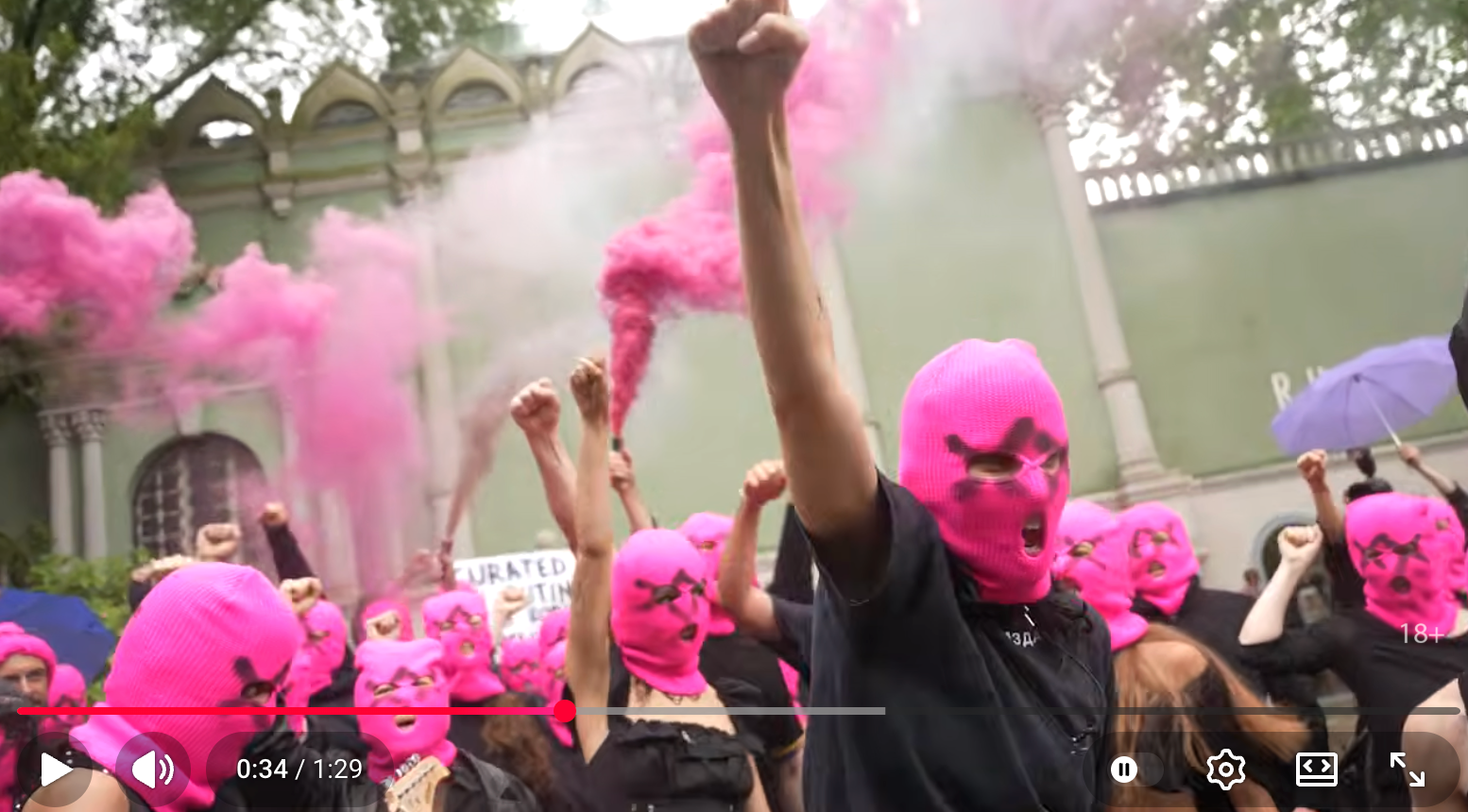
On May 6, 2026, Pussy Riot did what Pussy Riot does — they showed up where they weren’t supposed to be and made it impossible to look away. This time the location was the Venice Biennale, the target was Russia’s controversial return to the international art exhibition, and the weapon was a brand new punk single called “DISOBEY.”
The context matters. Russia’s reappearance at the Biennale has caused a genuine institutional rupture — the EU pulled funding, the jury resigned, protests erupted across the art world. Nadya Tolokonnikova had been working through official channels since March: writing letters, curating exhibitions, getting 71 members of the Parliamentary Assembly of the Council of Europe from 29 countries to sign a written declaration formally condemning the decision. She tried every door. None of them opened.
So they went back to punk. Over 50 Pussy Riot members from around the world descended on Venice, stormed the Russian pavilion with pink smoke alongside Ukrainian performance art group FEMEN, and physically shut the entry to the pavilion in the Biennale giardini. Then they filmed it, edited it on the spot, and released “DISOBEY” the same day.
Tolokonnikova put it plainly: “I’ve been trying to be polite — writing letters via the Council of Europe, writing directly to the board, to the president, to people in the art world, and dead ends everywhere. Polite society doesn’t work when you are dealing with thugs and crooks — so we meet them with punk.”
That turnaround — protest to finished music video in a single day, cut sitting in a Venetian cafe — is worth sitting with. Most artists spend months in post-production. Pussy Riot treated the entire thing as actionist training. The urgency is the point. The roughness is the point. The fact that it exists at all is the point.
“We hope the punks, freaks, and actually anyone who ever felt like fucking screaming to enjoy this song and moment with us.” — Nadya Tolokonnikova
“DISOBEY” is old-school Pussy Riot — bilingual, blunt, and built to be screamed. English verses alternate with Russian lyrics that do not soften anything in translation. The song is not interested in nuance. It is interested in volume, in refusal, in the simple but radical act of telling people to get off the couch and fight.
The hook — “disobey disobey disobey” — is repetitive by design. It is a chant more than a chorus. And the line “I don’t give a shit about this fucking song” is one of the most honest things a protest artist can say: the song is not the point. What you do after hearing it is the point.
disobey disobey disobey
ебаные фашистские ублюдки
— Fucking fascist bastards
убийцы детей, матерей
— killers of children and mothers
im not your fucking jesus christ / im not going to die for your sins
get up from your couch and fight
im so done with your explanations / you say you can’t change anything
disobey disobey disobey
we live at the end of world / i dont give a shit about this fucking song
disobey disobey disobey
For the EV audience — independent artists, people who built something without institutional backing, people who understand that real creative freedom sometimes costs something — Pussy Riot is a reference point worth knowing. They have been jailed, exiled, banned, and ignored. They keep releasing music. They keep showing up.
“DISOBEY” is not their most polished work. It is not trying to be. It is a document of a specific moment, made in real time, released while the smoke was still clearing. That is a different kind of craft — and it is one that a lot of artists who care about independence should pay attention to.
Keep reading
Back to Music News ↗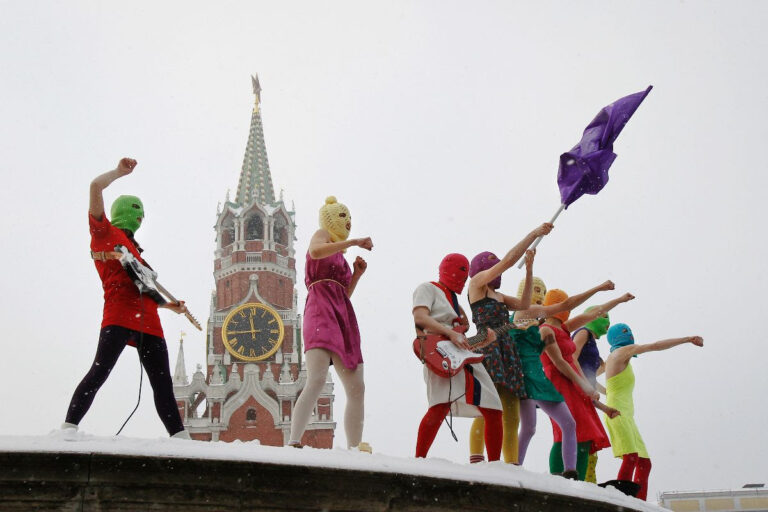
Also featuring this profile