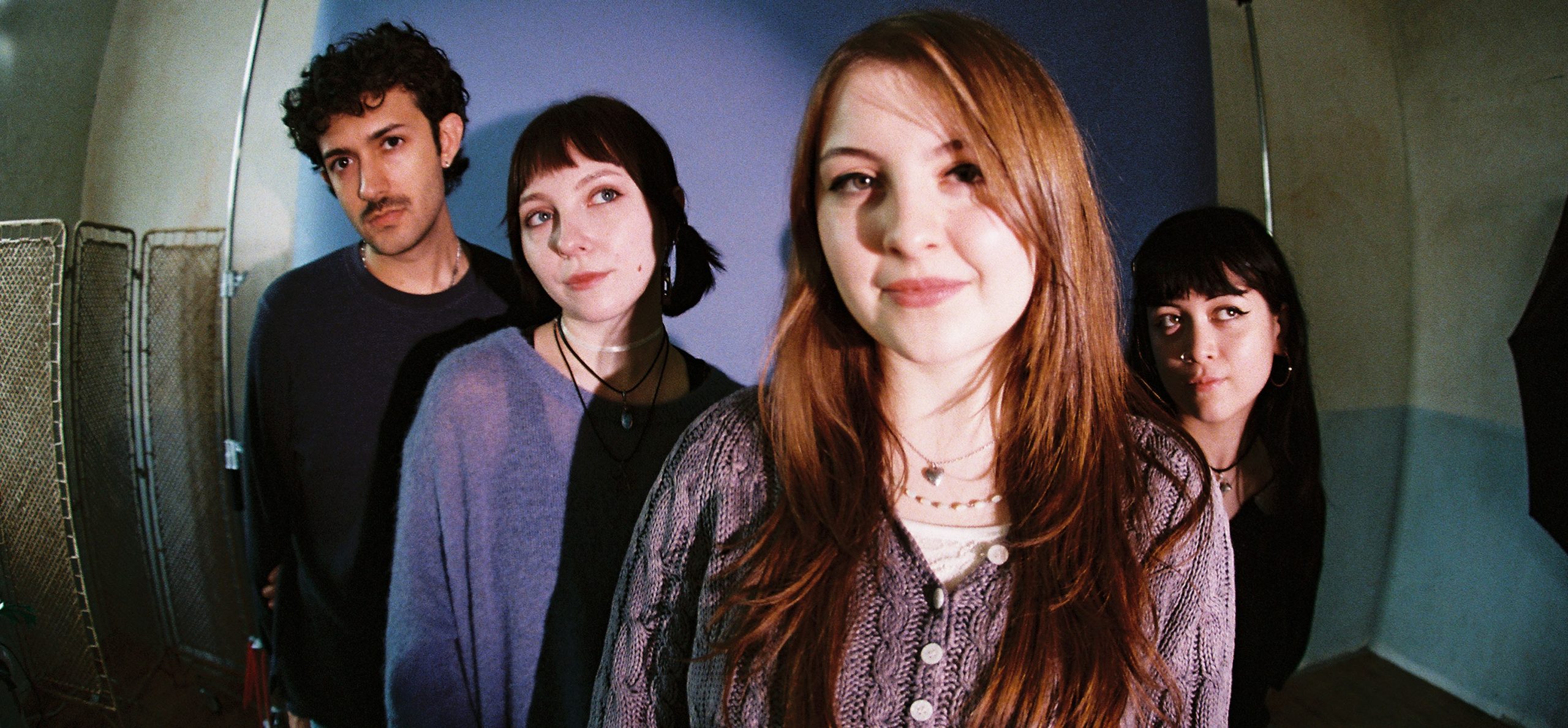
Fiona Tagami started Whisper Doll in her bedroom in Atlanta in high school, falling in love with The Sundays, Mazzy Star, and The Cranberries. She moved to New York, got absorbed into the city’s indie scene, found her bandmates — drummer Shawn Majeed, guitarist Maya Lagman, bassist Julia Chrzanowski — and made a debut album, 2024’s Perfume Garden, that established Whisper Doll as one of NYC’s most quietly compelling acts. Now, two years on and signed to Brooklyn’s Take Care Records, the band returns with “Am I a Knife” — a twinkling, driving, thunderous piece of dream-pop that uses the image of a knife to ask one of the oldest questions about womanhood: if desire is a wound, who made it?
Fiona’s responses are characteristically precise — spare where they need to be, unexpectedly vivid where you don’t expect it. She celebrated the release of the single alone in a park at night, which tells you most of what you need to know about how she works and where this music comes from.
2024
Debut — Perfume Garden
“I just remember feeling like my body was sharp and dangerous and out of my control. Shame is so prevalent — if sexuality is like a wound, who punctured you? Who is to blame?”
— Fiona Tagami, Whisper Doll
EV
Whisper Doll started as a bedroom solo project in Atlanta. What does it feel like now to be releasing music as a full four-piece band rooted in New York City — has the process of making music fundamentally changed for you?
FT
It makes me feel a lot more grounded. I love the community aspect of being involved in a scene, and collaboration makes everything more interesting to me.
There’s something worth sitting with in that word — grounded. Whisper Doll’s sound is anything but: woozy guitars, ethereal vocals, the kind of reverb that makes a room feel larger than it is. But the music comes from somewhere rooted, and the band has given Fiona a foundation that the solo bedroom project, by its nature, couldn’t provide.
EV
You described “Am I a Knife” as your reaction to seeing men get indoctrinated into an ideology that places lust and blame onto women. Where did that anger come from, and what did it feel like to finally put it into a song?
FT
I think the anger of being objectified by society is relatable to most. I don’t think I ever got over the initial period of girlhood when I realized my perception was essentially out of my control. It felt vulnerable to write about it in a song so clearly, but ultimately therapeutic.
The phrase “my perception was essentially out of my control” is the emotional core of the whole record — the experience of understanding, early and permanently, that how you are seen by the world has almost nothing to do with how you see yourself. The song doesn’t rage at that. It examines it.
EV
The title is such a striking image — feeling like a weapon because of the body you’re in. How did you land on “Am I a Knife” as the framing for everything the song is saying?
FT
I just remember feeling like my body was sharp and dangerous and out of my control. I reference religion a bit, so I liked that the shape of the knife mimicked a cross. Shame is so prevalent, and certain ideologies claim sexuality and desire are like a wound. If that is the case, who punctured you? Who is to blame? It’s all so messy and fascinating.
The knife-as-cross image is the kind of detail that makes a song land differently on every listen. It’s not a metaphor explained in a press release — it’s a visual that does multiple things at once: body as weapon, body as religious symbol, desire as wound, and the question of blame rerouted back to where it belongs.
EV
The music video was shot in a gothic church with increasingly intense imagery. How closely did the visual direction reflect what you already heard in the song, and what did collaborating with Owen Lehman bring to that?
FT
Owen is a fantastic director, and their DIY ethos was super inspiring and allowed us to move really quickly. We made that with just the band, Owen, and a friend helping out. Thanks to Owen, we got exactly what I was hoping for.
“I celebrated the release of ‘Am I a Knife’ alone in a park at night by my house. I love the night. It feels so neutral and quiet — a safe space for creative output.”
— Fiona Tagami
EV
You have this analogy about sneaking into a park after hours — the adrenaline, the quiet, the darkness that’s both unnerving and comforting. Is that something you consciously try to manufacture in the music, or does it come naturally?
FT
It comes naturally; I am a chronic night owl. I celebrated the release of “Am I a Knife” alone in a park at night by my house. I love the night. It feels so neutral and quiet, which creates such a safe space for creative output. I write all my songs at night, so perhaps that specific feeling of both comfort and adrenaline shows up in the music because of that. I hope so.
The image of Fiona celebrating a single release alone in a park after dark is more telling than any bio paragraph — it’s exactly the sensibility the music is made from. The night as neutral territory. The dark as creative infrastructure rather than threat. It’s not an aesthetic choice; it’s a way of living that the songs happen to reflect.
EV
Signing to Take Care Records feels intentional — a Brooklyn label with a “no good unless it’s real” ethos. What made them the right home for where Whisper Doll is headed?
FT
I couldn’t have asked for a better home for Whisper Doll. Rob from Take Care is a true music lover and is out at shows almost every night. He’s seen all of my favorite bands from the 90’s multiple times. We think about music in the same ways, and meeting him and joining Take Care Records really grounded me in a community, which is something I’ve craved from the beginning of the band’s journey.
“I experienced a mindset shift after undergoing a very bad few months of mental health — I realized how helpful it is to choose to see the beauty in little things. Being grateful for anything big or small has helped me stay hopeful.”
— Fiona Tagami, Whisper Doll
EV
The sophomore album is the first full-band record and the first made entirely in New York. How does the city actually show up in the music — not just logistically, but sonically and emotionally?
FT
New York and the scene here helped me identify the sound I was chasing. The experiences I’ve had here show up in every aspect of the songs.
That’s a deliberately open answer, and it’s the right one. The album isn’t out yet — the sonic specifics belong to when it arrives. What Fiona is describing is something more foundational: the city as the place where the sound finally became legible to her. New York didn’t give Whisper Doll its aesthetic; it gave Fiona the context to recognize what she’d already been building toward.
EV
You have played shows in the U.S. and Japan. Are there moments on the road that have shaped the way you write or perform?
FT
It helped me realize how important human connection is. It was so exciting to go to different places and see what the different scenes looked like and how music connects and shapes communities. It’s so lovely.
EV
You’ve talked about this new era being about cultivating whimsy and staying hopeful. How do you hold onto that when the music itself is dealing with something as heavy as the male gaze and the detachment of women’s bodies from their own identity?
FT
I experienced a mindset shift after undergoing a very bad few months of mental health and realized how helpful it is to choose to see the beauty in little things throughout my day. I want to always smile at cute dogs on the street or notice pretty patterns in wrought iron gates and window bars. Being grateful for anything big or small has helped me stay hopeful.
Wrought iron gates and window bars. Dogs on the street. A park after midnight. Fiona Tagami’s world is one where the heavy and the lovely coexist without cancelling each other out — where a song about shame and the male gaze gets released in the dark, alone, in a place she loves. The sophomore album doesn’t have a release date yet. Whatever it sounds like, it will have been made by someone who knows exactly what she’s listening for. We’ll be paying attention.