
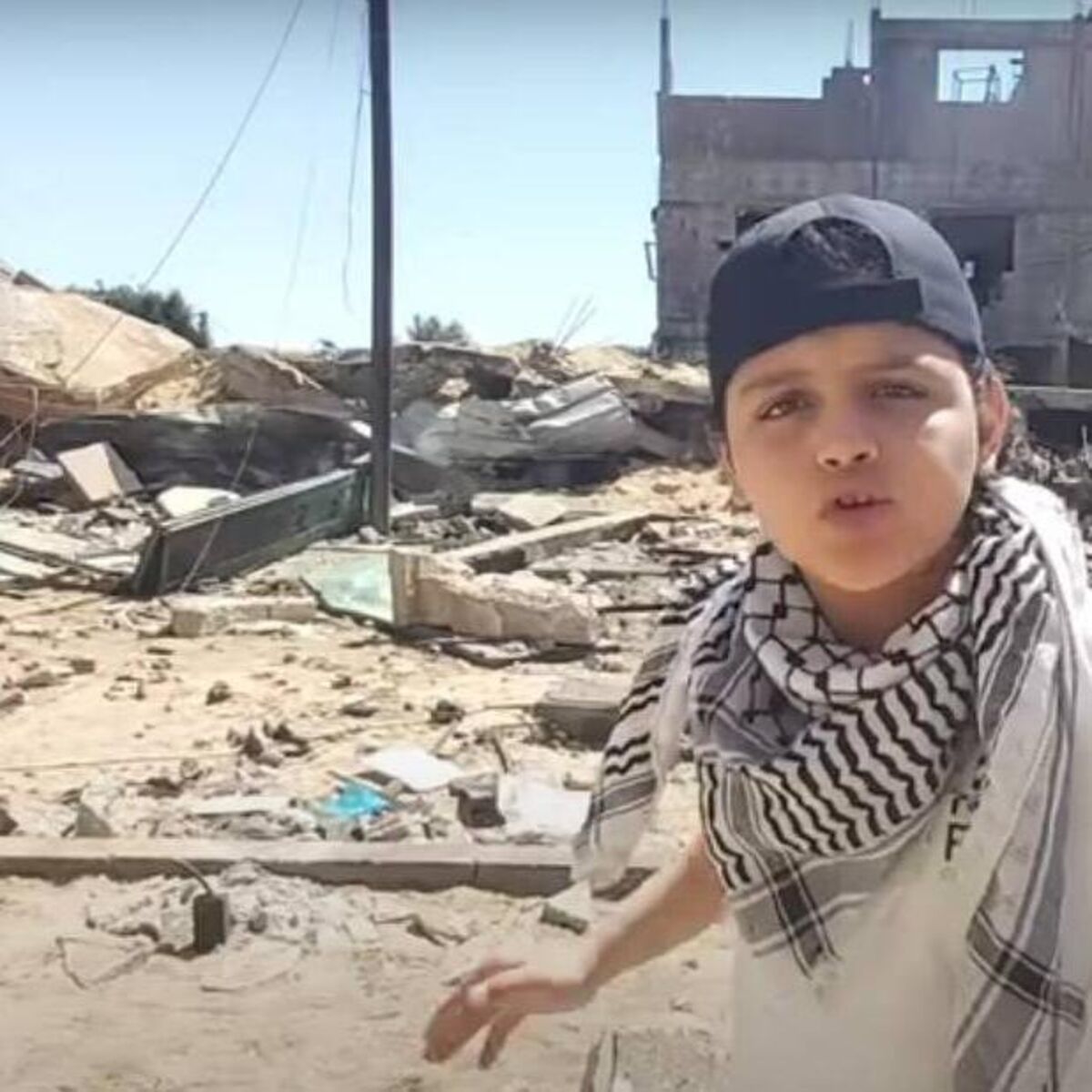
At just 12 years old, MC Abdul (Abdel Rahman Al-Shantti) picked up a mic and did something most artists spend decades trying to do—he made the world stop and listen. With a beat, a phone camera, and bars that hit like truth bombs, this young rapper from Gaza cut through the noise and gave global audiences a raw, unfiltered look at life under occupation.
Abdul didn’t wait for a record deal or studio budget. He recorded his first viral freestyle right outside his home in Gaza City, standing in the street with debris and tension in the background. Spitting over classic hip-hop instrumentals, he delivered verses about drones, displacement, and dignity—lyrics far beyond his years but unmistakably grounded in his daily reality.
What made the world take notice wasn’t just his flow (which, let’s be clear, is solid)—it was the urgency in his delivery, the power in his words, and the contrast between his youth and the heaviness of what he was rapping about. Abdul isn’t just performing—he’s documenting.
Since that first viral moment, he’s continued to build his platform, collaborating with international producers, dropping visuals that blend resilience with style, and using his voice to speak not just for himself, but for an entire generation of Palestinian youth. A generation that’s often spoken about but rarely given the mic.
What’s striking about MC Abdul is that he isn’t trying to mimic the Western hip-hop blueprint—he’s remixing it. His lyrics blend Arabic and English, his perspective is firmly rooted in Gaza, and his mission is clear: tell the truth, loudly and lyrically.
In a world where rap is often commodified, Abdul reminds us that hip-hop’s roots are in resistance. And even though he’s still just a teenager, he’s already earned his place in that tradition.
MC Abdul isn’t the future of Palestinian hip-hop—he’s its voice right now.