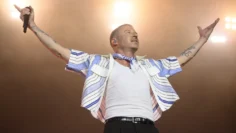

In a bold move that sent shockwaves through the music industry, Kristina Sarhadi courageously stepped into the spotlight in July 2023 to accuse a once-revered feminist punk-rock frontman of a heinous act. The allegation? None other than a harrowing incident of sexual assault that she claims took place back in 2010.
The music world stood still as Sarhadi’s words reverberated across social media, sparking a heated debate and opening up a Pandora’s box of discussions around power dynamics, accountability, and the often murky waters of fame. With her voice cutting through the noise and demanding to be heard, Sarhadi’s bravery in speaking out against a figure once hailed as a champion of equality was nothing short of revolutionary.
For many fans, the revelation was a gut-wrenching blow, shattering the carefully crafted image of the punk-rock icon they had idolized for so long. The once-revered frontman, known for his radical lyrics and vocal advocacy for social justice, now found himself at the center of a storm that threatened to consume his legacy.
As the accusations played out in the court of public opinion, supporters and critics alike found themselves grappling with the uncomfortable reality that their heroes are not infallible. The myth of the untouchable rock star was shattered, replaced by a sobering reminder that behind the music and the fame lie real people with flaws and, all too often, dark secrets.
In the wake of Sarhadi’s accusations, the music community found itself at a crossroads, forced to confront uncomfortable truths and reckon with the ways in which power dynamics have long enabled abuse to thrive unchecked. The feminist punk-rock movement, once a beacon of hope and empowerment for marginalized voices, now faced a reckoning of its own, as allegations of misconduct shook its very foundation to the core.
But amidst the turmoil and upheaval, there was a glimmer of hope—a voice of resilience and defiance rising from the ashes of betrayal. Sarhadi’s courage in speaking her truth inspired a wave of solidarity and activism within the music community, with artists and fans alike uniting to demand accountability and justice for survivors of abuse.
As the once-revered frontman’s career hung in the balance, the conversation around consent, boundaries, and toxic masculinity reached a fever pitch, forcing the industry to confront its own complicity in perpetuating a culture of silence and impunity. The court of public opinion had spoken, and its verdict was clear: no one, no matter how famous or revered, is above the law.
In the aftermath of Sarhadi’s accusations, the music world was left grappling with a sobering reality: the idols we worship are only human, with all the frailties and failings that come with it. The veil of celebrity had been lifted, revealing the ugly truths that lurked beneath the surface, challenging us to reckon with the uncomfortable truths that lie at the heart of the industry we love.
As the dust settled and the echoes of Sarhadi’s words faded into the ether, one thing was clear: the music world would never be the same. The era of turning a blind eye to abuse and exploitation was over, replaced by a new ethos of accountability, transparency, and above all, solidarity with survivors.
In a world where fame and influence too often shield the powerful from consequences, Sarhadi’s bravery was a beacon of hope, a reminder that even in the darkest of times, the light of truth will always find a way to shine through. And as the music industry grappled with the painful reality of its complicity in enabling abuse, one thing was certain: the voices of survivors would no longer be silenced, their stories forever etched into the fabric of a movement determined to create a safer, more just world for all.