
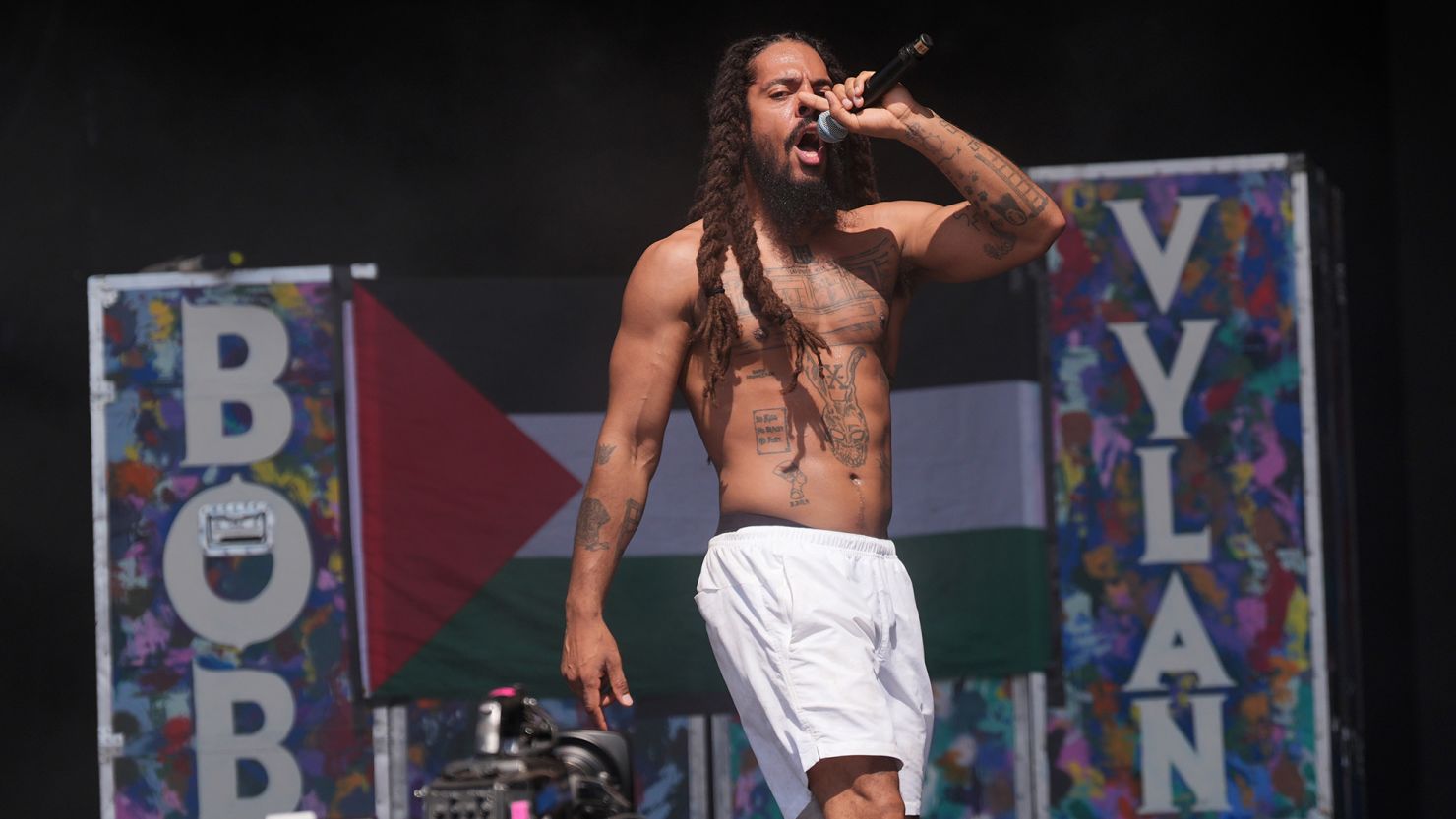
The air at Glastonbury cracked open like a fault line. The kind of moment you feel in your chest before your brain can process it. This wasn’t just a performance—it was an eruption. A tear in the fabric of what’s “allowed” to be said on a stage backed by corporate money and broadcast to the world. One moment, it was just another set. The next, the world was watching in disbelief as a punk band dared to say the quiet part out loud.
Bob Vylan, the London duo known for shredding through political apathy, didn’t come to entertain—they came to confront. With fists raised and eyes locked on the crowd, frontman Bobby Vylan stepped up to the mic and shouted it, clear and unforgiving: “Death to the IDF!” The words hung there like smoke. Then came the roar: “Free Palestine!” No metaphors. No softened language. Just rage—pure, unfiltered, and justified by months of watching the horror unfold in Gaza.
In an instant, the atmosphere shifted. Phones went up, security stiffened, and the BBC’s broadcast feed would soon cut away in a panic. But it was too late. TikTok had it. The crowd had it. The internet had it. And what the media couldn’t control, they scrambled to spin. But what was said on that stage had already cut through the noise—and there was no putting it back in the box.
That moment wasn’t polished. It wasn’t rehearsed for brand safety or press approval. It was charged, real, and emotional—and it sent shockwaves through the establishment. Phones were already recording. TikTok caught it. Within 24 hours, the clip was viral. Millions saw it. Millions shared it. It didn’t matter that the BBC scrambled to cut the livestream. The story was already out of their hands.
Let’s be clear: repeating the chant here isn’t endorsement—it’s journalism. This is what happened, and it matters. Because Bob Vylan didn’t just throw out slogans—they cracked open a conversation that too many people in power want to avoid. That chant wasn’t coming from nowhere. It came from witnessing what’s been unfolding in Gaza—bombed hospitals, displaced families, the unbearable footage that keeps showing up in our feeds no matter how hard governments and newsrooms try to soften it.
And make no mistake—those efforts to soften, sanitize, and spin are coordinated. Within hours of the performance, mainstream outlets began reframing what happened, reducing it to a “controversial outburst” while ignoring the root cause behind the words. The BBC, under pressure, admitted they should have cut the livestream. Headlines became euphemisms. Words like “protest” or “anti-occupation” were swapped out for “incitement” or “extremism.” Behind the scenes, powerful lobbying groups and political figures applied pressure to make sure this moment was buried before it could spread. And yet, it did. That’s what scared them most. The truth reached too many people too quickly—raw, unfiltered, and beyond their control.
Even more troubling is how the charge of anti-Semitism has now become weaponized—not to protect Jewish communities from genuine hate, but to silence anyone who dares speak against the actions of the Israeli military. Critics of the occupation, especially artists and activists, are now routinely smeared with the label, no matter how clearly they distinguish between Judaism and Zionism. It’s a cynical tactic designed to discredit valid dissent, shut down debate, and blur the lines between protest and prejudice. And it works—because it scares people into silence. But Bob Vylan didn’t flinch. They said what others were too afraid to say, knowing full well what the backlash would be.
It’s not just the media—it’s the machinery behind it. So powerful, in fact, that Bob Vylan’s U.S. visas were revoked almost immediately after the set, an extraordinary move that signals just how deep this runs. This wasn’t about a punk band crossing a line. This was about a government—or multiple—sending a message: speak against the wrong military, and you’ll pay the price. But here’s the problem with that approach—when you try to silence a voice that loud, it only echoes louder. The attempt to suppress has backfired. People are watching now, not just the performance, but the reaction to it. And they’re asking the right questions.
But even with all that, the chants kept echoing—online, in protests, in conversations. Because the people who heard it knew exactly what it meant. Not a call for violence against individuals—but a call to name a violent, unaccountable military force. The IDF isn’t just a name—it’s the face of occupation for many, and Bob Vylan said it out loud.
This isn’t about whether you’d chant it yourself. It’s about the fact that someone did—and the world responded. The kind of silence that usually follows this kind of protest didn’t land this time. Because this isn’t 2005. This isn’t pre-social media. You can’t erase things with an edit button anymore. People are watching in real time, and they’re louder than the headlines.
What Bob Vylan did was risky. And it’s okay to say it was controversial. But it’s also okay to say it mattered. Because the artists willing to put their platforms on the line, to say what safer acts won’t, are the ones who change the conversation. Whether you agree with their words or not, you can’t ignore the urgency behind them.
So no—this isn’t a comfortable moment. It’s not sanitized. But that’s the point. This isn’t comfortable for the people in Gaza either. Or for those who are watching it unfold with no way to stop it. This was protest. This was art doing what art is supposed to do: shake people.
Let the moment stand. Let the footage roll. Let people decide for themselves what it means. Because no matter how much the media tries to spin or bury it, the truth is out—and it’s louder than ever.