Hyper FM on EDGE, Spontaneity and Finding a Voice
Exposed Vocals • Interview
Hyper FM discusses the four-year process behind EDGE, the spontaneous recording of “Boogie Woogie,” and finding a way to bring two versions of a voice into one song.
Across the conversation, the album emerges as both a dance record and a developing visual world, shaped by long-form experimentation, instinctive performance and a growing trust in the artist’s own decisions.
EDGE took four years to write, produce and engineer. What was the earliest piece of it, and when did you realize you were making an album?
“Blackhole” was the earliest piece. I didn’t start with the entire album mapped out. The songs gradually began building a world together, sort of spooky and it strangely finalized around the middle of September right before October i had a since of urgency and I realized this could create a bigger experience as a complete project than they could individually. That’s when EDGE became an album.
What changed most between the person who started the record and the person who finished it?
I learned to trust my own vision and developed the skills to bring it to life. Four years gave me time to grow, experiment, and revisit ideas I couldn’t execute the way I wanted at first. The person who finished EDGE had a better understanding of how to turn what I heard in my head into something real.
Take us through “Boogie Woogie” from its first idea to the finished recording. Which decision gave the track its identity?
“Boogie Woogie” came from one sleepless night of recording and getting completely absorbed in the music. I didn’t write everything down or plan every decision. I wanted it to feel the way it feels to make it: surrendering to the BPM, hitting record, and going.
I refined the lyrics afterward, but the initial recording came from that spontaneous flow. The line “BPM over decisions” captures the approach perfectly. I wasn’t trying to make something that sounded overthought. I wanted something magnetic that came from letting go, and the finished track carries that same feeling.
You describe a mix of late-night dance music, hip-hop and R&B. How do you decide which direction a song needs, and was there a track that surprised you?
I let each song lead me toward the sound it needs. Some tracks are built around movement and energy; others explore darker or more vulnerable feelings. “Boogie Woogie” captures spontaneous release, while “Eaten From Within” turns inward. “Blackhole” surprised me most because I eventually found a way to finish something I had once abandoned.
What did handling the writing, production and engineering yourself make possible—and what was hardest to judge without a team?
Working independently gave me the freedom to follow my own ideas without compromising the vision. The challenge was learning to step back and judge my work objectively. But I could also keep developing my skills and return to unfinished ideas when I was ready.
“Blackhole” is proof of that. After vocal surgery, I wasn’t happy enough with the track to release it, even though I still liked my vocals. I had already recorded a full chorus, and recording another one over it felt like too much. As I improved at mixing, I figured out how to fade my older voice into the background and keep both versions—before and after surgery. The contrast creates a texture that sounds almost like masculine and feminine intimacy, even though both are mine. I had wanted to combine those two versions of my voice, and eventually I found a way to make it happen. It’s the only track on EDGE where I achieved that.
How does Lexington find its way into EDGE?
Honestly, Lexington doesn’t really have anything to do with EDGE or who I am as an artist. It’s simply the ground I’ve walked on since I was born. I’ve had some great experiences here and some terrible ones, but I wouldn’t say the city defines my music or my identity. EDGE came from my own experiences, ideas, and creative vision—not from trying to represent a particular place.
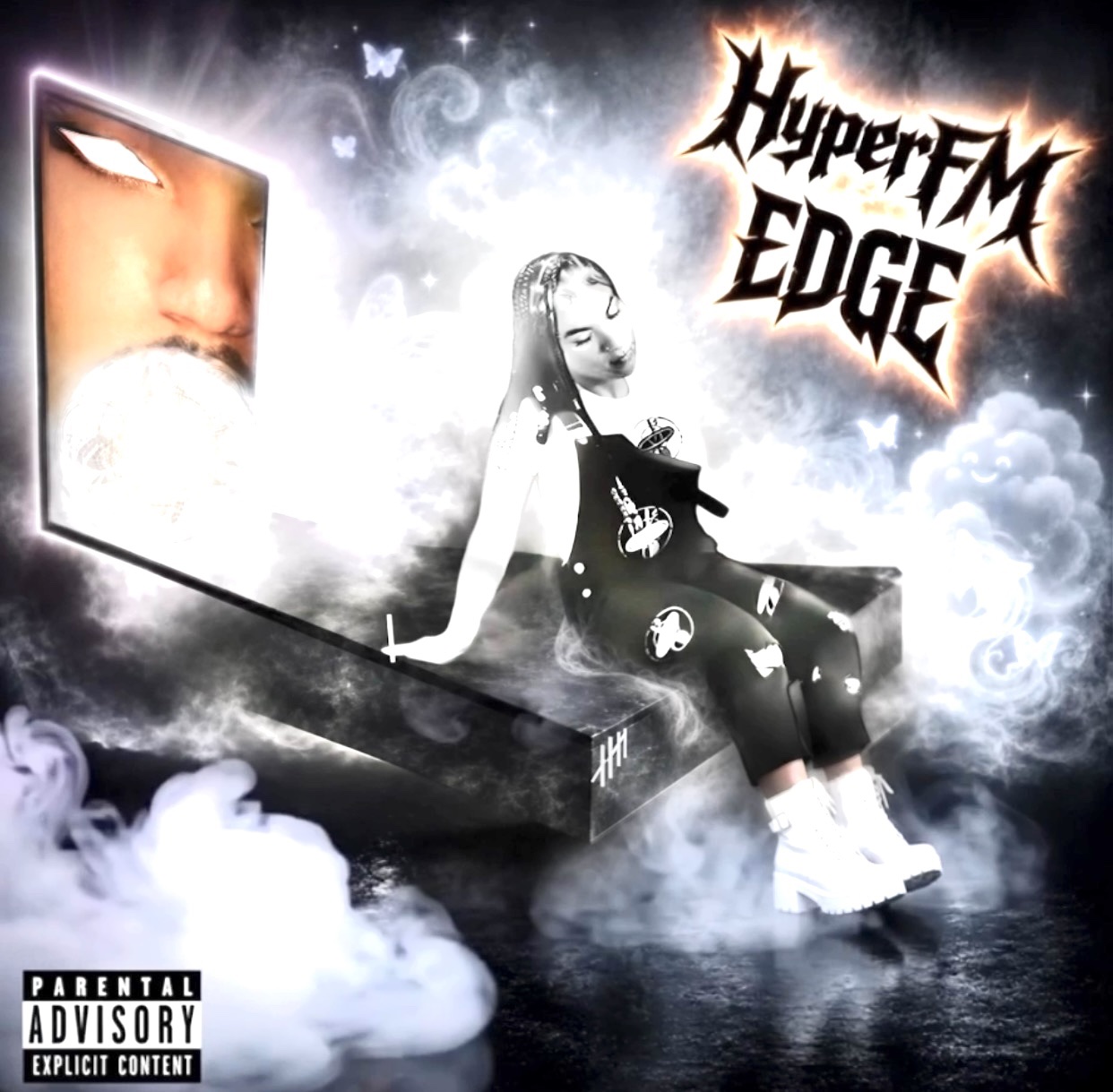
You said the cover has more meaning than you could fit into an email. What is its story, and how does it connect to the music?
The cover has meaning beyond its appearance, and I wanted it to connect with the larger world of EDGE. There are details that may not be obvious at first, just as there are layers in the music that reveal themselves over time. And exploration. 👁️🚪🧡🌀💫☁️🦋 all super unintentionally conspiring I just was moving and creating designing whatever I felt and just like like we we all do from birth. I discovered myself, and I realize that everything that I was doing had meaning and reason.
Now that EDGE is out, what do you want listeners to find in it, and what are you making next?
I want people to move to EDGE first and discover more of it with every listen. It’s a dance album, but it also has darker, more personal layers. I want listeners to experience it in their own way rather than feel like they have to understand everything immediately.
Next, I’m expanding the visual world around the music, including a video concept for “FLaVe” called “Haunted Candy Shop.” EDGE is out now, and it’s only the beginning of what I have planned to build with my brand.
Explore the music
Signal this interview
Send it up if it hit, down if it missed. The most engaged pieces surface on Signal.
Keep reading
Back to Interviews ↗
From this section
Orthodox Tactics on NOT FOR SALE, Conscience and the Cost of Belonging
October 28, 2026
From this section
Exposed Vocals Interview: Sandro Morales-Santoro on Scoring Horror Without a Picture
October 28, 2026
From this section