The Tralala
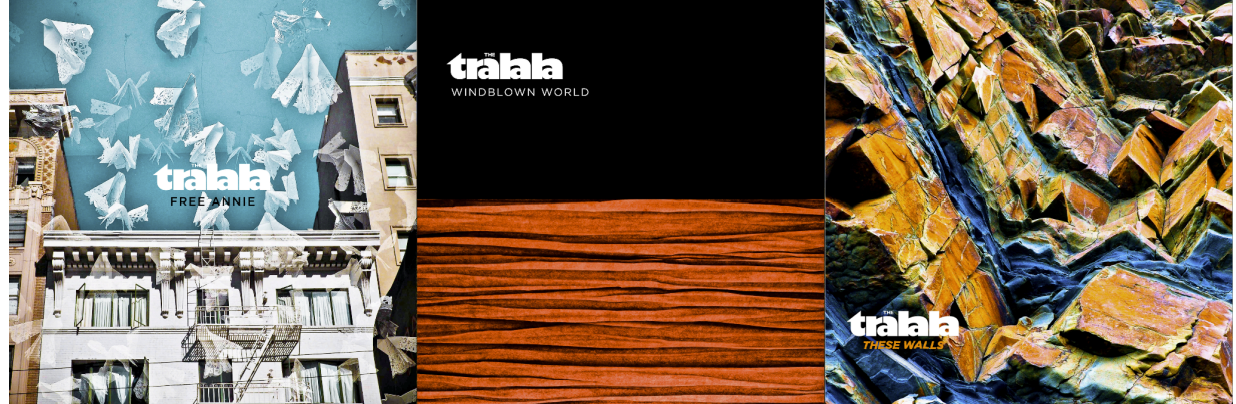
These Walls
Two people, two coasts, five years, ten tracks. The Tralala’s debut album These Walls is the kind of record that could only exist because someone refused to let it disappear.
There is something quietly extraordinary about how this album came to be. Drew Price and Chris Trewin were supposed to be in the same room. Then the pandemic happened, and instead of giving up, they built something asynchronous, patient, and deeply personal — passing demos back and forth across the country until a record emerged that sounds like it was made by a band that has always known exactly who they are.
These Walls occupies a specific and beautiful sonic space — synth-laden, atmospheric, melodic, and drenched in the kind of ’80s and ’90s nostalgia that does not feel borrowed because it was genuinely lived. Chris Trewin spent seven years in a Bay Area shoegaze band before this. Drew Price had been writing songs privately for decades. When those two worlds collided, something clicked that neither could have arrived at alone.
The electronic elements are not modern in a trendy sense — they are modern in the way that matters, which is that they serve the songs. The pulse Chris brings anchors Drew’s more ethereal vocal melodies, and the contrast between those two instincts is exactly where The Tralala lives. It is a sound that feels unique without announcing itself as such, which is the hardest thing to pull off.
Mixed in Manchester by James Doviak — best known as Johnny Marr’s producer and bandmate — alongside Russ Miller, who has worked with The Kooks, the album has a richness and depth that lifts the home-recorded origins into something that sounds completely assured.
These Walls is the kind of record that rewards patience — not because it is difficult, but because it was built by people who took the time to get it right.
Free Annie is the kind of track that sneaks up on you. What started as a straightforward melody — verse, chorus, verse, chorus — became the most beautiful thing on the record once Chris wrapped it in a shoegazey, atmospheric environment that perfectly captures the spirit of the song. It earns its place in the middle of the album like an exhale.
Windblown World is heavier in a different way. Written through loss — a friend who died far too young, shared by both of them, and the mother of Chris’s wife — it carries real grief without being mournful for its own sake. The production holds the emotion without overplaying it, which takes restraint and trust in the listener.
Across all ten tracks the album moves with a sense of purpose that is rare in debut records. Some of these songs came together quickly. Others took years. You can hear both — the ones that arrived fully formed and the ones that were earned — and neither is lesser for it.
These Walls is not a record that is trying to find an audience by chasing one. It is music made by two people who connect most deeply to the sounds that shaped them — and who trusted that connection enough to spend five years building something worthy of it. The conflict is inevitable, Drew says. That is the thread running through the whole album, from the opening of Winded to the exhausted resolve at the very end. It lands.
We both lived in the Bay Area in 2020 and were meant to jam and then the pandemic happened. While we weren’t able to be in the same room, Drew sent me some acoustic demos of his, as well as some instrumentals I had on SoundCloud that he’d written melodies to. The initial results were instantly not terrible, and then it kind of blossomed from there.
Chris had recently done a seven-year run in a five-piece shoegaze band. They played live off and on in the Bay Area and released a few records and EPs. I had written songs privately for decades but had never played with other musicians. Chris could send me an instrumental, and I would come up with melodies and oftentimes the lyrics to layer on top — and he had full autonomy to do whatever the hell he wanted to fully flesh out my acoustic demos.
It’s the “write what you know” principle, basically. The music I listen to hasn’t evolved that much since I was 10 — it’s just broadened. I wouldn’t go as far as saying the electronics are all that modern sounding either. I think the electronics are kind of ’80s and ’90s as well, if you know what I mean?
Exactly. This was not a conscious choice. I don’t connect to new music in my 30s and 40s the same way I did as a teenager when it was the soundtrack to every conscious moment, and absolutely essential. And the music I connected to most as a teenager was a mix of ’80s art rock and ’90s alternative that was just slightly off the beaten path.
An honor and a pleasure. I can’t believe we got the chance, to be honest. It was all quite serendipitous. And they stuck in there even after the pandemic once touring started again, which is pretty incredible. I think Doviak and Russ knew what we were aiming at, understood the influences, and helped us find the sound you hear on the album. I do know it would be much different without them, and not as good.
Outside of their skill and patience, working with James and Russ just gave us more confidence to keep going. We worked on and off on this record for five years. I’m not sure we would have stuck with it if we didn’t have them in the wings to bring the audio fidelity to the next level.
Windblown World is a song about loss. I don’t really feel like explaining it too much, but I lost a friend and my wife lost her mother during the making of the album, and so that’s what was going into it.
Free Annie was a very old song, and a late addition to the album. We were nearly done, sitting with nine tracks, and Chris was asking if I had anything on the lighter side that might serve well in the middle of the record. Chris initially took it in a Pavement/garage-band type direction but then explored the more shoegazey, atmospheric approach you hear on the record. I’m so glad he did because the environment he created really captures the spirit of the song, and I believe it’s the most beautiful track on the record.
Nothing has been all that deliberate. I think Drew’s vocal style sits with those types of sounds really well, and so we organically gravitate to that sound. Also, I’ve got all these pedals and so I need to use them or it’s a waste.
The electro/synth aspect of our sound feels important. Chris’s music on its own has a strong and confident pulse to it. Whereas my songs on their own get quite ethereal, and perhaps lack some bite. Combining the two gives us our sound. The contrast feels unique, but the influences are still present.
The obvious disadvantage is you lose the energy from being in the same room. The advantage is probably time, which I think we needed to figure out what we were doing. Neither of us had recorded anything before and we were doing it at home, so there was a lot of trial and error. We basically felt our way through this album, learning as we went.
When we started this album, my daughter was two years old, and she was nearly eight when we finished. There are many periods of time where recording music took a backseat for each of us. This was very much just a passion project that I could pick back up when the mood struck. It was always fun to go back to.
It was a song of Drew’s and the title just felt like the right vibe for the overall album, plus it’s ambiguous which I like.
The album is drowning in misdirections. Some songs that sound like relationship songs are really just about finding your way in a world that’s gone insane. But one central theme is that conflict is inevitable. This is all teed up on track one, Winded, and carries through with exhausted resolve at the very end of These Walls.
All of the credit for that goes to Doviak. What we recorded would be what I suppose you would consider contemporary lo-fi, in that it was recorded at home into GarageBand. Doviak took our mixes and made them sound fuller and like we knew what we were doing.
And some of this is just dumb luck. Our methods before handing off to James for a final mix were not sophisticated. We didn’t trade notes on how each of us were capturing sounds. We just winged it.
Anything would be something. Honestly, do people still experience albums from start to finish any more, or is that a totally “ok boomer” thing to say? What’s the gen-x equivalent of that?
That feeling when a good song kicks off the end credits for a two-hour film that really transfixed you. It’s letting you know it’s time to re-acclimate, but that you can hold on to that feeling a bit longer and really sit in it if you want to.
Live plans just don’t really seem plausible, given distance and time. They’re sort of insurmountable blockers if you want to be in a proper band. We also both have day jobs and responsibilities and so on. But I would do another album, and it might not take four years next time. I’d like to try and record live drums instead wherever possible for the next one, and spice things up a bit that way. And more bangers.
More bangers sounds like a good idea. Maybe a few softer ones as well to mix things up. And perhaps we just drip out songs when they’re done and ready versus holding ourselves to a full album. I’d bet on more music.