

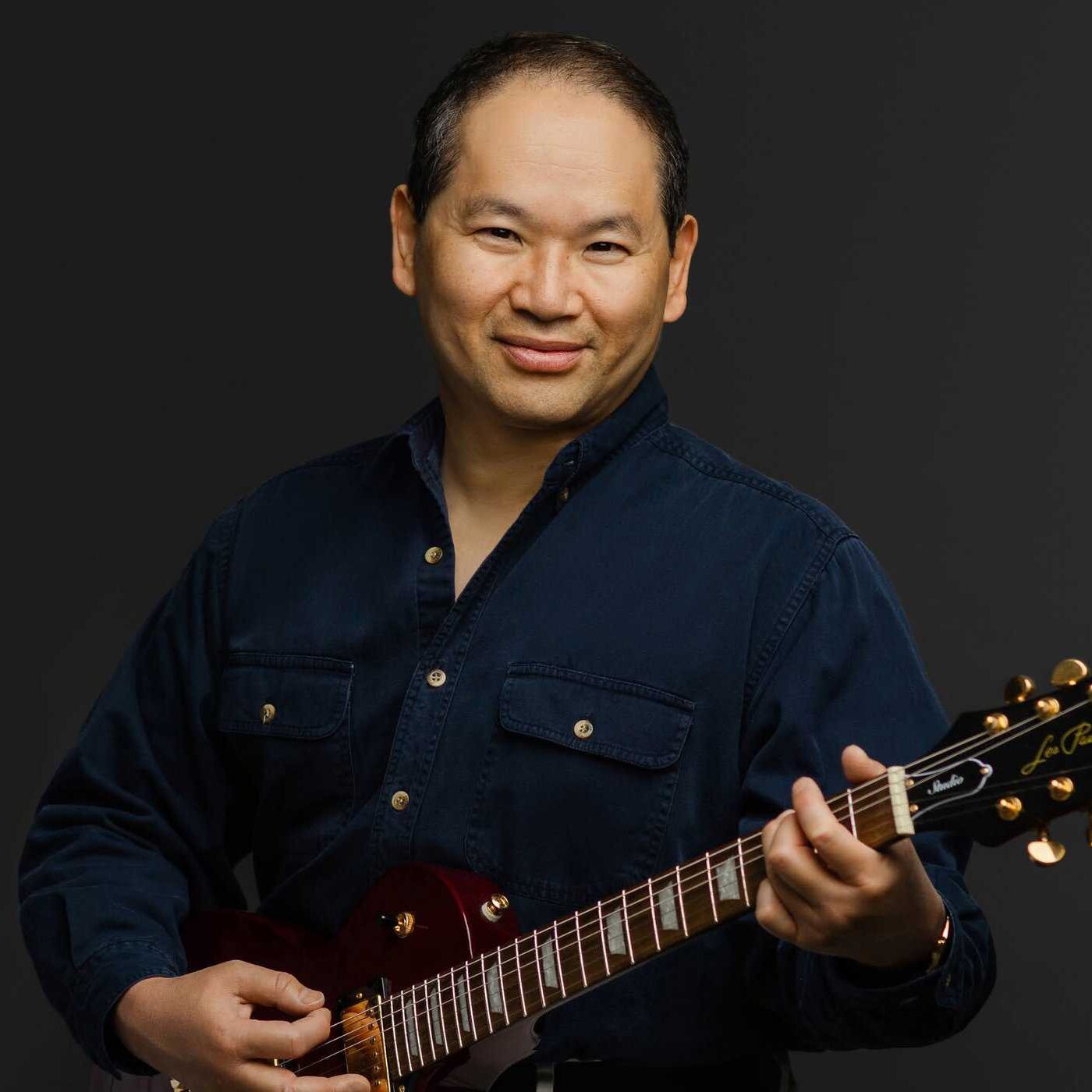
Solemn Pledge, the rock duo of Maria Genevieve Elia and Michael Justin Lee, has reimagined Shakespeare’s timeless tragedy as a full-blown rock opera. Romeo and Juliet: The Rock Opera is not just a reinterpretation—it’s a dramatic retelling scored with orchestral grandeur, searing guitar solos, and the emotional weight of classic theater.
Told entirely through the voices of its characters, each track propels the narrative forward, drawing from Shakespeare’s original script but imbued with musical life. From hard rock duels to aching ballads and even moments of classical reflection, the album is cinematic in scope and deeply character-driven.
To dive deeper, we sat down with Michael to explore the making of each song—how the characters shaped the music, how the music reshaped the story, and what it means to bring Shakespeare to life with guitar and grit.
Track 1: “Our Verona (Capulets and Montagues)”
The curtain rises not with quiet reflection, but with fury. “Our Verona,” the album’s thunderous opening, wastes no time immersing the listener in the centuries-old blood feud between the Capulets and Montagues. From its very first note, the track grips like a clenched fist—loud, theatrical, and unrelenting. This is not just an overture; it’s a declaration of war.
Structured as a back-and-forth between the two houses, the song functions like a musical battleground. Each side takes turns in the spotlight, their lyrics dripping with venom, pride, and generational rage. Sung in alternating keys to emphasize the stark divide, the Capulets and Montagues don’t just introduce themselves—they threaten each other in stereo, setting up the narrative tension that will ripple through the entire rock opera.
Musically, “Our Verona” leans hard into a gritty hard rock sound, with pounding drums and shredding guitars amplifying the hostility between the warring families. But it’s also smartly theatrical—every verse and musical change serves a dramatic purpose, building a sense of looming inevitability. The tension here isn’t just personal; it feels mythic, tragic, and fated.
Much like the opening prologue of Shakespeare’s original play, this song acts as both scene-setter and mood-setter. But unlike the Bard’s calm narrator, Solemn Pledge lets the characters speak—and scream—for themselves. “Our Verona” doesn’t just introduce a story. It drags you into it, headfirst and heart pounding, daring you to keep listening as everything begins to unravel.
Exposed Vocals: “Our Verona (Capulets and Montagues)” serves as the opening track of the album. How did you approach crafting this song to establish the world of Romeo and Juliet in a rock opera setting?
Solemn Pledge:
Great question! I spent a great amount of time planning this very thing, the way to establish the world of Romeo and Juliet. As Shakespeare wrote it, two young Capulets encounter two young Montagues in the Verona marketplace and pick a fight with them. This is classic storytelling, by starting “In Media Res,” meaning right in the middle, without much setting up.
I saw no better way than to establish the conflict just like that. So I plotted out a song in which the verses alternate between being sung by the Capulets and the Montagues with each side declaring their intention to vanquish the other.
Exposed Vocals: This track introduces the central conflict between the Capulets and Montagues. How did you musically represent that tension—did you use specific instrumentation, key changes, or vocal techniques to highlight the rivalry?
Solemn Pledge:
A song intended to create the ambiance I wanted would need a tough vibe. This is very congruent with hard rock.
To heighten the contrast between the two, I wrote the verses for their respective camps to be sung in different keys, which in addition to the content of the lyrics, emphasizes their different loyalties.
Exposed Vocals: Is the song told from an omniscient perspective, setting the stage like an overture, or do you imagine specific characters (like the Prince of Verona) delivering these words?
Solemn Pledge:
Every song on this album is told from the perspective of specific characters. I did not want any songs sung from an omniscient narrator even though Shakespeare starts with a short monologue this way.
What I had in mind through the entire writing was the hopeful creation of a movie or a stage musical from this concept recording. Therefore, I envisioned which character on stage or screen would be singing these words, and I note in the title of each song which character does.
Exposed Vocals: In rock operas like Jesus Christ Superstar, the opening track immediately establishes grandeur and stakes. Were you inspired by any classic rock operas when composing “Our Verona,” or did you take a completely fresh approach?
Solemn Pledge:
I was directly inspired by the first scene in West Side Story, which starts with a fight between the Jets and the Sharks. I feel this is among the finest opening scenes in any musical movie or play ever.
Exposed Vocals: As the opening track, “Our Verona” sets the tone for everything that follows. How does this song’s energy and style foreshadow the rest of the album’s journey—does it hint at the tragedy to come?
Solemn Pledge:
Great question. I had to take great care not to go too tough at the outset because I had to leave room for the story’s heat to grow further as the conflict builds. So the style and energy definitely do foreshadow the tragedy to follow, but I was careful not to overshadow that tragedy.
Track 2: “Neverending Heartache (Romeo)”
After the high-stakes fury of the opening track, “Neverending Heartache” takes a sharp emotional turn inward. Here, the spotlight narrows to a solitary figure—Romeo—navigating the stormy seas of adolescent heartbreak. Before Juliet enters the story, there is Rosaline, and before romance becomes destiny, there is the ache of unrequited love. This song captures that ache with both tenderness and intensity.
Romeo is introduced not as a hero or a fighter, but as a vulnerable, hopeless romantic—what Michael Justin Lee calls the “village love fool.” It’s a bold character choice, and one that adds rich emotional depth right from the start. Over lush, sorrowful orchestration, Romeo laments his heartbreak in language that mirrors Shakespeare’s poetic melancholy, but set to a sonic palette that blends symphonic grandeur with rock drama.
Then, everything changes.
As Romeo lays eyes on Juliet for the first time, the music undergoes a seismic shift. The orchestral textures give way to a driving pop-rock rhythm, lifting Romeo—and the listener—into the euphoric rush of love at first sight. The transformation is instantaneous, impulsive, and utterly sincere. It’s a musical mirror of Romeo’s emotional whiplash, and it works beautifully.
What makes “Neverending Heartache” so compelling is its duality. It’s a love song that begins in despair and ends in infatuation, a character study that reveals as much about Romeo’s flaws as it does his heart. It also sets up one of the opera’s central themes: the blinding speed at which youthful passion can turn into irreversible consequence. This is the moment Romeo leaps—and the music leaps with him.
Exposed Vocals: “Neverending Heartache” captures Romeo’s deep emotional turmoil. How did you approach translating his poetic sorrow into a rock opera ballad?
Solemn Pledge:
For me, it starts with a clear understanding of Romeo’s character. Of course, everyone knows that he is a romantic. But what else? My reading of Shakespeare suggests that he’s also the village love fool and a not terribly bright one. He’s not stupid but not smart enough to not just give his heart away all the time.
When we meet him, he’s utterly devastated because he’s just been dumped by Juliet’s cousin, Rosaline. But even while telling his friend Benvolio all this, he’s over her immediately and says, “Where shall we dine?” And then they’re off to crash Lord Capulet’s party, where he winds up meeting Juliet, which is a terribly foolish thing to do since the Prince had just warned of the death penalty if there’s another fight. This tells me everything!
So I wrote this song to reflect that. I start it with a deathly sorrowful vibe to convey his heartbreak over Rosaline. But the village love fool then spots Juliet and it’s the most famous love at first sight scene in literary history. As a result, my song must change pacing and vibe immediately to that of an upbeat pop-rock song.
Exposed Vocals: The song features sweeping orchestral elements alongside rock instrumentation. What was your process in crafting the arrangement to balance both grandeur and raw emotion?
Solemn Pledge:
Once I’ve concluded on the direction of the musical vibe, this almost falls out immediately. I ask myself, how do I implement it? In the part when he’s heartbroken, I didn’t hear the standard rock ensemble of guitars, bass and drums. However, when it moves to the beginning of his love, that does become dominant. And during the entire time, to prevent the song from sounding like two separate songs strung together, I had to retain the general melody.
Exposed Vocals: This track plays a key role in setting up Romeo’s emotional stakes. How does “Neverending Heartache” foreshadow the themes of love and loss that define the rest of the album?
Solemn Pledge:
Romeo’s love is conveyed immediately. That’s necessary because it’s the first major turning point of the story. As for foreshadowing the tragedy that comes from it, I do that lyrically. Among his lyrics, I have Romeo sing, “With you ‘til the end of days! Eternally mine I pray!” It happens to be true but obviously not in the way Romeo wanted.
Track 3: “My Prayer (Juliet)”
Juliet enters not in a flurry of drama, but with a whisper of hope. “My Prayer” is the emotional unveiling of her character—a gentle, yearning ballad that trades Shakespearean tragedy for something much more innocent and pure. This is Juliet not as a doomed lover, but as an adolescent young girl with a heart full of dreams she doesn’t yet understand.
Drawing inspiration from iconic “I want” songs like “Part of Your World” and “Just Around the Riverbend” in Disney movies, Michael Justin Lee gives Juliet her own musical space to express desire—not for a specific person, but for the idea of love itself. There’s no Romeo here. Not yet. Instead, we hear a quiet conversation between Juliet and God, a whispered prayer for something more. It’s a profoundly human moment that reconnects us with the character’s age, vulnerability, and emotional honesty.
Musically, “My Prayer” floats on delicate melodies and restrained instrumentation, leaving plenty of room for the lyrics and vocal delivery to shine. There’s a Disney-esque sweetness to the arrangement, but it never veers into cliché. Instead, it balances simplicity with emotional resonance, laying the groundwork for the whirlwind that follows.
This track is more than a setup—it’s a grounding point. In a story defined by impulsive action and escalating violence, “My Prayer” reminds us who Juliet is before fate takes hold. It invites us to see her not just as a tragic figure, but as a girl with a voice, a dream, and a quiet hope that love might save her. In doing so, it becomes one of the most emotionally truthful songs on the album.
Exposed Vocals: “My Prayer (Juliet)” introduces us to Juliet in a deeply emotional way. What was your thought process in choosing to portray her through a ballad that echoes Disney-style longing, rather than the more tragic tones often associated with her character?
Solemn Pledge:
Another great question! To maximize the tragedy that eventually befalls Juliet later in the story, I had to start with her in a good place initially. To some extent, it’s like a roller coaster ride. To enhance the thrill of the drops, roller coasters give riders a slow uphill climb. The engineers could easily make the uphill climb go faster but they don’t because to do it slowly builds the suspense, heightens the thrill. I wanted to do something like that.
Exposed Vocals: Juliet’s youth is often glossed over in modern adaptations. How did the historical context of her age influence the way you wrote this song, and what emotions were you hoping to capture in her first solo moment?
Solemn Pledge:
In characterization, Shakespeare actually gives us little to work with about Juliet. One thing that is not commonly known, and hard to believe these days, is that Shakespeare wrote her to be just 13 years old. In Act 1, scene 2, her father Lord Capulet says, “She hath not seen the change of fourteen years.” Obviously, any modern production can’t make her that young. The youngest Juliet I’ve personally seen is Olivia Hussey in Franco Zeffirelli’s movie version and she was fifteen at the time of filming.
But I did want to keep Juliet’s complete innocence in order to maximize the impact of her instant love for Romeo. To do this, I characterize my Juliet as a girl not interested in getting married yet because she’s waiting to fall in love.
Exposed Vocals: You compared “My Prayer” to iconic Disney songs like “Part of Your World” and “Just Around the Riverbend.” How important was it for you to establish Juliet as hopeful before her story takes its darker turns?
Solemn Pledge:
It was absolutely critical to me. Although she does tell her mother that she’s not interested in getting married yet despite her father trying to marry her off, I needed a song to set up her interest in falling in love. Juliet is not opposed to getting married. It’s just that she doesn’t want to marry the man her father has in mind. In fact, she very much wants to get married. But only after falling in love. That was why I needed this song.
Track 4: “Already My Husband (Juliet)”
If “My Prayer” was Juliet’s quiet plea for love, “Already My Husband” is her radiant answer. The shy girl who once whispered to the heavens now sings with fearless certainty. Representing Shakespeare’s iconic balcony scene—one of the most famous love declarations in all of literature—this track transforms Juliet’s confession into a celebration. Bright, energetic, and bursting with conviction, it captures the electric thrill of first love realized.
Where many musical adaptations of Romeo and Juliet lean into wistful romance, Solemn Pledge goes in the opposite direction. “Already My Husband” is unapologetically joyful, its pop-rock rhythm pulsing with life and promise. Juliet isn’t just in love—she’s all in. The arrangement matches her emotional state perfectly: bouncy, melodic, and effervescent, like a heart that’s beating too fast to sit still.
It’s a bold tonal shift from the delicate ballad that came before, but one that feels entirely earned. This song doesn’t just mark a turning point for Juliet—it accelerates her story. She’s no longer wishing; she’s declaring. Her voice is strong, her choice is made, and for a moment, everything feels infinite and beautiful.
Thematically, “Already My Husband” is critical to the arc of the album. It’s Juliet’s leap into love, blind to the risks, yet wholly sincere. In the context of a rock opera that barrels toward tragedy, this song is a flash of sunlight—fleeting, ecstatic, and impossible not to believe in, even if we know what’s coming.
Exposed Vocals: This track stands as a musical proxy for one of Shakespeare’s most famous scenes: the balcony confession. What made you decide to give it a pop-rock flair rather than a more traditional romantic tone?
Solemn Pledge:
Indeed “Already My Husband (Juliet)” proxies the balcony scene that contains Juliet’s most famous line, “O Romeo, Romeo, wherefore art thou Romeo?” Therefore, with this song, I establish her love for Romeo. Thus, I needed a very upbeat vibe and I felt the best way to do this musically is with a bouncy pop-rock rhythm behind the lyrics.
Exposed Vocals: In contrast to the reflective yearning in “My Prayer,” “Already My Husband” bursts with joyful certainty. Was that contrast intentional from the start, and how did you go about achieving that shift musically?
Solemn Pledge:
Definitely! You’re absolutely correct. This song is a direct counterpoint to the song immediately before it. In “My Prayer,” Juliet sings of her hope for love. Now in this song, she has found it, with Romeo. And furthermore, both have “positive” musical vibes to contrast against the darkness and heat of the hard rock style I employ later in the album to convey tragedy.
Exposed Vocals: Thematically, this song feels like Juliet stepping into her own agency—boldly declaring love and envisioning a future. How does this moment reshape her character arc within the album?
Solemn Pledge:
This is exactly the time when Juliet breaks away from being just Lord and Lady Capulet’s daughter to becoming her own person. Shakespeare had established that Juliet would be married off, and Juliet has responded by saying she’s not ready yet. But look what happens next, after meeting Romeo, she immediately wants to be his wife! So, just as you so correctly put it, this moment is not just a plot point, it is also the major inflection point in her character arc.
Track 5: “Precious Juliet (Romeo)”
Now fully immersed in love, Romeo takes the stage once again in “Precious Juliet,” offering a dazzling counterpart to Juliet’s outpouring in the preceding song, “Already My Husband.” This isn’t the Romeo of heartbreak or hesitation—it’s a young man completely overtaken by the rush of infatuation, caught in the magic of a moment that feels larger than life. If Juliet’s declaration was the spark, Romeo’s is the wildfire.
Musically, “Precious Juliet” explodes with vitality. The tempo is fast, the instrumentation joyful, and the melodies soar with the energy of someone who believes they’ve found their entire future in a single gaze. It’s a continuation of the transformation that began in “Neverending Heartache”—only now, the emotional shift is complete. Romeo is no longer grieving Rosaline; he’s glorifying Juliet, and the music reflects that rapturous devotion in every note.
Michael Justin Lee doesn’t just write Romeo as in love—he writes him as a believer, almost to the point of delusion. The song pulses with a kind of breathless immediacy, mirroring the way Romeo throws himself into love without looking back. There’s no hesitation in his voice, only conviction. This is a boy who falls hard and fast—and truly believes that Juliet is his salvation.
As a narrative device, “Precious Juliet” helps bridge the emotional arc between Romeo’s initial heartbreak and the escalating tragedy to come. But as a standalone track, it’s simply radiant. For all the tension and foreshadowing that frames this opera, this moment is pure. Romeo, for once, gets to bask in love without consequence—and the result is one of the most euphoric, unguarded tracks on the entire album.
Exposed Vocals: “Precious Juliet” feels like a bright echo of Juliet’s earlier hopes. How did you approach capturing Romeo’s experience of falling in love through this song?
Solemn Pledge:
I absolutely wanted to have Romeo declaring his love for Juliet immediately after she had declared her love for him. Therefore, I wanted the music for both songs to be of similar vibe and vitality. Both are pop-rock songs. Both are love songs. And both contribute to advancing the storyline.
Exposed Vocals: You mentioned wanting an even more upbeat feel than Romeo’s shift in “Neverending Heartache.” What musical elements did you use to emphasize this emotional escalation?
Solemn Pledge:
Yes indeed. In conveying his new love for Juliet after he’s met her, I needed an even more upbeat and livelier vibe than I had used in the second part of “Neverending Heartache” in which he has seen her. He was immediately smitten with her but that was minimal compared to how he feels after he has met her.
Exposed Vocals: How important was it to show Romeo’s emotional transformation here before the darker events unfold?
Solemn Pledge:
Oh it’s absolutely critical. Just as I’d done for Juliet, I needed to do for Romeo, that is, establish their love and happiness before their tragedy. That heightens the tragedy that is later to come.
Track 6: “When Capulets Fall (Mercutio)”
The tone shifts. The sky darkens. “When Capulets Fall” marks the moment when the story leaves the warm glow of young love behind and plunges into irreversible conflict. Told from the perspective of the ever-volatile Mercutio, this track signals the beginning of the end—a sonic eruption that captures the chaos, pride, and impulsiveness that drives the play’s most pivotal turning point.
This isn’t a subtle transition. The track hits hard from the outset, with driving drums, fiery guitars, and Mercutio’s voice slicing through the mix like a blade. There’s swagger here, but it’s laced with danger. Michael Justin Lee writes Mercutio as a showman—a provocateur whose arrogance masks deeper tensions. The lyrics strut with bravado, but just beneath the surface, the pressure is about to boil over. And when it does, lives are lost.
What makes “When Capulets Fall” especially gripping is its understanding of foreshadowed doom. The audience knows what’s coming, and the music leans into that inevitability. You can hear it in the tightening rhythms, in the aggressive call-and-response phrasing, in the way the song seems to hurl itself toward its violent end. It’s not just a rock song—it’s a theatrical descent into chaos.
And yet, Mercutio is not entirely serious. As Michael notes, there’s still a touch of performative bravado in his voice—he’s posturing, not truly challenging fate. That balance between fury and flair is critical. This isn’t the peak of the opera’s violence, but it’s the spark that ignites it. Mercutio sings like a man with nothing to lose—until the moment he does.
In the grand architecture of the album, “When Capulets Fall” is the shattering of innocence. The tension introduced in “Our Verona” and suspended through the love songs finally detonates. From this point forward, no one is safe—and the story of Romeo and Juliet speeds toward its tragic, inevitable end.
Exposed Vocals: “When Capulets Fall” marks a pivotal turning point in both the album and Shakespeare’s story. How did you channel Mercutio’s impulsive spirit into the musical style of this track?
Solemn Pledge:
Marking the turning point in the story was absolutely my need. It is indeed Mercutio’s killing that launches Romeo to kill Tybalt and thereby propel the story forward. Mercutio’s threats to drive the Capulets out of Verona is sheer immature bravado, and he knows it. He couldn’t really think the Capulets would flee just because he threatens them. He is not the violent hothead that Tybalt is. But his words are angry, even though I don’t feel he actually is. Therefore, I needed a hard rocker to convey this.
Exposed Vocals: The energy here feels electric but controlled compared to later tracks. What was your thought process in saving your most intense musical charge for the Prince’s song instead?
Solemn Pledge:
I composed this song’s vibe to be just one step below the all-out fury of the Prince’s song which follows this one. The reason is that although Mercutio is acting angry, the subsequent murders of Mercutio and Tybalt would surely send the Prince into an absolute rage. I therefore needed to spare one final bit of rocking fury for the Prince’s song that follows.
Track 7: “Verona Condemned (Prince of Verona)”
The fires that “When Capulets Fall” ignited now rage out of control. In “Verona Condemned,” the fury of the Prince of Verona erupts with volcanic force, bringing the album to its most intense and punishing moment yet. Where earlier tracks danced with tension and tragedy, this one confronts it head-on. The blood has been spilled. Mercutio and Tybalt are dead. And now, someone must pay.
This track belongs to the Prince—and he does not ask, he commands. Michael Justin Lee crafts a performance that’s as unforgiving as it is heart-wrenching. The Prince is not merely angry; he is betrayed by his people’s inability to heed his warnings. The music reflects this raw emotional state with unrelenting drums, a punishing bassline, and searing vocal delivery that sounds less sung and more shouted into the heavens. This is justice, yes—but it’s justice delivered through clenched teeth and teary eyes.
There’s no nuance here, and that’s the point. The Prince had warned all of Verona that further bloodshed would bring consequences, and now he must deliver on that threat. What makes this moment so powerful is the complexity of his role. He is not a villain, but a ruler forced to become executioner. The lyrics reflect this internal torment, with lines like “Damn you to Hell!” and “Pray that God will have mercy on your souls!” cutting through the mix with brutal clarity.
Maria’s vocal performance is crucial here, channeling not just anger but the exhausted moral weight of someone who must maintain order in a city collapsing into chaos. It’s rage fueled not only by loss, but by helplessness—by the knowledge that this judgment will not end the violence, but only escalate it.
In terms of arrangement, “Verona Condemned” is the heaviest and hardest-rocking track on the album. It’s the sonic peak of aggression—a deliberate crescendo that mirrors the narrative’s boiling point. If “Our Verona” opened the story with conflict, “Verona Condemned” shatters the last illusion that peace might still be possible.
From this moment on, love becomes desperate. Hope becomes fragile. And Verona is no longer a setting—it’s a warning.
Exposed Vocals: “Verona Condemned” stands out as the most intense, aggressive track on the album. How did you approach crafting a song that captured the Prince’s rage while maintaining narrative cohesion with the rest of the opera?
Solemn Pledge:
For this song, I ramped up the heavy metal to its highest. The Prince is beyond angry. Earlier in the story, he had already warned that any further rioting would result in the death penalty. And then it happened. I believe the Prince is a very benevolent ruler and does not want to issue death sentences but he has no choice. He had to lay down the law or other people in the city would get hurt. And now that he has, he has no choice but to enforce it. The way I see it, that’s the reason why he’s so angry. The Capulets and Montagues have forced him to do something that simply did not want to.
Exposed Vocals: You’ve described this as needing to “rock harder” than any other song on the album. What musical choices helped you push the intensity to its limit?
Solemn Pledge:
HA! Oh, I had great fun with this! I simply rocked out to some of the hardest songs that I love. I turned up the Van Halen, Gun N Roses, AD/DC, Led Zeppelin, and let the inspiration of my heroes propel me to my maximum metalhead!
Exposed Vocals: How did Maria’s vocal performance help bring the Prince’s fury to life? Were there specific directions or emotions you asked her to lean into for this track? cohesion with the rest of the opera?
Solemn Pledge:
Oh we had fun with this! As I do for every song I create with Maria, I thoroughly explain not just the words of my lyrics but the point of view of the character singing them. Maria and I do not plan for her to just sing the song, I truly want her to perform the song. And in this case, to perform it as if she actually were the Prince of Verona. The fact that the Prince is so angry actually made her performing of it so much more fun!
Track 8 : “Despair (Juliet)”
Grief doesn’t always whisper—it screams. In “Despair,” Juliet’s heartbreak doesn’t unfold in soft piano chords or teary-eyed balladry. Instead, it blazes forward like a wildfire. As Romeo’s exile is declared and her world begins to collapse, Juliet doesn’t wilt—she erupts. What we hear is not quiet sorrow, but the raw, uncontrollable anguish of a young woman pushed to the emotional brink.
Michael Justin Lee makes a bold, and brilliant, choice here. Rather than default to a slow, mournful tone, “Despair” pulses with urgency. The tempo is relentless, the arrangement volatile, and Juliet’s vocals carry the energy of someone whose pain is too overwhelming to contain. The grief is active—it thrashes, it rages, it refuses to be polite. This isn’t the sorrow of resignation. It’s the desperate howl of someone who was promised everything and had it torn away before she could fully hold it.
Lyrically, Juliet is at war with herself, with her fate, and with the forces tearing her from Romeo. There’s a fire in every line, a sense that even in devastation, she refuses to be passive. Her despair doesn’t isolate her—it compels her. This is a turning point where love, once soft and sacred, becomes something dangerous: a force strong enough to inspire defiance, rebellion, even death.
Musically, the fast pace mirrors the racing of her heart, the quickening spiral of her thoughts. There’s no time to reflect, only to react. And in doing so, “Despair” becomes one of the most gripping emotional showcases on the album. It’s not just sadness—it’s momentum. It carries Juliet toward the irreversible, toward the next fateful step in a story spiraling toward its tragic end.
In this moment, she is no longer a girl dreaming of love. She is a young woman facing the cost of it.
Exposed Vocals: “Despair” captures Juliet’s emotional collapse without slowing down into a traditional ballad. What inspired you to give her heartbreak a more intense, fast-paced treatment?
Solemn Pledge:
I really felt that a girl who has only so recently fallen so deeply in love, then loses her husband would not just melt down, she would come close to cursing God. I stop short of that but I do have her praying with heartfelt desperation to God to restore her soul, which she feels she has lost. Musically, I did not feel a funeral dirge would be appropriate. I needed some heat to reflect her anguish.
Track 9 : “Anguish (Romeo)”
The lovers now suffer in parallel, their once euphoric bond fractured by bloodshed and consequence. In “Anguish,” we return to Romeo—not the romantic dreamer from earlier tracks, but a broken young man reeling from the weight of his actions. This isn’t just heartbreak. It’s devastation. And like Juliet’s “Despair,” the song doesn’t retreat into silence—it crashes forward, full of panic, guilt, and unbearable longing.
From the first moments, “Anguish” surges with urgency. The tempo is relentless, the guitars sharp and chaotic, and Romeo’s voice is almost too raw to listen to. He’s not just mourning Tybalt’s death—he’s mourning the death of the future he envisioned with Juliet. His hands are stained, and now, so is everything they touched. It’s a soul unraveling in real time.
Michael Justin Lee uses tempo and sonic texture to convey the emotional storm inside Romeo. Like Juliet’s track before it, “Anguish” avoids the easy path of slow, reflective sadness. Instead, it mirrors the spiraling thoughts of a young man who’s realized too late that love alone cannot save him. The rock rhythms hit like waves, each chorus crashing harder than the last, dragging Romeo further into emotional chaos.
The song also serves a critical narrative purpose. This is the moment that moves Friar Laurence to act—to create the desperate plan that will ultimately backfire. But before that, we have to believe in the depth of Romeo’s torment. And “Anguish” delivers that belief tenfold. It makes us feel what Romeo feels: that this pain is too great to survive, and that he’ll do anything—anything—to make it stop.
This is Romeo at his lowest, stripped of charm, poetry, and hope. Only anguish remains—and the music refuses to let him suffer quietly.
Exposed Vocals: “Anguish” explores Romeo’s emotional breakdown after Tybalt’s death. How did you musically capture the scale of his guilt and grief?
Solemn Pledge:
I treated this song which immediately follows Juliet’s song expressing her grief, like I treated the earlier two songs in which Romeo declares his love right after Juliet declares hers. Obviously, though, it is for exactly the opposite reason, and thus needed an opposite vibe. Whereas those earlier two songs, “Already My Husband” and “Precious Juliet” had upbeat pop-rock rhythms, these two could not. In fact, I had to take the vibe in exactly the opposite direction in keeping with Romeo and Juliet having their souls shattered.
Exposed Vocals: How does this track connect back to earlier songs like “Neverending Heartache,” where Romeo’s emotions first spilled over?
Solemn Pledge:
This song concludes Romeo’s character arc. We met him at a relatively low point at the beginning of the story, bemoaning getting dumped by Rosaline. But he perks up immediately in the middle of the song when he sees Juliet. This immediate infatuation becomes red hot true love after he meets her, and then descends to the lowest point in his life when he thinks she has died. It is this song in which I need to establish the depth of his grief which compels him to kill himself thinking that he no longer has any reason to live.
Track 10: “Juliet’s Gymnopédie (Juliet)”
The noise falls away. The distortion fades. And in its place, something ethereal rises. “Juliet’s Gymnopédie” closes the album not with a scream, but with a sigh—an aching, beautiful surrender to fate. It’s the quietest track on the record, but also the most devastating. Here, at the very end, we are alone with Juliet. No more declarations. No more defiance. Just a girl, a body, and a final breath.
Michael Justin Lee takes a daring and deeply moving turn with this finale. Rather than composing an original melody, he turns to classical music’s most haunting minimalist work: Erik Satie’s Gymnopédie. Reimagined with new lyrics and subtle arrangement changes, this timeless piano piece becomes the bed beneath Juliet’s farewell. It’s a stroke of brilliance—an unexpected fusion of genres that elevates the emotional gravity of the scene beyond words.
The track feels like it’s suspended in time. A cello line, performed by a professional symphony musician, weaves through Juliet’s final verses with aching restraint. Maria’s vocal delivery is delicate, deliberate, and devastating—she sings as if each word carries the weight of a life not lived. There’s no rage here, no tension. Just inevitability. Just goodbye.
What makes “Juliet’s Gymnopédie” so extraordinary is its stillness. After an album filled with soaring choruses, pounding drums, and emotional fireworks, the quiet lands like a punch to the heart. It invites reflection. It insists on silence. And it asks the listener to sit with the consequences—not just of a love cut short, but of a world that couldn’t hold it.
This is not just a song. It’s an elegy. A musical grave marker. And as the final notes fade into nothing, they leave behind the echo of a love that could not be, but will never be forgotten.
Exposed Vocals: “Juliet’s Gymnopédie” feels like a complete tonal shift from the rest of the album. What led you to adapt a classical piece for this climactic moment?
Solemn Pledge:
Indeed it is a complete tonal shift. When writing what absolutely had to be the saddest song on the album, my mind drifted to the saddest melody that I could conceive of in any genre of music. That happens to be Satie’s “Gymnopédie.” I tried to capture the power of his melody in rock music but I very quickly realized that there’s no way to do that. Satie did it already and I decided to just borrow from him.
Exposed Vocals: You brought in a professional symphony cellist for this recording. How did that collaboration come together, and what did it bring to the final song?
Solemn Pledge:
It so happens that a friend of mine is a cellist in one of the best orchestras in the United States. Because I needed just a few tweaks to Satie’s melody to fit my lyrics, I went to him to request that he play it with those tweaks in mind. He understood what I was going for. He captured it perfectly in one take!
Exposed Vocals: As a composer and storyteller, what emotions did you hope listeners would carry with them after hearing “Juliet’s Gymnopédie”?
Solemn Pledge:
Thank you for this great question! I hope for nothing less than for my listeners to cry their eyes out after Juliet decides that she can’t go on! In this story, which is possibly the most famous one in all of literature, we have taken Romeo and Juliet from the greatest heights of love to the absolute hell of grief. If artists have portrayed their character arcs well to the audience, listeners would completely understand how Juliet feels at this point. It is my hope that they would be crying tears of heartbreak for someone they might actually feel close to by story’s end.
Editorial Note:
In Romeo and Juliet: The Rock Opera, Solemn Pledge doesn’t merely retell a classic—they resurrect it with a ferocity that demands attention. By fusing Shakespearean storytelling with the raw energy of rock, they create a genre-defying experience that is as emotionally piercing as it is musically electrifying. Each song is a character study, a dramatic soliloquy, and a theatrical set piece all at once, proving that even centuries-old tales can scream with new life when placed in the right hands.
What makes this album unforgettable is its unflinching commitment to emotional truth. Love, rage, grief, innocence, rebellion—it’s all here, not just heard but felt. Solemn Pledge has accomplished something rare: they’ve taken one of the most iconic tragedies in literature and made it visceral, cinematic, and sonically unforgettable. This isn’t just a rock opera. It’s a thunderous, heart-wrenching tribute to the power of music to reimagine, to resurrect, and ultimately, to move us.