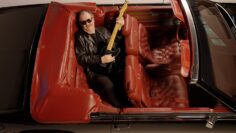

A lush, late-night dispatch from an artist who stepped away, looked inward, and returned unafraid
“I quit the idea of me.”
— Casey Dienel, “People Can Change”
After eight years of near-total silence, Casey Dienel didn’t just re-enter the scene — they remade the rules. My Heart Is an Outlaw, released October 17, 2025, marks the artist’s first album under their birth name after retiring their White Hinterland alias. But this record isn’t just a name change. It’s a full-bodied creative metamorphosis: expansive, warm, layered with meaning, and unapologetically free.
Dienel’s decision to walk away in 2017 — at what seemed to be the peak of their indie ascent — felt jarring at the time. But now, hearing Outlaw, it makes sense. You don’t get an album like this — so lush, so spiritually awake, so at peace with its contradictions — without going off-grid for a while. This is what artistic clarity sounds like.
A Record About Letting Go of Old Versions of Self
From the opening notes of “People Can Change”, it’s clear that My Heart Is an Outlaw is about renewal — but not the glossy, polished kind. It’s about the messy, overgrown, stubbornly human kind. Dienel sings with grace and slight wariness over jazz-tinged piano:
“I quit the idea of me.”
That line frames the album’s mission: shed the artifice, soften the sharpness, and embrace contradiction. There are no anthems here. No attempts to go viral. Instead, this album builds a home for stories that don’t fit the algorithm — songs about queerness, gender play, family myths, tiny heartbreaks, and growing into something unfamiliar.
1970s Soft-Rock Meets Queer Indie Clarity
Musically, Outlaw blooms in a world between Fleetwood Mac’s Tusk, Carole King’s Tapestry, and modern-day explorations like Weyes Blood or Julia Holter. There are horns, pianos, shimmering guitars, glockenspiels, harmony stacks — all arranged with care and restraint.
But this isn’t pastiche. Dienel uses the lush sonic textures of ’70s pop not to emulate a sound, but to house a feeling — one of intimacy, ambiguity, and open-ended love.
Songs like “Seventeen” ride crisp, disco-glow rhythms while reflecting on adolescence and self-delusion. “Your Girl’s Upstairs” sways with bluesy humor, playing like a feminist torch song rewritten for a smoky queer cabaret. The album’s longest cut, “Tough Thing”, closes the record with a nine-minute emotional sprawl that’s part mantra, part surrender. Dienel’s voice here is soft, a little worn — like someone who’s stopped trying to be heard over the noise, and instead sings into the quiet.
Lyricism That Honors Process, Not Perfection
What sets Outlaw apart is how process-oriented it is. These songs aren’t tidy, three-act narrative arcs — they are emotional snapshots, pages pulled from a journal that were meant to be kept private, but are offered anyway.
In “Little Garden”, Dienel sings:
“Loved it so hard, though nothing came up.”
It’s a line about effort without reward — a quiet heartbreak that lingers well beyond the chorus.
On “Bit by Bit”, they explore healing not as a destination, but as slow, mundane work:
“I thought I’d feel brand new. I felt like old shoes instead.”
These lyrics aren’t trying to be clever. They’re trying to be true. The record doesn’t promise closure — and that’s what makes it comforting. It tells you that transformation can be quiet, and freedom doesn’t always look like power chords and proclamations. Sometimes, it sounds like a Rhodes piano and a voice learning how to soften.
The Comeback That Doesn’t Call Itself One
In today’s fast-paced cycle of disappearances and returns, “comeback albums” can often feel like strategic reboots. My Heart Is an Outlaw is something different. It doesn’t scream I’m back! — it whispers: I never really left. I was just becoming.
Dienel reclaims their own name, sidesteps industry expectations, and offers a record that is richly melodic, narratively complex, and emotionally generous. It’s not chasing virality — it’s asking for patience. And if you give it that, the album rewards you in waves.
Standout Tracks
- “People Can Change” — A declaration of identity, uncertainty, and new beginnings.
- “Your Girl’s Upstairs” — Irreverent, sly, and deeply queer. A new kind of love song.
- “Seventeen” — Catchy in an understated way; reflects on the myths of youth and femininity.
- “Tough Thing” — A slow-building, meditative closer; the emotional heart of the record.
Final Thoughts: A Grown-Up Pop Record With a Wild Soul
My Heart Is an Outlaw isn’t the type of record that commands attention with noise — it earns it with nuance. It’s pop music made by someone who’s been silent long enough to value sound again. It’s soft rock for hard feelings. Queer pop without performance. A love letter to identity as something elastic, not fixed.
Dienel has re-emerged with a record that feels both timeless and of the moment. It’s the kind of album you sit with, return to, and — eventually — see yourself in.
🏆 Exposed Vocals Verdict: 9/10
A brave, beautiful return. Lush, thoughtful, and emotionally alive — My Heart Is an Outlaw is one of the year’s most important indie records.
For fans of: Weyes Blood, Carole King, Julia Jacklin, Florence Welch (on downers), Brandi Carlile, Soft pop with sharp bones.
Buy it if: You want an album that believes in slow healing, queer truth, and the idea that the best art isn’t always the loudest. You can purchase the album here