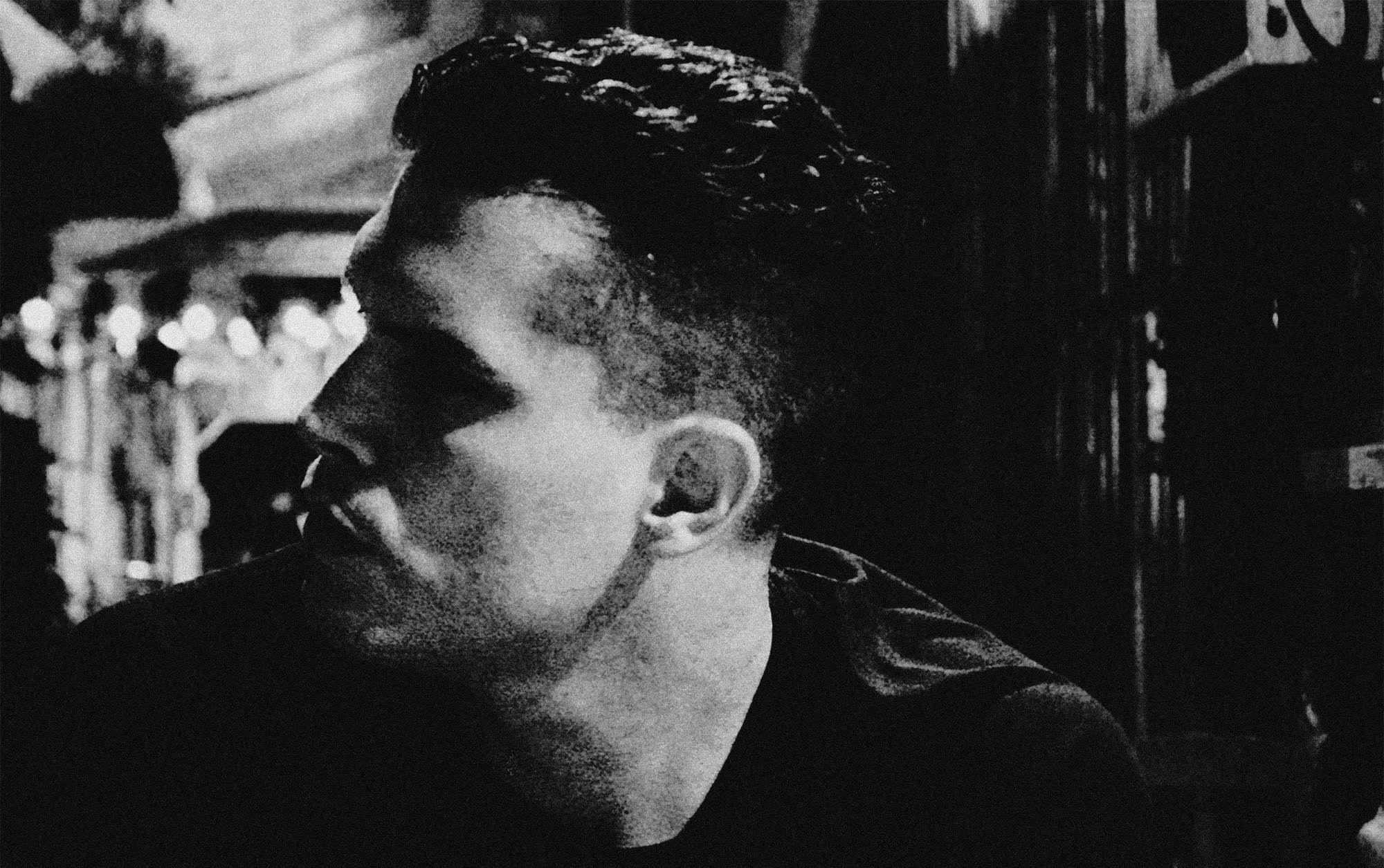
Released via Evil Ideas on October 10, 2025, Martel’s Zaire is a six-track descent into the political unconscious of techno. Stark, layered, and unflinching, the album confronts the enduring legacy of colonial exploitation in the Congo and the complicity of global systems in perpetuating it. But this isn’t protest music in the conventional sense — it’s an immersive, pressure-cooked soundscape that speaks in rhythm, texture, and atmosphere.
Musically, Zaire trades polish for power. Its hand-played percussion, polyrhythmic loops, and fragmented field recordings give the project a jagged, tactile edge — a far cry from the overproduced sheen of mainstream Afro-house or the sanitized spiritualism of festival-ready “world music.” Martel builds tracks that feel lived-in and on-edge, designed not to soothe but to stir. The album is just as informed by his background in architecture and cinema as it is by underground club culture, resulting in a sound that feels sculpted, not sequenced.
Tracks like “The Ghost” and “Lumumba” operate as both hypnotic club tools and sonic essays — each one excavating buried histories while maintaining dancefloor momentum. It’s techno with teeth, grounded in geography, ideology, and personal experience. With past work spanning film, underground parties, and video games (including the brooding Bleak Faith: Forsaken), Martel brings a multidisciplinary precision to his productions that resists easy classification. Zaire is less about escape and more about confrontation.
We caught up with Martel to explore the ideas behind the album, his production approach, and where he sees electronic music headed in an increasingly politicized world.
🎤 Exposed Vocals: Zaire feels both cinematic and political — what first inspired the concept behind this album?
🎧 Martel: It wasn’t a lightning bolt moment. It was more a slow burn of frustration I’d get reading the news, seeing the same cycles of exploitation play out in the Congo, over and over — so I wanted to make something that felt as vast and heavy as that history, but also immediate, something you could feel in the room with you.
🎤 Exposed Vocals: You’ve described the project as an “audio-political meditation.” How did you balance message and music during the creative process?
🎧 Martel: I stopped thinking of them as separate things. The anger, the urgency — they are natural when one is a compassionate being witnessing severe injustices. It was the drive to make a synth line feel more aggressive, to push a rhythm until it felt like it was breathing hard, but without going over the top rave-style, even if I love that. Rather, I aimed for a breathing, organic, lively sound that would do well in translating a mood of tension and a brooding taste to the atmosphere.
🎤 Exposed Vocals: The textures in Zaire — from field recordings to hand-played percussion — give it a very tactile sound. What was your process for capturing and layering those elements?
🎧 Martel: It was pretty organic, honestly, but with all the technology on offer nowadays, I can’t say I didn’t rely on everything and anything to make it all sound the way I wanted it to. So, sampling, synthesis, playing actual drums, sequencing, sprinkling that with more samples… Mixing too, as track-crafting was there.
🎤 Exposed Vocals: “The Ghost” set a distinct tone for the record. How did that track evolve, and why was it the right one to lead with?
🎧 Martel: It’s the most overtly ideological one, so if anyone gets lost with the other pieces, you kind of get what side I’m leaning on with that one. And also, it’s air-tight in its density, with the double kick that follows up through the beat — again, pushing into ritualistic, shamanic territory.
🎤 Exposed Vocals: As someone with a background in architecture and film, how do those disciplines influence your composition and production style?
🎧 Martel: World-building, really. Music can feel very linear if all it pursues is a feeling or a mood. Trying to build an entire scape behind the sound, trying to evoke a genuine sense of space without overdoing things — that’s something you learn from architecture. And film — well, pacing and rhythm are everything if you want to stand out from what’s already out there.
🎤 Exposed Vocals: The album challenges the “exotica” and commercialization of African sounds in electronic music. How important was it for you to confront that narrative directly?
🎧 Martel: It was everything. It makes me crazy to hear these rich, profound rhythms get turned into a lazy sample pack for a tropical deep house track. It strips all the meaning out of a world of sound. With Zaire, I wanted to put the context back in. The groove is there, but so is the history. You can’t have one without the other if you’re being honest, and you have to dive in if you are making something respectful — not just decorative.
🎤 Exposed Vocals: Are there specific historical or personal moments that shaped Zaire’s emotional core?
🎧 Martel: The ’50s, ’60s, and ’70s are the main inspiration, but our era just as much really. I love even the idea of Western empires being very happy with complete national name changes, as long as the regime ruling serves their own interests. And Zaire — as a period before it turned back into the Congo again — and its plethora of problems today is a manifest of that… Of how destructive our meddling is, but how we never care to see the actual damage we are capable of — both historically, and especially nowadays.
🎤 Exposed Vocals: What role do you think techno and experimental electronic music can play in political or cultural discourse today?
🎧 Martel: Well, they’re gentrified to hell and back, so I really hope a bit of the grassroots ethos and the true sense of community will pull a part of the scene into its own direction — and hopefully with a heavy load of politics this time around, just as it used to be political in the very beginning. Art sometimes needs evolving, and so it is with music. The same way we sidelined the Beatles when what they wanted to say was less important than Joe Strummer’s voice in the ’80s, the same way I really don’t care about what Ben Klock or Richie Hawtin have to say musically after decades of dominating the field in a scene whose most important voices are coming from the fringes and who are still relatively unknown. Techno should three-dimensionalize itself beyond the 808 and hypnotic feelings — it’s no longer enough, and even the preppies have caught on to that. It needs danger, and political thought is again becoming dangerous, all over Europe.
🎤 Exposed Vocals: You’ve worked across London, Philadelphia, and Nicosia — how have those environments shaped your approach to sound and storytelling?
🎧 Martel: Think of it this way — you live in a city for 25 years, you’ve lived a life. You’ve lived in three cities for the same amount of time, you’ve lived three lives whether you wanted to or not. In many ways, this translates to creating. More fields help you navigate expression and styles more easily, and it all gives a confidence to strive for fresh moments that rarely happen to those stuck in the world they’re comfortable in.
🎤 Exposed Vocals: What’s next for you following Zaire — are there performances, installations, or future collaborations on the horizon?
🎧 Martel: More EPs, more albums, another video game, a film scoring, and definitely more techno!