
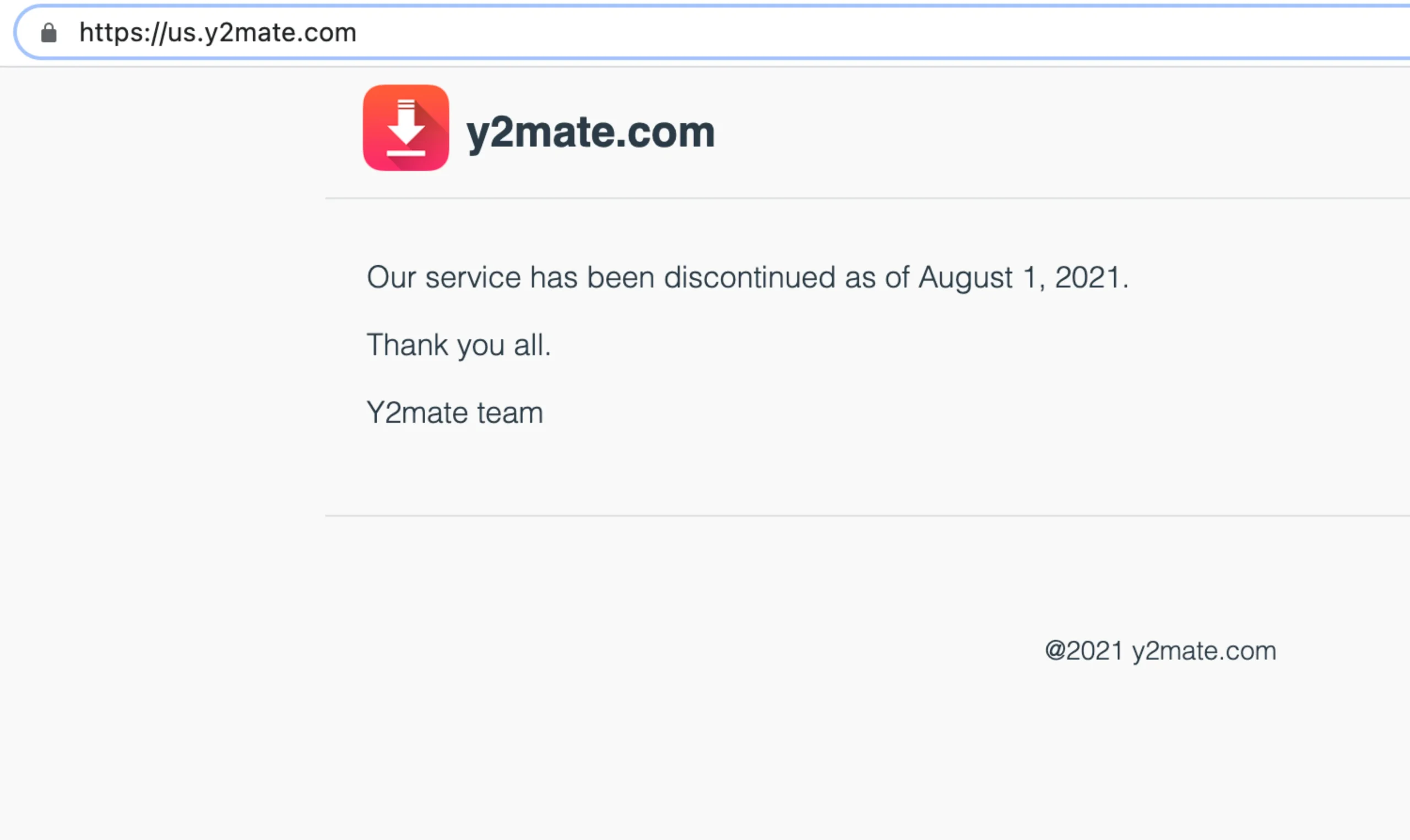
In a significant anti-piracy sweep, the International Federation of the Phonographic Industry (IFPI) has successfully shut down Y2mate.com — one of the world’s most popular stream-ripping sites — along with 11 others based in Vietnam. The operation marks one of the largest takedown actions of its kind, targeting services that collectively received over 620 million visits in the past year.
This isn’t just a legal win. It’s a strategic one. Most of the domains, including Y2mate.com, Yt1s.com, Tomp3.cc, and Utomp3.com, are now in IFPI’s possession, effectively cutting off access and visibility to millions of users. While domain takedowns are often temporary roadblocks in the piracy landscape, this case represents something larger: a display of legal coordination, regional cooperation, and tactical precision.
Stream-ripping — the process of extracting audio from platforms like YouTube — remains one of the most pervasive forms of music piracy worldwide. For years, sites like Y2mate have enabled users to download songs without paying for them, bypassing licensed platforms and undermining the streaming economy. The damage is especially real for artists and rights holders operating at the margins, where every stream and payout counts.
Vietnam has long been considered a hotspot for stream-ripping activity, in part due to weaker enforcement environments and technical loopholes. This recent action by IFPI, in collaboration with Vietnamese authorities, signals a shift. It suggests that local regulators may be taking intellectual property enforcement more seriously, especially under international pressure.
Still, the broader question remains: how effective are these takedowns in the long term? The piracy landscape is notoriously resilient. Sites often reappear under new domains, mirror links, or operate through anonymous proxy networks. For every Y2mate that goes offline, another variant is often only a few clicks away.
That’s where domain control becomes critical. By taking ownership of these sites’ domains, IFPI gains a tactical edge — it can redirect traffic, shut down copycats faster, and potentially use the visibility to educate users or track infringement patterns. It’s a deeper kind of enforcement than a standard cease-and-desist, and one that may help slow the spread of copycat platforms.
For artists, labels, and distributors, this is welcome news. Piracy may not dominate headlines like it did in the early 2000s, but its economic toll hasn’t vanished. Stream-ripping may feel like a passive offense to casual users, but on a global scale, it extracts millions from a creative economy already facing pressure from rising costs, algorithmic competition, and streaming payout models that often favor scale over substance.
IFPI’s latest move won’t solve piracy overnight, but it shows what a targeted, globally coordinated response can look like in 2025. Enforcement alone won’t fix the structural gaps in music monetization or change user behavior — but it can set new boundaries and disrupt the systems built to exploit creators. That’s not just a legal win — it’s a cultural one.