
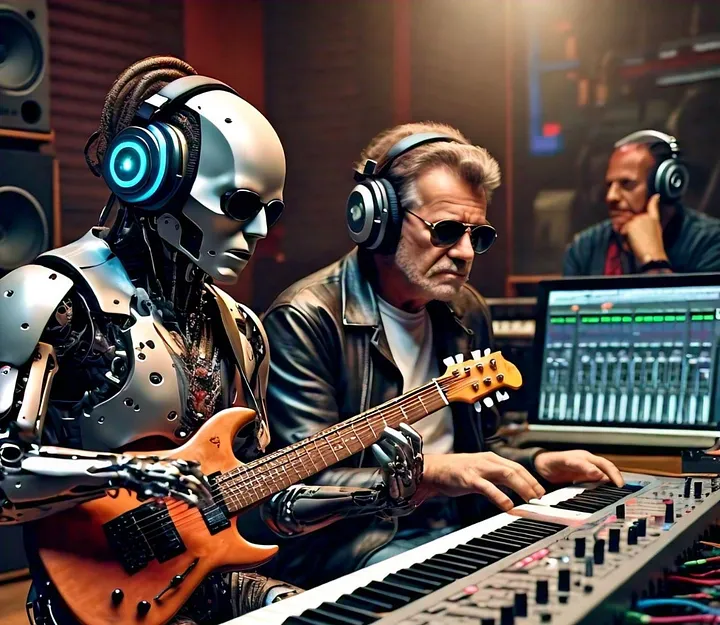
The music industry in 2025 is being redefined not just by trends in sound or genre, but by the rise of artificial intelligence in every phase of music creation. From composition to final mastering, AI tools are now fully embedded in the workflows of producers, engineers, and independent artists — and the results are both impressive and disruptive.
AI-powered stem separation tools allow producers to isolate vocals, drums, bass, and melodies from full mixes with precision that was unthinkable just a few years ago. This has not only opened the door for more creative remixing and sampling, but it’s also changing how live performances and DJ sets are constructed, with real-time reworking of tracks becoming more common.
Voice cloning technology has moved beyond novelty to become a serious tool in the studio. Artists are using AI to demo songs in their own voice before ever stepping to a mic, while some are pushing boundaries by creating digital vocal features — complete with emotional nuance — that can be fine-tuned without a human vocalist present. While controversial, the technology is here and being actively used, particularly in pop, electronic, and experimental genres.
AI mastering services have also evolved significantly, with platforms now offering mastering chains that adapt dynamically to genre, mood, and even release platform. For budget-conscious indie artists, these tools provide radio-ready sound at a fraction of the cost and time of traditional mastering sessions.
Behind these advancements are a mix of scrappy startups and major players. Companies like Lalal.ai, Moises, and iZotope are competing with new entrants developing more intuitive, artist-friendly interfaces. Meanwhile, producers are becoming as fluent in prompt writing as they are in EQ curves, signaling a shift in what it means to be technically skilled in the studio.
The creative implications are massive, but so are the questions — around originality, authenticity, and the value of human input. Some argue AI is eroding the soul of music. Others see it as the most liberating toolkit since the invention of multitrack recording.
What’s certain is that AI isn’t coming — it’s already here, shaping the sound of 2025 across genres, borders, and skill levels. From bedroom producers to Grammy winners, the tools are available, and the only limit is how artists choose to use them.