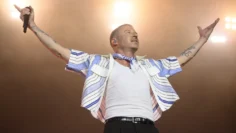

The high-stakes federal sex-trafficking trial of Sean “Diddy” Combs is hurtling towards a pivotal conclusion. With jurors immersed in a whirlwind of evidence, the impending verdict looms large as the beleaguered music tycoon has made the weighty decision to eschew taking the stand in a bid to defend himself.
For over a month, Combs has found himself entangled in the shroud of bombshell allegations, accusing him of utilizing a potent cocktail of violence, financial coercion, and blackmail to ensnare women into a web of drug-fueled spectacles dubbed “freak-offs.” Asserting his innocence amidst the storm, the rapper stares down the barrel of a potential life sentence should the verdict tip against him.
The prosecution’s case, steeped in videos, text threads, and a cavalcade of witnesses, reached its crescendo as famed singer Cassie Ventura and an enigmatic figure known simply as “Jane” – both former flames of Combs – took to the stand to recount their harrowing tales of being cajoled into the lurid world of the freak-offs.
In a stark departure from the norm, Combs’ legal team opted not to parade any witnesses of their own, choosing instead to rest their case swiftly after a truncated session of presenting incriminating text messages. Controversially, Combs himself opted for silence, a tactical evasion often favored by defendants wary of the perils lurking in the crucible of cross-examination.
In a familiar courtroom ritual, Judge Arun Subramanian sought explicit confirmation from Combs regarding his decision to abstain from testifying, underscoring the gravity of the forfeiture in play.
A terse affirmation from Combs – “That is solely my decision” – followed by an appreciative nod to the judge for presiding with excellence, punctuated this pivotal moment in the trial’s narrative arc.
Bucking the trend of calling upon witnesses, Combs’ defense pivoted their strategy around the contentious terrain of consent, contending that the provocative soirées orchestrated by the rapper were steeped in voluntary participation. This narrative thread was deftly interwoven through a strenuous cross-examination of Ventura and Jane, spotlighting purported moments of eagerness conveyed in the very text messages now dissected under the courtroom’s unforgiving gaze.
During a motion for acquittal, Defense lawyer Alexandra Shapiro bolstered this stance, drawing a crucial distinction between Combs’ alleged “regrettably violent” conduct towards Ventura and the starkly different trajectory of sex trafficking. Shapiro’s impassioned plea tacitly underscored the premise that Combs, ensconced in his position of influence, would have ostensibly gauged a semblance of enjoyment and autonomy in the shared sexual realm.
The judge, grappling with a weighty decision on the acquittal plea, laid bare the legal intricacies at play. While such motions often find minimal traction, they serve as instrumental building blocks for defense attorneys intent on bolstering their arsenal for potential appeals.
As the legal juggernaut hurtles towards a climactic juncture, jurors brace themselves for a brief respite ahead of a grueling session earmarked for dissecting legal directives with Judge Subramanian. The stage is set for the crescendo of closing arguments, slated to reverberate through the courtroom corridors in a marathon session expected to unfurl over, at the very least, a full day.
Post the legal symphony of closing arguments, the judge will embark on the arduous task of imparting lengthy legal instructions to the jury – a ritual often stretching across multiple hours. The labyrinthine journey of deliberations, slated to commence either late on Friday or trickle into the onset of Monday, remains shrouded in uncertainty – a tantalizing enigma waiting to be decoded through the unanimous consensus of the jury.