The Grind: Give Mix Notes an Engineer Can Actually Use

“Make it bigger” can mean a wider chorus, a louder vocal, heavier drums or a completely different arrangement. If your engineer guesses wrong, both of you can work hard and move the song farther from the intended result.
Useful mix feedback translates a reaction into an understandable decision. You do not need to prescribe an EQ curve or know the name of every processor. You need to explain the moment, the problem and the experience you want the listener to have.
Agree on the target before the first mix
A 2023 exploratory study by Soumya Sai Vanka and colleagues examined engineer–client communication through interviews with five mixing engineers and a questionnaire involving 22. It highlights the collaborative role of references and communication; that small sample is useful context, not a universal formula for every studio.
Our practical recommendation is to write a short intent statement before mixing begins. For example: the vocal should feel intimate in the verses, the chorus should open outward, and the drums should retain the rough mix’s urgency. Pick the three qualities that make this particular record itself.
Include your rough mix and identify what you want to preserve. If a distorted guide vocal is essential to the character, say so. Otherwise, an engineer may understandably treat it as a defect to remove.
Use references to answer a specific question
iZotope’s referencing guidance recommends matching playback levels, focusing on individual elements and comparing corresponding sections. A mastered reference can be louder than a working mix, making a louder-versus-quieter comparison misleading.
Choose a small number of references and give each a job. One might illustrate vocal space; another might demonstrate the relationship between kick and bass. Link to the exact recording and mark the relevant section. Describe what you admire instead of asking for an entire unrelated production to be copied.
Keep the emotional goal in view. A reference is a conversation aid. Your song still has its own arrangement, performance and identity.
Listen once without stopping
For the first pass, close the message thread and hear the whole song. Write down the broad reaction afterward. Does the chorus arrive? Can you follow the central lyric? Did anything distract you from the performance?
On the second pass, investigate those reactions. Note the timestamp and the element involved. Compare the same moment in the rough mix if necessary. This helps distinguish a genuine balance problem from surprise at hearing a familiar demo presented differently.
Use listening equipment you know and a comfortable level. If you check another system, record which one revealed the issue. “Bass disappears on my usual small speaker” gives more context than “the bass is wrong.” It still invites investigation rather than proving a single correct technical fix.
Write notes as moment, observation and goal
Consider this invented example: “At 1:12, the first line of the chorus becomes hard to follow when the guitars enter. Please help the lyric stay clear while keeping the chorus energetic.” It identifies a location, describes the listening problem and leaves room for the engineer to choose an effective solution.
Compare that with “add 3 dB at 4 kHz.” Unless you are deliberately collaborating on a technical choice, that instruction may solve the wrong problem. The issue could involve competing instruments, automation, phrasing or something else entirely.
Separate corrections from preferences. A missing backing vocal or an unwanted click is a concrete fault to investigate. Wanting a drier vocal is a creative preference. Both matter, but they deserve different conversations.
Send one consolidated round
If several people approve the record, collect their comments before sending the next revision request. Identify conflicting notes internally. An engineer cannot simultaneously make the same vocal much wetter and much drier without knowing which direction the project has chosen.
Rank the notes. Start with the few changes that affect the song most, followed by localized corrections and optional experiments. Confirm the agreed revision scope and schedule with the engineer rather than assuming that an unlimited number of new directions is included.
Always name the exact version you reviewed. A timestamp attached to the wrong bounce can create a phantom problem and waste a whole round.
Keep an approval trail
For each new version, mark earlier notes as resolved, still open or superseded. Hear the whole song again after checking individual changes. A technically successful adjustment can still disturb the larger balance.
When you approve a mix, record the filename and approval date in the project folder. Treat approval of the mix, the master and alternate deliverables as separate checkpoints. If a clean version, instrumental or performance backing track is required, confirm and check those files explicitly.
The strongest note is not the one with the most engineering vocabulary. It is the one that lets another person understand what matters and make a confident decision. Clear feedback protects the working relationship and gives the song a better chance of arriving intact.
Sources and working notes
This guide combines the primary resources linked above with Exposed Vocals’ practical editorial recommendations. Sources checked October 28, 2026.
Featured stock photograph by James Kovin via Unsplash, used under the Unsplash License. Illustrative image; no endorsement implied.
Keep reading
Back to The Grind ↗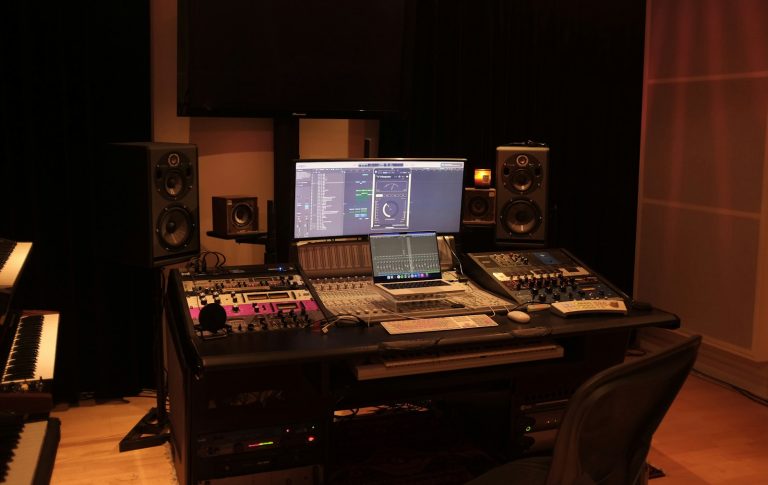
From this section
The Grind: Your Session Is Not Backed Up Until You Can Restore It
October 28, 2026
From this section
The Grind: Advance the Show Before You Load the Van
October 28, 2026
From this section