
Emily A. Sprague’s new album Cyano begins with world-building before it ever reaches the question of genre. Released October 2 through RVNG Intl., the 14-track, 47-minute project imagines a distant planet whose inhabitants are attempting to recover forms of expression and emotional connection that have been suppressed.
Sprague composed, produced and performed the entire album. Heba Kadry mastered the record with assistance from Jacob Clements, while Josh Bonati cut the lacquers. Sprague also created the original artwork, extending the album’s imagined environment beyond the audio itself.
Ambient music as science fiction
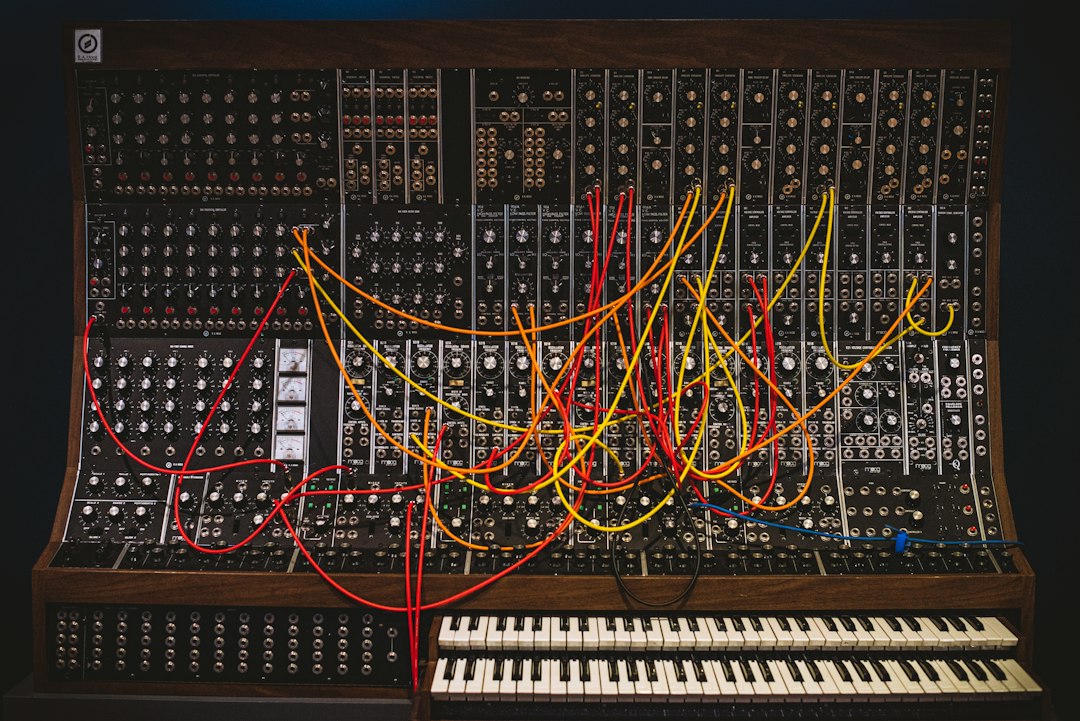
The concept behind Cyano gives Sprague a framework for questions about selfhood, ecology, visibility and communication. The record was developed through modular synthesizers and voice, but its electronic vocabulary is intentionally connected to organic sensation. That overlap is especially appropriate for an artist whose work has long moved between the synthesizer compositions released under her own name and the intimate songwriting of Florist.
The album’s science-fiction premise grew partly from Sprague’s engagement with cyanotypes and the work of pioneering photographer Anna Atkins. Rather than treating that inspiration as decoration, Cyano uses ideas about light, transmission and image-making as part of the project’s larger language.
Two sides of Sprague’s work begin to meet
Sprague’s catalog has often been discussed as two parallel practices: songs with Florist and instrumental electronic music as a solo artist. Cyano makes that division less useful. Voice appears inside the electronic environments, while short compositions allow melodic ideas to surface and disappear without being forced into conventional song structures.
The result is a release that can be approached as ambient music, experimental electronic composition or a piece of speculative world-building. More importantly, it shows Sprague using the studio not merely to construct sounds but to imagine the social and emotional rules of another place.
Editorial image: Ryunosuke Kikuno / Unsplash, licensed via Unsplash. Image is illustrative and does not depict the artist unless otherwise stated.