Album Review & Exclusive Interview
Came From a Woman
Part Time Baby
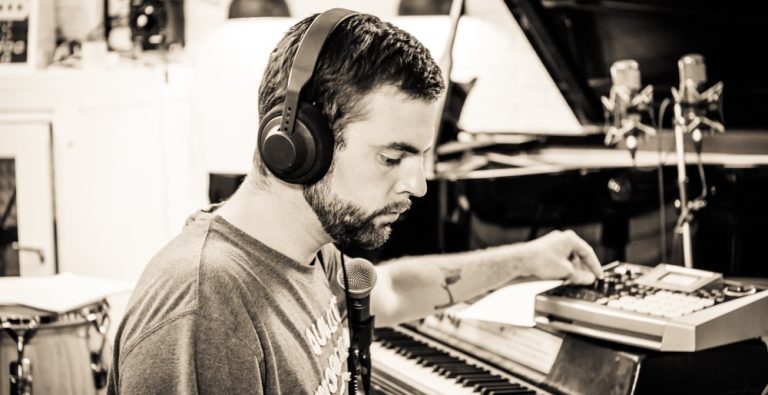
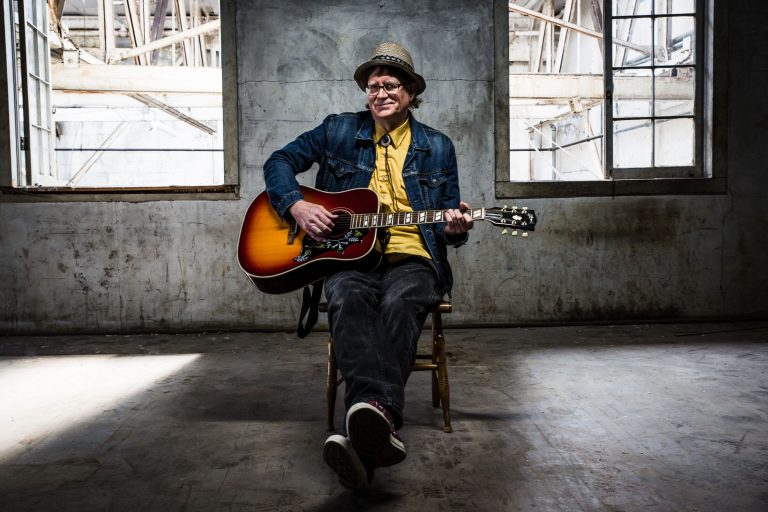
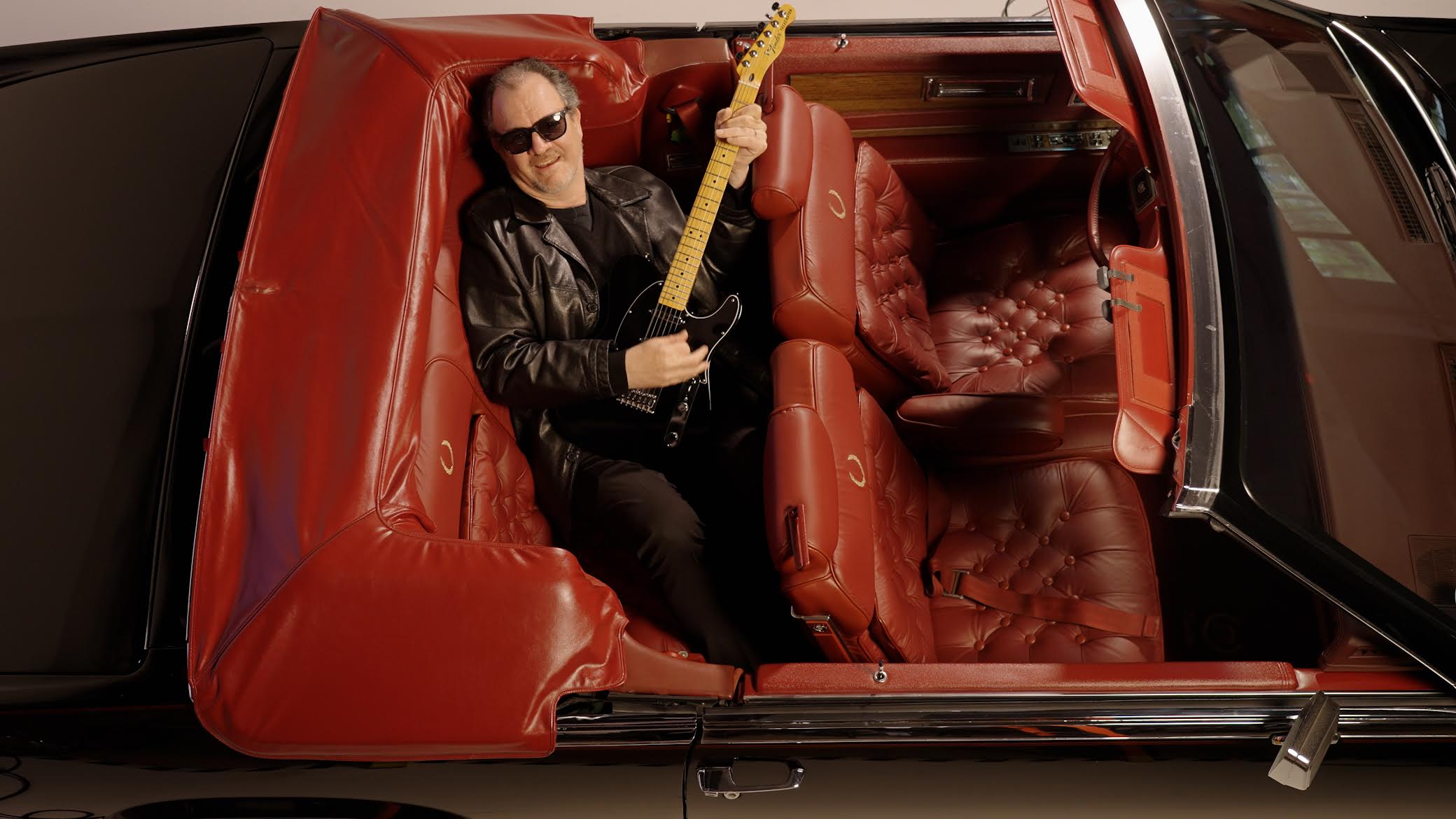
After decades immersed in band life and collaboration, Mike Goldstein—now performing as Part Time Baby—has found a new creative rhythm through introspective solo work. His second solo album, Came From a Woman, is a deeply personal and spiritually resonant project, weaving moments of vulnerability, memory, and sonic experimentation. Each track carries its own weight and story, rooted in real-life experience and musical craftsmanship. In this exclusive track-by-track breakdown, we sat down with Part Time Baby to explore the inspirations, songwriting processes, and emotional layers behind each song.
Jump to a track
Track 1
Alive With You
A warm, textured introduction that sets the stage for what’s to come
We begin with the album’s opening track—a warm, textured introduction that sets the stage for what’s to come.
“Alive with You” opens the album with such warmth and emotional gravity. What inspired this song, and why did you choose it to lead the record?
Part Time BabyThis song began as a collaboration between my dear friend and sometime songwriting partner, Sam Gaidemak. We met at Dickinson College in Carlisle, PA in 1988, and went on to form a touring rock band in the mid-1990s, Ethel. Sam was going through a transitional period as his first marriage was coming to an end when we wrote this song in 2009. The lyrics are written from the point of view of someone who is deeply in love, but there’s an undercurrent of resentment because the love object is a bit of a player, so to speak. “I don’t mind, but I mind, can you tell?”… I chose this track to begin the album because it’s damn catchy, and I think it excites the ear from the get-go. Seemed like a good leadoff hitter to me!
Can you walk us through the musical choices on this track—the instrumentation, the layering, and how it sets the tone for the rest of the album?
Part Time BabyThe backbone of this song is a singular chord progression—E minor, D major, C major, G major—voiced differently between the verses and choruses. In the verses, I’m playing the chords in open tenths, which creates a bright, light texture. For the choruses, I switch to first position voicings, which really pull a mellow tone from the acoustic guitars. Over that, I added a lilting piano figure, which is intended to add a high register texture against the simple vocal melody, “but it’s alright…”
You’ll also hear a melodic obligato acoustic guitar track in there—that’s my good friend D. Davis, who is another Dickinson College connection. D. is a professional musician who lives in Montpellier, Vermont. Such a fantastic musician, and I am so lucky that he takes the time to visit me in New Jersey, where he grew up. D. is featured on several tracks on both of my albums.
I use harmonica to build the textural layers at the beginning of the song, before the vocals come in. The harmonica sort of acts as an organ pad throughout the rest of the song, with extended notes that the other instruments can bounce off of. I also throw in a Telecaster guitar part in the choruses which adds some harmony. I used a nice little GarageBand drummer with prominent use of brushes, which has these nice triplet figures on the snare drum, along with subtle cymbals. And then in the bridge, I used a sample of birdsong—you’ll hear this sort of thing on many of my other songs—I love layering in natural and manmade sounds in my music.
There’s a powerful sense of presence in the lyrics. Was “Alive with You” drawn from a personal moment or memory, and how does it tie into the larger themes of the album?
Part Time BabyLike I mentioned, the lyrics came initially from my friend Sam, who was going through a tough time. He was in the excruciating process of getting divorced, and was at the same time back on the dating scene. The lyrics portray someone who is infatuated with a lover, and there’s a hint of resentment for the “games” that are being played.
It’s in the bridge that we get to the root of things, and that loneliness is the most painful thing, along with the passage of time. So, we date and play these romantic games, because it’s better than being alone. I guess that’s the gist of the song. Like other tracks on the album, it’s a reflection and a revelation about a certain time in one’s life. I’m pleased to report that Sam is now happily remarried, and still writing great lyrics! Another successful lyrical collaboration of ours is the track “Matter of Faith” from my first album, Only the Ocean.
Track 2
Search for the Sign
A soulful search for meaning in the quiet aftermath
Following the warm, emotionally textured opener, “Search for the Sign” delves into more solitary terrain. It’s a poignant portrait of stasis, grief, and the quiet fight to rediscover purpose after life’s most defining chapters fade into memory. The repetition of “it’s all in your mind” shifts the narrative from passive resignation to active self-realization—a whispered awakening.
“Search for the Sign” feels incredibly personal and emotionally honest. Was there a particular life moment that sparked the writing of this song?
Part Time BabyThe song began many years ago when my elder daughter was a toddler, and as a lark, I wrote a silly love song for her called “Bess Anna.” Same reggae beat chord progression, but with a totally different melody. I always knew the musical idea had legs, and so when I was putting this album together in the initial stages, I decided to work out this song. It went through a couple of poorly executed lyrical and melodic iterations until I decided to channel one of my musical heroes, Paul McCartney. Frustrated by my lack of success here, I asked myself, “what would Sir Paul do with this melody?” So, I got myself into an “Ob-La-Di, Ob-La-Da” frame of mind, and came up with the bouncy melody. The life moment that inspired the lyrics was that of being an empty nester, and searching for meaning post-child-raising. Considering where and how the song idea began, as “Bess Anna,” I think that’s ironic.
The line “Now that children are gone, how you gonna fill the days?” is especially moving. Was this written from the lens of parenthood or a broader metaphor for loss and change?
Part Time BabyI chose to write the lyrics as if I were singing to my wife, who was going through a period of down. But I could have equally been singing them to myself in the mirror. It’s both, really. As parents, our identities become increasingly shaped by our children, their experiences, and our role in keeping them safe, loved and well-rounded. Once they’re grown, it leaves a bit of a void, and this song names that void, while seeking to provide some encouragement to overcome the sadness and sense of loss.
Musically, the song mirrors the lyrical journey—from stillness to motion. Can you talk about how you built that progression in the arrangement?
Part Time BabyThere are 2 parts to the song—the reggae-ish 4-chord progression, which moves over 4 bars, but at the same time is quite repetitive and static. The underlying bass line is really a hook in and of itself. What moves the listener from stasis to a sense of action is the lyric over the end of this progression, in both verses—”…it’s the same old story / and any day now, you’re gonna find…” That carries you to the second song section, which is 2 simple chords—E minor and A7. And while that progression is musically less active than the verse, it’s the juxtaposed lyric encouraging resilience and change which creates some emotional motion.
There’s a repeating affirmation—”You can change this.” Did you intend this song as a message of empowerment for listeners going through transitional phases in life?
Part Time BabyYeah, big time. That’s the entire point of the song. I hope it will resonate with people who need to hear that message.
Were there any influences, literary or musical, that helped shape the message or sound of this track?
Part Time BabyLike I said, Paul McCartney helped me out here with the melodic shape. I copped the verse 4-chord progression (B minor / F# minor / G major / D major)—probably subconsciously—from Weezer’s song “Undone.” And with the bass line hook, I was going for something that one of my idols, Badly Drawn Boy, would have done.
You’ve mentioned blending natural and human-made sounds in your work. Are there any hidden sonic textures in this track that listeners should lean in and catch?
Part Time BabyNot so much in this song, although I definitely weave in natural and sampled sounds in my other tracks. This song is all musical instrument-made (guitars / bass / drums / synth), and lots of me multi-tracking my voice. I love to layer vocal harmonies and unison melodies to create a thick and choral sound. I think listening to a lot of Queen as a kid gave me that inspiration, and you’ll hear that vocal approach in many of my songs.
Track 3
Came From a Woman
Bold, poetic, and rhythmically driven—a tribute to feminine power
“Came From a Woman” is equal parts gospel, spoken-word, and soulful funk, channeling the spirit of Gil Scott-Heron. The hook challenges the listener to reframe the seemingly mundane as sacred, tracing not only humanity, but innovation and culture, back to its feminine source. Goldstein’s ability to blend reverence with realness elevates the piece into something both timely and timeless—a love letter, a wake-up call, and a challenge to reimagine our origin stories.
This track feels like a spiritual and cultural manifesto. What was the moment or inspiration that sparked “Came From a Woman”?
Part Time BabyThe moment of inspiration came from a meme I saw on Facebook. It listed several inventions that were created by women, ending with the line: “you came from a woman.” That really struck a chord with me. It nudged me to thread together three different musical ideas that had been sitting in my mental song attic for years.
There’s a lot of symbolism in your lyrics—from biblical references to brown paper bags and GPS. How did you decide what made the cut?
Part Time BabyThere were a few other ideas in that meme—like “Monopoly game” or “circular saws”—that I considered. But ultimately, I chose the lines that worked best metrically and matched the rhyme scheme. For example, “invisible glass” paired well with “your a$$,” and “GPS” matched up with “this whole mess.” As for the biblical references, I started with the familiar idea of Eve being made from Adam’s rib. From there, I morphed that rib into a metaphor for female strength—”backbone,” “shoulders strong.” It felt right to honor that resilience in the lyrics.
The repetition of “change our minds” is powerful. What specific societal beliefs or narratives are you hoping to challenge with this song?
Part Time BabyMen have largely run the world since the discovery of fire—and look where that’s gotten us: endless wars and a looming environmental collapse. “And now it’s time to change our minds” is a call to rethink that paradigm. We need to make more space for women to lead and shape our future.
On a personal note, I’ve been married to my incredible wife for 25 years and we have two amazing daughters, now 23 and 20. I’m horrified by what’s happening in my country right now—laws being passed that attack women’s rights and healthcare. It’s infuriating. That anger absolutely found its way into this track. In fact, when I was recording the choruses in my basement studio, my wife called down, “You sound angry!” I guess I was. I guess I am.
Musically, the track feels minimal yet impactful. Can you talk about your approach to production and why you kept it stripped down?
Part Time BabyLast summer, I was in Seattle and stumbled into a guitar shop where I found a 1978 Ibanez AR-2622 AV—an electric guitar I’d been dreaming of. I finally pulled the trigger. Once I had it in the studio, I built the track around its sound. I kept the arrangement minimal because I wanted that beautiful tone to shine. You can hear it especially in the intro, where I layered some feedback through my Vox Mini Super Beetle amp. The vintage humbuckers are whisper quiet and absolutely stunning. Incidentally, Steve Miller used the same model—which makes me love it even more. This guitar is crunchy, clear, and full of soul. I’m obsessed—can you tell?
If someone only hears this song once, what’s the one thing you hope they walk away remembering or feeling?
Part Time BabyI hope the chorus gets stuck in their head in the best way possible. And I hope it inspires them to feel uplifted—and maybe even to call their mother, if she’s still around. 😊
Track 4
Demon
A slow burn—smoky, intimate, and laced with contradiction
“Demon” explores the emotional gray areas we all slip into—the messy overlaps of comfort and chaos, love and addiction, guilt and desire. The standout hook—”Not every angel comes from heaven / And not every demon comes from hell”—challenges the listener to reassess assumptions about good and evil. It’s a confession whispered into the dark—and it lands.
“Demon” feels incredibly personal and emotionally raw. What headspace were you in when writing this track, and was there a specific moment or experience that sparked it?
Part Time BabyThis song’s genesis is a riff rather than a lyric. I was trying to compose something akin to the track “Heart in Your Head Right Now” off my first album, which is a driving, ethereal instrumental track with ghostly vocals. One night I was strumming on my Martin D28 and came up with what evolved into the underlying “Demon” bass riff. A few weeks later, I transferred it over an octave down to my Fender Jaguar bass, ultimately finding the bottom. Once done, the lyrics just sort of popped into my head—emerging from the dark, driving aspect of the music. Lyrically, the word “Demon” emerged out of the musical mist, and I took it from there…
The line “Not every angel comes from heaven / And not every demon comes from hell” is powerful and ambiguous. What does that duality mean to you personally?
Part Time BabyThat hook is a play on the dichotomy of good and evil. Who is the arbiter of good vs. evil—Religion? Government? Culture? History? In my experience, we encounter angels and devils in the most unexpected places. Be open to all possibilities—embracing life while remaining wary. The world is a menacing and marvelous place.
I’ll relate a personal story about where I live—Ocean Grove. It’s a Methodist Christian town on the northern coastline of New Jersey—totally “dry,” and full of quaint Victorian homes (one of which I live in), overshadowed by the massive wood and steel cathedral called “The Great Auditorium.” Directly to the north is Asbury Park—think Bruce Springsteen and the E Street Band. Asbury Park is full of shining culture, as well as vice and murkiness—the best and worst of us. When I stand on the Jersey shore looking out at the vast sea, I think of Ocean Grove and Asbury Park as the “angel on my right shoulder and the devil on my left.” But really, there’s so much more than that picturesque binary.
There’s a strong sense of surrender in the lyrics—like letting the darkness sit beside you instead of pushing it away. How do you view your relationship with the “demon” in the song?
Part Time Baby“Demon” is addiction. Addiction is complicated and all too commonplace. One’s demon is a constant struggle that cannot be fully exorcized—it comes in all forms, and we all have a demon. Even the saints among us abide with a demon. We’re only human. We “ride, hide and side” with our demons every day. There’s no shame in it—so just name it. This song explains that—plainly.
The musical arrangement is stripped back, almost haunting. What influenced your production choices for this track?
Part Time BabyBlack Sabbath was my influence for the musical arrangement for “Demon.” Ever since I was 12, I’ve been a devotee. When I picked up bass guitar in 9th grade, Geezer Butler’s bass lines in songs such as “Paranoid,” “War Pigs,” and “Into the Void” really got me going. The first high school band I was in was a Black Sabbath/Zeppelin cover band, and I’ll never forget those sweaty basement sessions, laboring over those sparse and ominous arrangements, building metal muscle. Sabbath’s first 5 albums are so, so, so good—for me, nothing comes close in terms of essential heavy metal rock. Which one is your favorite? I think mine is Vol. 4, but I might change my mind tomorrow…
If a listener is going through something heavy and stumbles on this song—what do you hope it gives them in that moment?
Part Time BabyI hope this song conveys a sense of acceptance and self-forgiveness. A realization that we all have demons, and that there’s no shame in it. Perhaps embracing that fact, one might be able to identify a pathway forward, finding salvation.
Track 5
I'll Be Free
A quiet release—carving out space in the static
By the time we reach “I’ll Be Free,” Came From a Woman takes a breath—deep and deliberate. This track feels like a pause from the heavier emotional terrain, offering instead a sense of quiet release. There’s a beautiful tension throughout: the desire to escape pressure versus the hope for clarity. The repeated line “I’ll be free” becomes a mantra, floating above the haze like a compass needle trembling toward peace.
Much of your work seems to blur the lines between past and present, memory and imagination. When you’re writing, are you looking backward, forward—or somewhere else entirely?
Part Time BabyI don’t think about my songs in a temporal sense, typically. I sometimes try to tell a story, but more often I try to convey a feeling or an idea. Maybe share some wisdom or offer some encouragement. That being said, “I’ll Be Free” takes the listener from a present tense which feels heavy and overwhelming, towards a future which is hopeful, yet unknown. For someone with a master’s degree in music history, my songs don’t tend to look backward.
The lyric “Life is still forming / Next destination’s… a mystery” feels like a thesis statement for the whole record. Do you see this album as a snapshot of a transitional period in your life?
Part Time BabyThat line was one of my contributions to this song, which began as a lyric composed by my eldest daughter, Bess. A recent college graduate, she was struggling to find a job in her chosen field, and was feeling down and out about it. That’s where her imagery of “Lie in the backseat/Stretched out elastic” and “I slip through the cracks/Where no one can find me” comes from. She asked me to set her poem to music, and I agreed but asked if I could add my own hopeful twist at the end.
“See, time is before me / Life is still forming / Next destination’s a mystery” is my wishful thinking for my daughter, who is so talented with tremendous potential. How it translates to my life, or anyone’s life at a transitional period? I really love the lyric I contributed at the end—”I’m gripping the wheel / On this journey every day / Lift me up and listen loudly / I’ll be free.” That’s how I feel these days—really blessed and fortunate to be where I am, and still gripping the wheel to make sure I make good choices. Freedom is having a choice. This album is a celebration of that freedom.
Your production style is beautifully textured but never overstuffed. How do you decide when a song has enough—when to stop layering and let it breathe?
Part Time BabyThank you! I do try to not overstuff my musical textures, and sometimes it’s so tempting to keep adding layers to my cake. I guess my decision-making process comes from being older and more discerning than I used to be. When I was a young dude, I played bass guitar in a bunch of different rock and jazz bands. My bass heroes at the time were Geddy Lee of Rush and Chris Squire of Yes, so my style involved playing lots of notes—busily melodic and complex. The older I’ve gotten, the less interested I’ve become in playing that way. Less is more for me, and I’ve gotten much more minimalistic in my approach. I’m looking to create more spaces for silence and breath in my future productions.
We hear so much emotional honesty in these tracks. Were there any songs that were difficult to finish because they felt too raw or personal?
Part Time BabyI think my alter ego, Part Time Baby, allows me to be honest and up-front about things. Maybe that’s the reason I created him. No, I didn’t have difficulty here—if anything, it was all very liberating and cathartic.
If someone hears Came From a Woman for the first time today, what’s the one thing you hope they carry with them after listening?
Part Time BabyThe one thing I hope someone hearing this album for the first time will carry with them afterwards is that everything is going to be OK. That, and I hope they will “carry” a digital download or CD with them, especially on Bandcamp! 😊
Track 6
My Old Self (feat. Darko the Super)
A playfully profound evolution of character and rhythm
With “My Old Self,” Part Time Baby shifts gears into a groove that’s wry, whimsical, and wonderfully self-aware. The lyrics land somewhere between spoken-word confessional and hip-hop memoir, blending absurdist humor with sharp character sketches and unexpected vulnerability. It’s a song about transformation—messy, honest, hilarious—and a love letter to reinvention.
This track has such a different tone—playful, fast-paced, almost like a musical monologue. What inspired this stylistic shift in the album?
Part Time BabyIt all started with a drunken lark. I was hanging out in the studio late one night with my daughter Bess, riffing on some random chord progressions—me cranking on my Telecaster and she on the piano. Before we knew it, we had these imperfectly clunky tracks. I never planned for this to end up on the album, but when I listened back in the light of day, I realized the weirdness had legs. So, I polished it up with a bass guitar part and some bendy, crunchy synthesizers. Then I sent it off to my pal and musical collaborator Evan Souza—aka Darko the Super. He’s an experimental alternative hip-hop genius, and we’ve done some cool stuff together over the past year. I figured Evan could take this track somewhere unexpected—and he absolutely did. I’ll turn the interview over to Darko now…
There’s so much character and storytelling packed into these verses—from frozen pizzas to Billy Joel. Are these autobiographical snapshots, fictional exaggerations, or a little of both?
Darko the SuperCompletely fictional. All the imagery is metaphorical. I like to use abstract wordplay and cultural references to express my point. The “collecting frozen pizzas” line is actually a Sparks lyric—it represents loneliness. As for Billy Joel, well… I did get a car and move out from my parents. So I guess that one’s true.
The surgical metaphor—literally cutting out a part of the brain—is vivid and unexpected. Can you talk about that image and what it represents?
Darko the SuperThat lyric comes from MCA of the Beastie Boys, and it’s the core idea behind the whole song. Cutting out the part of your brain that does the complaining—it’s about finding acceptance and reflecting on your past to see how far you’ve come. It’s weird, sure, but it’s also healing.
In the chorus you sing, “Now I pick apart the day / And put it back together my way.” That sounds like a mantra. Is that how you view songwriting—or life right now?
Darko the SuperAbsolutely. That’s how I view songwriting and making music in general. Some people say no idea is original—I don’t buy that—but I do believe inspiration is everywhere. It’s the spark behind all art and all progress in society. That line is really about taking pieces of your life, your day, your mind, and reassembling them through your own lens. Also… I think I heard that line somewhere else before. So maybe that’s part of the point too.
Track 7
Can't We Take It Back?
A soulful rewind through love, regret, and the ache of what-ifs
“Can’t We Take It Back” brings the listener into a quieter, more vulnerable corner of the album. Built on a sparse and moody instrumental bed, the track feels almost suspended in air. The stripped-down arrangement leaves plenty of room for the emotional weight of the lyrics to hit. This isn’t a song about reconciliation—it’s about the longing for it, and the realization that some things might never return to how they were.
“Can’t We Take It Back” feels like a private plea made public. Was there a specific moment or relationship that sparked this track? How close to home did this one hit when you wrote it?
Part Time BabyIt’s one of the saddest I’ve written, meant to capture the passage of time and a longing for yesterday. The inspiration came one evening when my daughter brought some of her friends home. I was struck by their youthful ease and freedom, and from that moment wrote the line, “such a lovely thing shining in the sun.” From there, the song unfolded. The chorus, “wait for me,” shifts the perspective to my middle-aged self—calling back through time with a plea to an old flame, never hearing an answer. The “B” section, “after the money’s gone,” speaks to what truly matters and what doesn’t. Hopefully, with age, comes the wisdom to know the difference.
The lyrics balance guilt, memory, and longing in a really delicate way. How did you find that emotional tone without tipping into sentimentality?
Part Time BabyI appreciate that you don’t find it too sentimental. “All my friends sayin’ I’m too sentimental,” LOL. I think I struck the right balance by keeping some distance in the verses—writing from the perspective of an observer. The “B” section shifts inward, becoming more self-reflective and ending with a rhetorical question. Then, in the chorus, the emotion builds into a kind of cry, closing again with a question that feels more like a lament.
There’s a lot of space in the production—nothing feels rushed or overdone. How did you approach building (or unbuilding) the arrangement for this one?
Part Time BabyI usually compose on acoustic guitar, and this song was no exception. My process started with tracking just the guitar to a simple drum beat, then adding bass—both fretted and fretless on this track. From there, I layered acoustic and electric guitars to create a fuller, chorus-like tone, followed by some keyboards and light brass. The little solo in the middle is actually a blend of electric guitar (a Fender Telecaster) and synth trombone doubled—I’m pretty proud of that little nugget. When the arrangement was complete, I realized I’d done a bit too much; there wasn’t enough space, especially in the choruses. So, I began peeling back the layers, paring things down to give the music more room to breathe and resonate.
The repeated question—”Can’t we take it back?”—feels intentionally unresolved. Was that part of the message?
Part Time BabyYes, exactly—very intentional. That question is meant to hang in the air, unanswered and unresolved. Yet deep down, we already understand the answer is no. As Billy Joel wrote, “Then the king and the queen went back to the green / But you can never go back there again.”
If someone hears this song while going through their own breakup or moment of regret, what do you hope it gives them?
Part Time BabyMaybe a sense of resilience. To sit with the sadness, to embrace it for what it is, knowing that time will help it pass. To feel the ache of yearning for something that can never return—it’s part of the human condition.
Tucked gently between the aching vulnerability of “Can’t We Take It Back” and the final two emotionally dense tracks, “The One” offers a breath of open air. It’s the only instrumental on Came From a Woman, and for Part Time Baby, that silence speaks volumes. Built around a luminous 12-string Martin D1228, the track’s central progression rises and falls with natural ease—a masterclass in restraint and trust between two musicians who know how to leave space for one another.
Since this is the only instrumental on the record, what made you decide to leave the vocals out and let the music speak for itself?
Part Time BabyThe melody arrived the moment the chord progression took shape, and for a time I considered giving the song vocals. Instead, I wanted it to speak through feeling alone, without the boundaries of language or a defined story. My wife Carol has always encouraged my instrumental pieces, so I make sure each project includes some—just like the first album.
Can you share the story behind how this piece came together? Was there a moment or feeling that sparked it?
Part Time BabyIn 2019, my dear old friend Bill placed a gift of a Martin D1228 in my hands—a magnificent 12-string whose voice can feel like an entire orchestra swelling at once. Its harmonic richness invites exploration, and I found myself chasing sounds by shifting an open E-major shape along the fretboard, listening for places where the guitar seemed to sing back. From that wandering came the “A” section of this song, completed with a gentle rising progression borrowed from the Allman Brothers’ “Melissa.” The whole sequence radiates an easy, feel-good warmth.
You mentioned there’s a guest musician featured here. Who joined you on this track, and what did they bring to the recording that stood out?
Part Time BabyJoining me on this track is my longtime friend from our Dickinson College days, Dee Davis—known simply as D. Davis in the Vermont music world. A professional musician living in beautiful Montpelier, he is not only a remarkable player but also one of the most extraordinary people I’ve had the privilege to know. As we began arranging the song, he smiled and said, “Ah, you already have a melody.” I encouraged him to weave a counter melody instead, and what he created was exquisitely contrapuntal, adding a depth and beauty I couldn’t have imagined on my own.
Where does this track fall in the emotional arc of the album for you?
Part Time BabyThis is one of two deliberately placed quiet moments on the album. The first, “I’ll Be Free,” acts as a balm after the turbulence of “Demon.” Here, “The One” opens a window of joy and spaciousness in the wake of the bittersweet ache left by “Can’t We Take It Back.” It also prepares the listener for the final pair of tracks, which venture into shadows and narrative depth.
Is there anything you’d want a listener to notice or feel while hearing this one for the first time?
Part Time BabyI’d want someone to feel like they are in a cool, classic convertible, cruising on the open road, sunny and light, headed toward a happy destination.
Track 9
Lawnchair Larry
The sky’s not the limit—it’s just the beginning
With “Lawnchair Larry,” Part Time Baby takes a wild left turn—lifting us from the internal emotional terrain of previous tracks and launching us skyward in a whimsical, narrative-driven ode to one of the strangest folk heroes in American history. Set to an energetic, almost cinematic arrangement, the song recounts the surreal yet true story of Larry Walters, a man who in 1982 soared 15,000 feet into the sky in a lawnchair tied to 42 weather balloons. It’s absurd, hilarious, and oddly moving—a burst of eccentric joy in a record full of introspection.
This track is such a narrative shift—funny, fast-paced, and rooted in a true story. What drew you to Larry Walters’ infamous flight as inspiration for a song?
Part Time BabyOne evening on my way home from work, I was listening to a podcast I’ve followed for years, “My Favorite Murder,” when one of the hosts told the story of Lawnchair Larry. I was transfixed. Something about him stayed with me—his obsession and dreams, his courage and foolhardiness, his vulnerability. Haven’t we all wanted to spread our wings and fly? I could see myself in that aluminum chair, suspended between absolute exhilaration and abject terror—never more afraid, or more alive.
The lyrics are packed with vivid, almost cinematic details. What was your process for writing the story into a song while still keeping your signature voice and tone?
Part Time BabyWhen I got home that night, I sat out on my front porch, pulled out my phone, and started writing—beginning with the line, “a boy with a dream of freedom to fly.” From there, it poured out almost effortlessly. I already had a harmonic and melodic framework I’d been living with for months, pushing and pulling at a musical idea that hadn’t yet found its story. The progression—C♯ min, A min, C min, G maj, F maj, F min, F maj—supports a rising chromatic melody, and I had been searching for the right lyric to carry it. Larry’s flight of fancy felt like the perfect fit.
There’s a balance between humor and genuine admiration here. Do you see Larry as a folk hero, a cautionary tale, or something in between?
Part Time BabyThere are undeniably humorous elements to Larry Walters’s story—the BB gun he brought along to pop the balloons so he could eventually descend, the small but telling detail that he forgot to tie the rifle to the chair. And of course, his famously deadpan explanation afterward: “A man can’t just sit around.” That line is irresistible to me, and it’s why it becomes a refrain in the lyric.
At the same time, Walters was clearly a man who struggled with mental illness—something so prevalent, and still so often unspoken. His story doesn’t end with laughter; it ends in tragedy. Yet that aluminum lawn chair ultimately found its way to the Smithsonian. You can see it today at the Air and Space Museum in Washington, D.C. In that sense, Larry is immortal. It’s a story that’s funny, heartbreaking, and unsettling all at once—a complicated human tale that refuses to sit neatly in any one emotional register.
Musically, this one has real lift—it feels like a takeoff. How did you approach the production to match the arc of the story?
Part Time BabyThis song came together the moment I encountered Larry Walters’ story—it immediately matched a rising melodic motif I already had in my head. The arrangement follows the arc of his flight. A jangly, ethereal synth arpeggiator opens the track, creating a floating, weightless feeling. The bass guitar carries much of the narrative, inspired by Chris Squire’s approach with Yes: bright, melodic, and expressive. In the verses it moves gently between quarter- and eighth-note figures, then shifts into a driving sixteenth-note pulse at liftoff, aided by a Uni-Vibe and subtle chorus for a shimmering, unstable energy.
As Larry ascends, spacey overdriven electric guitar in open 10ths adds atmosphere without grounding the harmony. In the bridge, the music briefly resolves to E major before descending stepwise from A minor, mirroring his return to earth. Over that, I leaned into a George Harrison–influenced melodic counterpoint—something human and companionable—to keep Larry company on the way down. This one was pure joy to compose.
What do you hope listeners take away from this track—beyond just the story itself? Is there a bigger metaphor about risk, dreams, or defying gravity?
Part Time BabyMy hope is that listeners feel transported—if only for a few minutes—to that aluminum chair, suspended between sky and earth. And when they land, I hope they’re left with a simple takeaway: to follow their dreams, but to do so with a healthy dose of reality.
Track 10
Carnival Pink
A fragile world behind glass, and the fear of stepping into it
As Came From a Woman reaches its final moments, “Carnival Pink” doesn’t explode outward—it folds inward. It’s a quiet, surreal, and deeply introspective closing track that feels less like a conclusion and more like a lingering question. The recurring imagery of glass—”glass partition,” “glass museum,” “life behind a window”—becomes the emotional core. When the carnival arrives, it feels dreamlike. A celebration of life, risk, and abandon. Yet even in that moment, there is hesitation. As a closing track, “Carnival Pink” doesn’t resolve the album—it reflects it.
“Carnival Pink” feels like a deeply introspective and symbolic closer. What does the “carnival” represent to you personally? Is it the world, opportunity, chaos—or something else?
Part Time BabyThe carnival represents the bodily, fleshy reality of physical existence—the carnal, in the literal sense—set against the imagined world the protagonist has constructed for themselves. It’s that grounded, unavoidable reality arriving like a parade: intrusive, loud, and in motion. It pushes forward and ultimately disrupts the fragile, agoraphobic bubble they’ve built to feel safe.
There’s a strong motif of glass throughout the song—windows, partitions, a “glass museum.” What does that barrier symbolize in your life or creative process?
Part Time BabyThe transparent solidity of glass represents the lens through which each of us perceives and interprets the world. It’s both barrier and portal, depending on how you engage with it. I was interested in the tension between a windowpane and a picture frame—both defining a boundary, both shaping what’s seen—each suggesting a version of existence that carries its own risks.
The line “I feel just like a scared mouse” is incredibly vulnerable. Was this song written from a place of hesitation or fear about stepping into something new?
Part Time BabyI was writing from the perspective of a character—a shut-in, deeply fearful of the outside world, driven by neurosis and something harder to name. The idea was inspired by Conrad Aiken’s Silent Snow, Secret Snow. It’s nearly 100 years old, but still feels incredibly current. The language is lyrical, and the themes—retreat into an inner world, gradual detachment—feel especially relevant now. That said, I wrote this song 35 years ago, when I was 20.
This track seems to balance beauty and anxiety—joy and fear existing at the same time. Was that duality intentional as a way to close out the album?
Part Time BabyYes. In fact, this was originally the album’s title track, before Came From a Woman took that place. I was drawn to the idea that the song could hold multiple meanings at once—especially around the tension between art and life, and how those two realms reflect and distort each other.
As the final track on Came From a Woman, what do you hope listeners are left feeling or questioning when the album ends on this note?
Part Time BabyI hope it leaves people reflecting on the “glass houses” they’ve built for themselves—what purpose they serve, and what they might be protecting or preventing. Are we acting with intention and agency, or are we confined by the structures we’ve created? Maybe it’s somewhere in between.