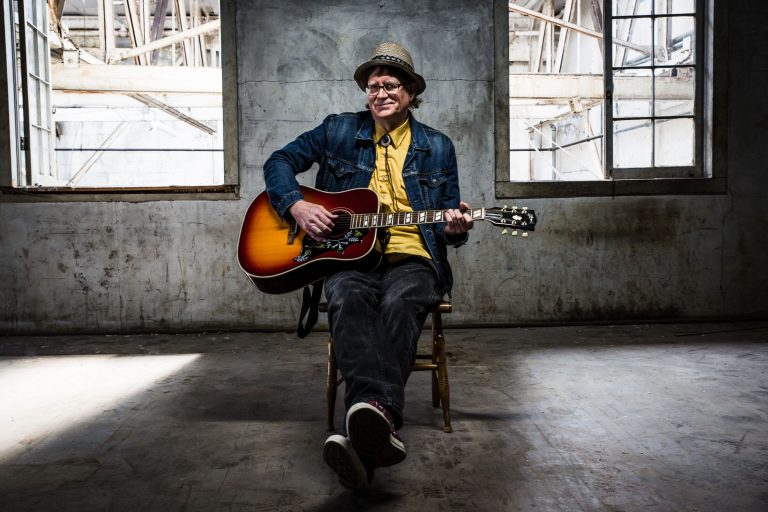

An Exposed Vocals Exclusive Interview with Sean Martin
In a time where the line between survival and surrender feels razor-thin, The Quarantined step forward with an album that doesn’t just demand to be heard — it demands to be felt. Their latest release, Aversion to Normalcy, isn’t just a collection of songs; it’s a visceral body of work that tears into societal illusions, confronts buried trauma, and reclaims the power of authenticity. With raw grunge textures and post-war grit, the band delivers protest music that doesn’t scream through slogans — it reveals truth through vulnerability.
Fronted by Iraq War veteran Sean Martin, The Quarantined have tapped into the kind of emotional resonance that can only be earned through living — and surviving — the extremes. From PTSD-induced creativity to cathartic songwriting born of battlefield memory, Aversion to Normalcy is a record that honors both scars and healing. It’s no surprise the band has struck a chord on platforms like TikTok, where millions have tuned in to explore the themes of trauma, identity, and redemption embedded in their music.
The album’s production pedigree — recorded at the iconic Blackbird Studios and guided by industry veterans — adds sonic weight to an already emotionally charged experience. From the haunting violin lines to the pummeling drums, every element is tuned not only to move you, but to break you open. And that’s the point. Aversion to Normalcy is a record that walks you into darkness, not to keep you there — but to show you the way out.
Now, in this exclusive conversation with Exposed Vocals, frontman Sean Martin opens up with unfiltered honesty about the origins of the album, the cost of war, and why protest music today might sound more like healing than fury. This is more than an interview. It’s a reckoning.
Exposed Vocals:
Your new album Aversion to Normalcy is incredibly raw and emotional. What inspired the title, and what does “normalcy” mean to you in today’s world?
Sean Martin:
Normalcy in today’s world is describing what we really are, not what we hope to be, but what the effect of our existence brings to others- the ad that sells you your hopes and dreams. The crowd quickly judges and bases their lives on the lies they wish to believe instead of the evidence they choose to ignore. The institutions we believed carried our values are fronts for the vices they purport to fight against. The deep apathy with a smile being so common. Watching with cold calculation as you dehumanized, and in silence turn away as our countrymen are abused. To lie to a group of people just to feel the powerful control from their favor. To choose to become rage instead of informed. To sacrifice your honor for a false sense of belonging. To punish the outsider for even existing near you. Always choosing to serve yourself first and only, no due process for those different than you. Always minimizing your faults to exaggerate your enemies’. This is the normalcy to me, the new standard that cruelty is just a cherry on top of the boot on your neck. No one is exempt from these influences, so we all suffer the results. “When tyranny becomes the norm, in order to survive you will need an aversion to normalcy”. It’s a call to be the better version of yourself in spite of the society you live in.
Exposed Vocals:
Tracks like “Skeleton Chair” and “Nemesis (friend of mine)” dive deep into personal trauma. Was there a specific moment or experience that triggered the creative process behind these songs?
Sean Martin:
Skeleton Chair is inspired by a series of events over a few months of my deployment that became one of the greatest tragedies of war that I have ever seen personally. The short version is this- There was an abandoned house near our patrol base in Iraq that was a potential overwatch position and therefore a threat. We decided to expend some extra ammo and blow up the house. But, the house burning then caught a few trees and a field on fire, and eventually spread mildly around the area, it did cause damage, which then was used to radicalize a village, who, in their anger turned to insurgency, which took over their town with murders and brute force. We then set off an ambush they set for us, we counter ambushed, which led to A-10’s blowing up a lot of the village. The survivors brought their dead thru our patrol base checkpoint, and when I saw a mother, screaming bloody murder she was soaked in, holding the two hollow halves of a baby over her head. She was just one in a line of cars with desiccated bodies that went to the treeline about a mile away- well, that is when I checked out mentally from ever thinking we had a righteous reason for being there.
Skeleton Chair is describing the processing of this experience. That’s what the inspiration for Skeleton Chair came from- it is what I wrote when I was doing therapy for the guilt of that incident, and indeed facing the unspoken dirty secret that defined our generation of soldiers as having the highest suicide rate in modern history; that the war in Iraq was for the cruelty, and not for any Americans benefit. no filter, no cap.
Nemesis is about facing the evil of this world and overcoming mutually assured destruction through the power of forgiveness and holding boundaries. The lyrics came to me thru a panic attack in the night. The ‘Nemesis friend of mine’ described in the song is the profile of every bully narcissist psychopath I’ve ever known, and describing the process of having the strength to be smarter, rather than using hate as motivation to violence. Hatred is powerful, but forgiveness and acceptance does overcome it, with vigilance and properly applied enforcement of boundaries. I think that’s an important thing to know thru the chaos that inevitably overwhelms those under the gun and behind it, so I wrote a song about it and put that lesson into a quick 7 minute story.
Exposed Vocals:
How did your time in the Iraq War shape the narrative and emotional tone of this album?
Sean Martin:
It was an influence, Just as much as my civilian life is, there’s much more civilian life than life as a soldier. However, in the Airborne Infantry, I learned what real humanity was, what the real army was, what I was, who I could be, what people also choose to be and why, what I was capable of, while facing my death everyday that it became a blissful end, one worthy of aspiration- all before my first legal drink. How does that not affect everything you know, think, see, and feel? I’ve learned thru multiple kinds of therapy to turn these overwhelming experiences and daily involuntary assaults on my nervous system (PTSD) into the passion and inspiration for this music. It has become my grand opus, and now we get to see the fruits of that labor towards healing with the strengths you have, to learn what you never knew.
Exposed Vocals:
You recorded at Blackbird Studios with a powerhouse team. What was that studio experience like, and how did it influence the final sound?
Sean Martin:
I’ve recorded in many environments, in many studios, with many engineers and producers, some legendary, some just beginning, and I’ve done it all on my own. This was the smoothest recording process I’ve ever been apart of, the most efficient and most effective recording process I’ve ever been apart of. I could, at the same time, appreciate how specific the knowledge used by the team was, how it was utilized to go further than I ever imagined, feel the effect of it on my own playing, and watch myself perform like an out of body experience (because this was the third time I had recorded all of these parts)- I knew exactly what I needed to do and had the best possible way to do it, facilitated by experts. I wish that I could do that every day, all day, but it takes so much planning to get to that place. So hopefully I can do it a few more times in my life and die with a smile.
Exposed Vocals:
The album feels like a journey from chaos to clarity. Was that arc intentional during the songwriting process, or did it reveal itself over time?
Sean Martin:
It was an unintentional end of the process- every song I wrote as a response to some major issue I was dealing with in my life. But after I had all the pieces, the arc became apparent. My main drive was to give each song its due attention to make it individually the best it could be. The line to clarity is not a straight one, or friendly to your wellbeing- suffering is the greatest motivator for innovations in healing. Many on my same path did not make it.
Exposed Vocals:
You’ve gone viral on TikTok, sparking conversations around trauma and healing. What has that response meant to you personally and as a band?
Sean Martin:
The response has been exciting to see, and I’m very grateful to the social media team that has driven it into so many places. My music has never reached so many people before and it’s inspiring to see the effect that the music has on the world, not just in my country. Accepting that the ways people will interact with your music will not always make sense to you is an interesting road to travel, one that I am in love with the diversity of expression it brings in so many different lives.
I’m so glad that people are discovering the music, because we are just getting started in displaying it.
Exposed Vocals:
Many people see protest music as loud and angry. Your version is more introspective — how do you see your music fitting into that tradition?
Sean Martin:
Well, can you be angry and introspective at the same time? Can we?
I think an objective introspection deals with anger as it does every other emotion- it sits with it, gives it the space to express, puts it thru the razors/tests to discover the truth behind the feelings and refine its expression to match its intention to suit the overall needs of the person.
A singular feeling like anger or lust is easy to represent in music and has its pantheon, but an introspective journey, properly projected for the listener to see themselves in the driver seat, has multiple “hot” feelings that all play into each other. Introspection creates depth for all feelings you can evoke, and delays your judgement of the subject of the song for the audience to experience the expression of life, rather than recruiting for assimilation in tribal motivations. The Intention of the artist to the audience is that of a messenger in the introspective songwriting process, and less of the hero or victim. The result of the listener going on a journey with the music leads to where the listener is capable of going in imagination and suggestion, not just what I, as a songwriter, direct them to. The result facilitates freedom of thought in your imagination, not just linear, singularly driven storytelling. “Be Free in your Mind” is my slogan for a reason.
Exposed Vocals:
What was the most challenging song on this album to write or record — emotionally or technically — and why?
Sean Martin:
Recording Nemesis, technically speaking- besides the length, the details of the genre mix required a vast pool of musical tricks to draw from to get the right performances from everybody, especially me. The expertise of the musicians in the band (Jerry Roe drums, Luis Espaillat bass, Zack Rapp Lead Guitar/Violin) who had much less time to learn it than I did, who came thru, took what I was giving them and came back with perfect and inspired delivery, is a discipline and ability that is top tier excellence.
It took a lot of practice to develop the parts for the song. There was a time when I had the idea of what it should be and couldn’t play it. I recorded the parts 3 separate times, mixed it hundreds of times and still couldn’t make the best version of the song on my own. But once I had the right producer, it all just clicked and flowed right out onto the final takes you hear on the record.
Exposed Vocals:
With over 10 million views across social platforms and hundreds of thousands of streams, how do you stay grounded amid growing attention?
Sean Martin:
I pretend like you’re all in your underware so it’s no big deal I’m nervous on stage. But seriously, I stay grounded by staying focused on doing what I need to do, and give myself the time to recuperate. I have no use for my ego to drive my career- I focus on facilitating the long term with the short term goals. The online support really helps to keep me motivated- despite these great results on Spotify and TikTok, there has been significant obstacles this year, both personal and professional. The overwhelming positive response is hope for me that my music can cross borders, and means more to people than just my expression to the world. I always told myself that the true success of making music is setting your sights and seeing the finished product completed, no further expectation will serve you. I was told, to save myself disappointment, to not care how many people heard it but to care that it affects the ones who do hear it. So honestly it’s a weird place to be in for a lot of people hear it and be affected by it. I’m so grateful to all who listen/watch. I’ll figure this whole social media thing out soon, lol.
Exposed Vocals:
What’s next for The Quarantined — any live shows, music videos, or projects we should be watching for?
Sean Martin:
We have a US West Coast tour in planning, more songs to be released early next year (including a new version of Unspoken), music videos on the way, and some fun traveling and content creation plans. I’ve got so many content ideas that I hope we can reach the right people to make them happen. We’re looking into opportunities to bring the music to the UK, Europe, Brazil, and Australia more significantly.
Follow our TikTok for fun and our Website www.Thequarantined.com for info.
With unfiltered truth and razor-sharp introspection, The Quarantined have given us a record — and an interview — that challenges the very idea of what protest music can be. This is more than art. It’s survival set to sound. And for those willing to listen deeply, Aversion to Normalcy may just be the roadmap out of chaos we’ve been looking for.