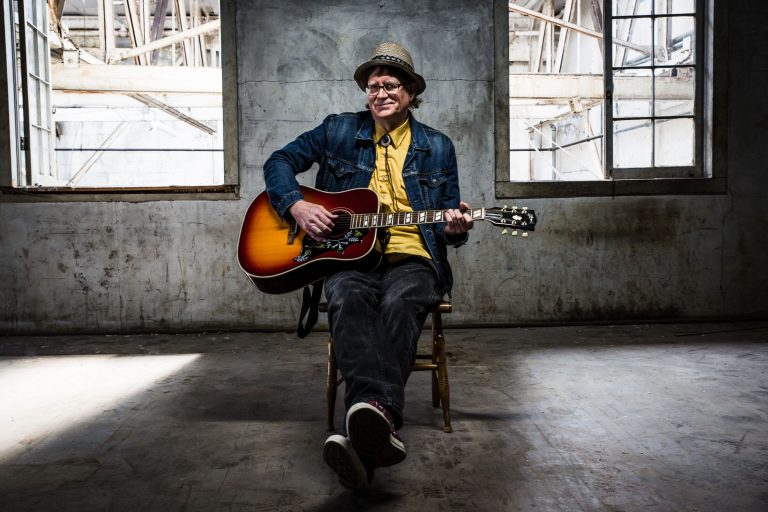

Steve Andrews, also known as The Bard of Ely, is a multifaceted artist whose music, activism, and writing intertwine to create a powerful message of environmental awareness and social change. Hailing from Cardiff, Wales, and now based in Portugal, Steve has carved out a unique space in the music world with his folk-inspired sound, thought-provoking lyrics, and unmistakable green beard. From performing at iconic festivals like Glastonbury to appearing on Britain’s Got Talent, his journey is as eclectic as his influences. In this interview, Steve shares his musical inspirations, the stories behind his songs, and his ongoing efforts to use music as a force for good.
As a seasoned musician and advocate for change, Steve Andrews has captivated audiences worldwide with his passion and artistry. To delve deeper into his journey, creative process, and the impact of his work, Steve sat down with Exposed Vocals founder Randy for an in-depth conversation. Together, they explored his inspirations, challenges as an independent artist, and his vision for the future of music and activism.
Exposed Vocals: Can you introduce yourself to our readers? How did you get started in music?
Steve: I am Steve Andrews, a singer-songwriter, author, poet, naturalist, and activist, originally from Cardiff in South Wales but now living in Portugal. I first got started in music many years ago in my teens when I started going to gigs, folk clubs, and festivals, and felt inspired to become a performer myself. My first performances were in folk clubs in Cardiff.
Exposed Vocals: Who were your biggest musical influences growing up?
Steve: I used to listen to a real mix of genres, artists, and bands, including a lot of Tamla Motown, R&B, blues, folk, country, singer-songwriters, pop, and rock music. I chose The Rolling Stones rather than The Beatles, though I bought records by both. But it was really the singer-songwriters that inspired me, with Bob Dylan being the most important of these.
Exposed Vocals: Your journey has taken you from Cardiff to Portugal. How has that transition influenced your music?
Steve: I wouldn’t say that being in Portugal has influenced my writing or performance style but has changed my producer. In Wales, I was working with Jayce Lewis but over here I discovered Ricardo Verdelho, who has his own VerdelhoStudio in Quinta do Conde, the town I have been living in. He recorded my songs titled “Time For Ocean Aid” and “Mother Nature Rap,” as well as “We Can Sing Together,” my last release, which has lyrics by Stephen Friedland, aka Brute Force, from New York. Pedro Augusto Almedia created the music video for “Mother Nature Rap,” which in addition to production by Ricardo Verdelho features synth overdubs by keyboard wizard Crum from Cardiff. “Where Does All The Plastic Go?” was produced in Wales by Jayce Lewis but the video for it was filmed by Filipe Rafael over here in Portugal.
Exposed Vocals: What’s the story behind your stage name, “The Bard of Ely”?
Steve: Back in 1998 I was a columnist for Big Issue Cymru, the Welsh version of Big Issue magazine for homeless people. I was living in the Ely housing estate in Cardiff, and knowing I was a singer-songwriter, poet, and performer, the publication dubbed me “The Bard of Ely.”
Exposed Vocals: You’ve performed at major festivals like Glastonbury and Green Man. Can you share some memorable experiences from those events?
Steve: Glastonbury 1998 was a very wet year and my performance was on the last day of the festival. I was lacking sleep, had mud on my clothes, and had gotten through a bottle of wine before I was on stage, but I managed to turn out such a good 45-minute set that I had an encore. I remember thinking if I can do this solo with just a guitar to back me, I don’t need anything more, and fronting a band would be a luxury.
The Green Man Festival in 2003 was when I first dyed my beard green. I was a compere for the event, as well as a performer, and I thought a green beard would go down well. I was right. I had people coming up to me all day telling me how much they liked it. But the real test was getting back to daily life in Ely. I was delighted to find that the young people there approved, as did the lady behind the cash desk in the local bank the next day. It was compliments all around, so I thought I’d keep it.
Exposed Vocals: How would you describe your music style to someone who has never heard it before?
Steve: I most often get compared with Neil Young, which is a really great compliment because I am a big fan of his, but I think it has more to do with my vocals than anything else. There is a similarity, and also we both write protest songs. My live performances are very much about audience participation, and I actively encourage this. For my song “Butterfly In My Beard,” I get everyone to “make butterflies” with their hands and to say “yeah.” I often perform my cover of “Stand By Me,” too, and ask the audience to join me on this.
Exposed Vocals: Your lyrics often touch on important themes. What inspires your songwriting?
Steve: My lyrics can be inspired by all sorts of subject matter, but in recent years, I have felt motivated to write a lot of protest songs because of the terrible damage being done to the environment and natural world. Writing such songs is a way of taking action for me.
Exposed Vocals: Tell us about your latest single. What’s the meaning behind it?
Steve: “We Can Sing Together” began when Stephen Friedland, aka Brute Force, who is most famous for once being on The Beatles’ Apple Records with his “King of Fuh” back in 1969, sent me his lyrics last May and asked if I could come up with some music. I was delighted to be asked and sat down with my guitar right away to see what I could come up with. I very soon found the chords and a tune I could sing over and recorded a rough demo on my computer. I sent this to Stephen and he was happy with it, so the next step was to get a professional recording made.
Ricardo Verdelho, my producer, suggested recording a backing choir of children. He is a music teacher as well as a studio owner, so he arranged with the parents of local children who came to him for lessons to record their voices for the song. Ricardo also filmed the music video for “We Can Sing Together.” It’s a song for peace in a world where wars, division, and hatred are causing so much suffering.
Exposed Vocals: What’s next for you? Are there any upcoming releases or projects we should look out for?
Steve: There is a massive project I have been promoting for the last several years—a marine conservation concert featuring household name acts that support Captain Paul Watson, who founded Sea Shepherd and now fronts the Captain Paul Watson Foundation. Coldplay and Bryan Adams are two very famous acts that publicly support Captain Paul’s work.
He knows about my idea, and I was honored to have his endorsement for my book about saving the ocean. I spoke about this at the World Ocean Summit in Lisbon last year, and my idea was mentioned in Italian radio host Filippo Solibello’s book titled SPAM: Stop Plastica A Mare. This is an international cause, and I believe a major concert could make a significant impact.
Exposed Vocals: How can fans best support your music right now?
Steve: By following me on social media, engaging with my music posts online, and buying my music if they really like it. Bandcamp is the best place for purchasing my songs: https://bardofely.bandcamp.com/
Websites: https://steveandrews.info/,
https://linktr.ee/steveandrews/,
https://www.instagram.com/bardofely/,
https://www.reverbnation.com/bardofely/,
https://www.facebook.com/TheBardofEly/,
https://x.com/bardofely/