Nicolle Horbath Is Rewriting Colombian Music on Her Own Terms
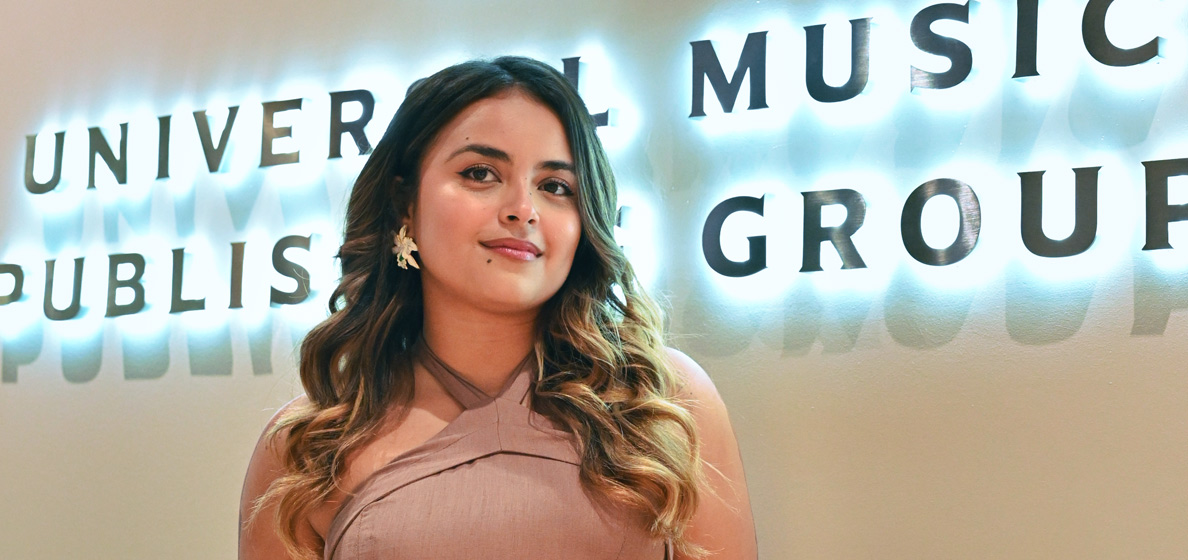
While the Colombian music scene often thrives on speed, rhythm, and commercial firepower, Nicolle Horbath moves in another direction entirely—somewhere quieter, deeper, and more intentional. An emerging singer-songwriter from Barranquilla, Nicolle isn’t just making music; she’s crafting emotional architecture. Her sound—part jazz, part folk, part spiritual meditation—doesn’t beg for attention. It rewards close listening.
In a moment where genre-bending is expected, Nicolle’s strength lies in her restraint. She doesn’t chase crossovers or club hits. Instead, she brings the emotional clarity of a storyteller, the poise of a jazz vocalist, and the intuitive touch of someone who has spent more time studying the silences between notes than the trends riding the charts. It’s not just refreshing—it’s radical.
Born in Barranquilla, a coastal city known for its vibrant musical history, Nicolle draws inspiration from her surroundings without being confined by them. She studied jazz and popular music at Universidad del Norte before earning a prodigy scholarship from the Latin Grammy Cultural Foundation—personally sponsored by Carlos Vives. That opportunity led her to the halls of Berklee College of Music in Boston, where she studied film scoring and songwriting, further refining her voice both literally and figuratively.
But education alone doesn’t make an artist. What sets Nicolle apart is her sensitivity to mood and meaning. Her debut EP, De Magia Imperfecta, released in 2024, is a five-song meditation on love, grief, gratitude, family, and the jagged beauty of being human. Produced by Grammy-winning producer Juan Carlos Pérez Soto, the project plays like a hand-written letter—open, unguarded, and deeply personal. The title translates to “Of Imperfect Magic,” which feels fitting for music that is emotionally rich but never overly polished.
Before this project, her singles “Sueña” and “Florecer” offered a glimpse into her quiet storm. Built on acoustic frameworks and emotionally raw lyrics, these early releases showcased Nicolle’s voice not just as an instrument, but as an invitation. Her delivery is subtle—never belting, never straining—yet full of emotional weight. It’s a rare thing in today’s landscape, where oversinging often replaces actual feeling.
Her résumé, though, is quietly stacked. She’s opened for Carlos Vives on tour, performed at the Latin Grammy ceremony, appeared in NPR’s “Tiny Desk Contest: Top Shelf,” and contributed as both a songwriter and arranger to Beautiful Humans Vol. 1 by AleMor—a project nominated for both Latin Grammy and Grammy awards. In 2024, she earned two Latin Grammy nominations herself: Best New Artist and Best Singer-Songwriter Album.
Still, for all the accolades and credentials, Nicolle Horbath remains centered. Her music doesn’t feel like it was designed in a boardroom. It feels like it was written at midnight, maybe after a phone call that didn’t go the way she hoped, maybe while staring out the window of a quiet Barranquilla street. There’s wisdom in her songwriting, but also vulnerability—a sense that she’s still working through her own questions in real-time, and that we’re just lucky enough to listen in.
For Exposed Vocals readers looking for something honest in an increasingly synthetic landscape, Nicolle Horbath is worth every second of your time. She’s not here to dominate the algorithm. She’s here to remind us that music can still feel sacred.
And if she keeps moving like this—deliberate, soulful, quietly revolutionary—she won’t have to get loud to be unforgettable.