
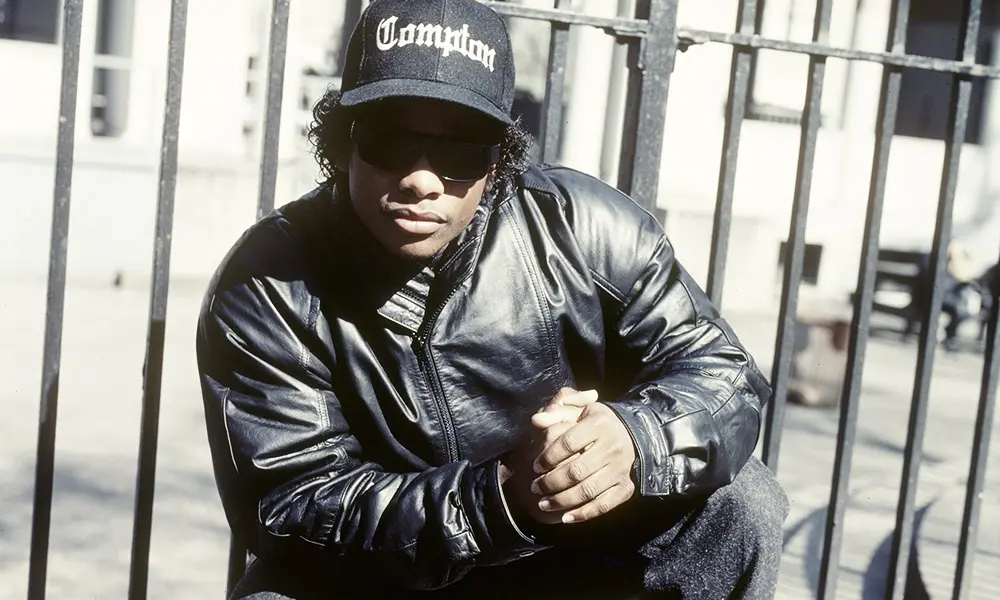
Eazy-E Was the Most Dangerous Man in Hip-Hop — And He Knew It
Eazy-E wasn’t supposed to become a legend. He didn’t look like one, didn’t sound like one, and didn’t care to follow anyone’s playbook. But that’s exactly why he mattered. Before the hip-hop industry had power players in suits shaking hands with tech giants and politicians, Eazy-E was already building his empire — from the middle of Compton, on his own terms.
Born Eric Wright, he was a drug dealer first, record executive second, and rapper somewhere around third. And yet, when you say “gangsta rap,” his name is unavoidable. He made sure of it. Eazy-E didn’t just participate in the birth of West Coast hip-hop — he put the gloves on and pulled it out of the womb himself. With a $7,000 bankroll from street hustle and an uncanny ear for talent, he built Ruthless Records into one of the most influential labels of all time. That’s not an exaggeration. No Eazy, no N.W.A. No N.W.A., no Dre. No Dre, no Snoop, Eminem, 50, Kendrick — the whole family tree starts with the shortest man in the room.
And he was short — 5’3” if you believe the stats. But his presence was massive. His voice, nasal and cocky, wasn’t polished. But it was magnetic. He turned bravado into performance art. Ice Cube wrote the bars, Dre laid the beats, but Eazy was the face of the firestorm. When “F*** tha Police” dropped, it wasn’t just music anymore — it was protest, it was power, it was political warfare. The FBI even sent a letter. Eazy-E framed it.
He leaned into controversy like it was a marketing strategy. When Dre and Cube left Ruthless and torched him in interviews and diss tracks, Eazy didn’t retreat — he responded with “Real Muthaphuckkin G’s,” a diss that still slaps and still stings. Say what you want about his flow, the man knew how to play chess in an industry full of checkers.
The man was ruthless in business too. While other artists were being chewed up by major labels, Eazy owned his masters. He signed talent before it was trendy. Bone Thugs-N-Harmony? That was him. And while the world was catching up to “indie hustle,” he had already written the playbook.
Of course, the story ends fast and tragically. AIDS. A public announcement. Then gone, just weeks later. Theories have swirled ever since. Was it foul play? A setup? Or just a brutal twist of fate? It doesn’t matter. What matters is that in his last days, Eazy humanized something hip-hop rarely talked about — vulnerability. He faced his death the same way he faced the music industry: head-on.
His legacy isn’t just the music. It’s the blueprint. Do it yourself. Own your name. Make noise. Be feared. Be funny. Be hated. Be unforgettable. And he is. Every time a rapper drops an F-bomb on CNN, every time an artist launches a label from their bedroom, every time hip-hop gets under America’s skin — that’s Eazy’s echo.
![[ID: bHzSp7T480g] Youtube Automatic](https://exposedvocals.com/wp-content/uploads/2025/11/id-bhzsp7t480g-youtube-automatic-60x60.jpg)
![[ID: qXnqZo03PHY] Youtube Automatic](https://exposedvocals.com/wp-content/uploads/2025/10/id-qxnqzo03phy-youtube-automatic-60x60.jpg)

![[ID: DOA2mB3OKMo] Youtube Automatic](https://exposedvocals.com/wp-content/uploads/2025/11/id-doa2mb3okmo-youtube-automatic-236x133.jpg)
![[ID: BU0xSI_DCXs] Youtube Automatic](https://exposedvocals.com/wp-content/uploads/2025/11/id-bu0xsidcxs-youtube-automatic-236x133.jpg)