Stolen Wood, Rubber Bullets, and a Freeway Shutdown: The Dead City Punx Story Gets Its Documentary
The Documentary
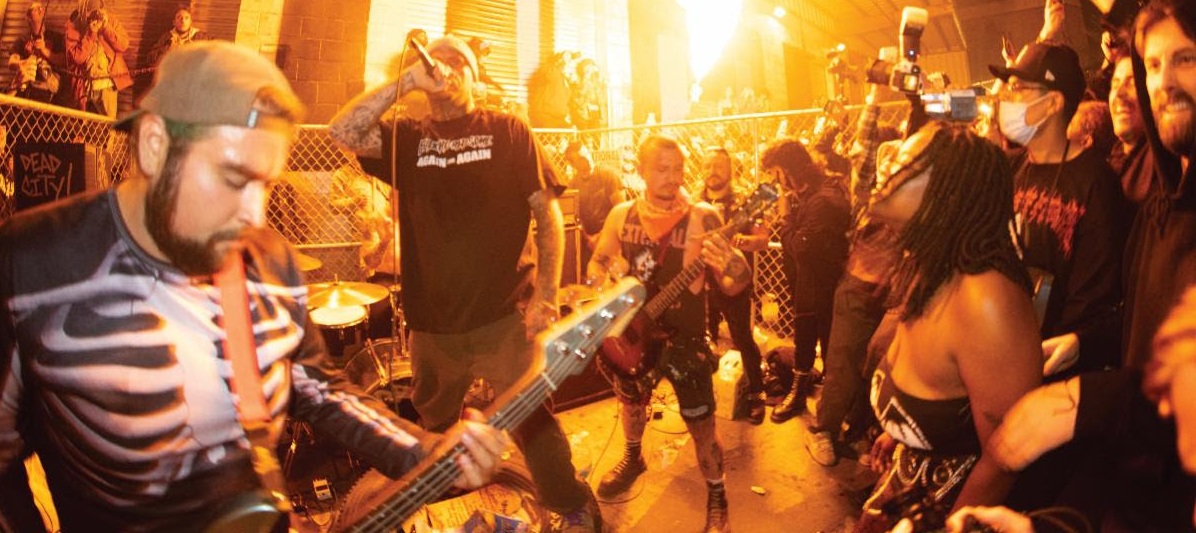
They stole the wood to build the stage. They used graffiti tactics to scope the location. They dropped the address one hour before showtime. And when the LAPD showed up with rubber bullets and helicopters, Dead City Punx kept playing.
This is not a band that needed a label, a booking agent, or a publicist. Dead City Punx — Meka, Grumpy, Mike, and Adrian — built their following the same way they built their stages: with whatever they could get their hands on, in places nobody gave them permission to be, for crowds of people who needed it as badly as they did.
Their story is now a documentary, presented by Beyond The Streets and executive produced by Roger Gastman, Joseph Pattisall, and Zack de la Rocha. It premiered April 16, 2026 at The Regent Theater in Los Angeles. If you missed it, pay attention to what’s coming next. This one matters.
Founding members Grumpy and Meka met at a trap house in a gang-controlled neighborhood in Central Los Angeles. They played whatever they could get their hands on — eventually including instruments stolen from a church. They brought in Mike on vocals and Adrian on bass and started playing shows in the fall of 2019. Then COVID shut everything down.
Boredom and pent-up energy did what they always do — they found a way out. Dead City Punx took the same operational logic they used for doing graffiti and applied it to live music: scope the spot, move in fast, use stolen materials, evade law enforcement, disappear. They built stages from shoplifted wood and bags of cement. They plugged into generators. They dropped show locations on social media an hour before the doors — or where the doors would have been, if there were any doors.
What followed was one of the most genuinely independent music stories of the pandemic era. Shows at Lafayette Park. A show in Frogtown that shut down the Interstate 5 Freeway. Shows beneath the 6th Street Bridge. Thousands of people showing up, fans arriving with fireworks and spray cans, the LAPD firing rubber bullets, helicopters circling overhead. Dead City Punx played through all of it.
Playing music with friends is a more powerful addiction than drugs. — Dead City Punx
Every member of Dead City Punx is a survivor. The documentary does not sanitize that. Vandals, yes — but also people who watched a city nearly swallow them whole through addiction, incarceration, and homelessness, and who found in music something louder, messier, and more meaningful than self-destruction. The band became chosen family. The fans became fuel.
Raised on hip hop and rock, they funneled trauma and rage into collective expression that had no interest in playing by anybody’s rules. No record label support. No professionally recorded songs. No permission. Just four people who figured out how to make a show feel like a crime scene — and built an audience that came back every time because of it.
For the EV audience — people who understand what it means to build something real without institutional backing — Dead City Punx is the most honest version of that story. This is not nostalgia for punk. This is punk happening right now, in real time, with real consequences, in a city that tried to stop it and couldn’t.
DEAD CITY PUNX is presented by Beyond The Streets — the organization founded by Roger Gastman that has brought street art and underground culture into serious cultural conversation for years. Executive produced alongside Gastman by Joseph Pattisall and Zack de la Rocha, the film uses fan-filmed concert footage and exclusive interviews to capture the full arc of the movement: from stolen instruments to viral shows, from trap houses to the front pages.
The premiere at The Regent Theater included a DJ set by Keith Morris of the Circle Jerks. The gallery opening at Beyond The Streets followed the next day. The film asks the viewer to question definitions of DIY ethos, activism, public space, excessive force, and rebellion in the modern world. It does not come down easy on any side. It just shows you what happened and lets you sit with it.