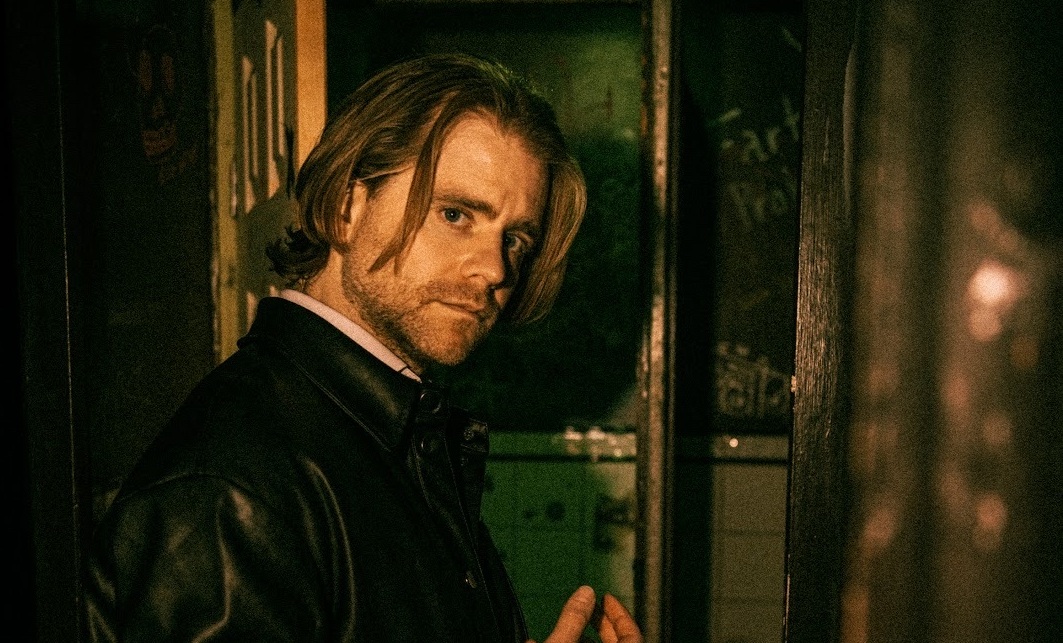
An American singer-songwriter who found his true voice in the depths of London’s Camden Town. Kyle T Hurley talks about the mentors who shaped him, the director who brought his vision to life, and what it means to finally make music that sounds like nobody but himself.
I was gigging around Los Angeles a lot and then I started to gig around Europe quite a bit and fell upon a kind of a very good rootsy scene in London for singer-songwriters. There is one especially at Spiritual Records which is a place located in Camden and they kind of ate me up and helped develop my sound.
I would say it brings out the best original version of myself that I wouldn’t have been able to find were not for the scene in Camden and Spiritual. I think that they really foster new ideas and give people a chance to explore weird and crazy ideas that other places would kind of shut down right away. It helps to open doors to other creative possibilities that make your original music really interesting.
“They foster new ideas and give people a chance to explore weird and crazy ideas that other places would shut down right away.” — Kyle T Hurley on Spiritual Records
Growing up I always liked Stone Cold Steve Austin from the WWE and I always liked his phrase “Austin 3:16” and “That’s the bottom line because Stone Cold says so.” It’s always just always stuck with me. KTH 3:16 is me saying this is me, this is the bottom line for my original sound as it is right now.
I think Irish John is anyone that anyone knows who is a giver — the giver is a character in Lois Lowry’s book “The Giver” and growing up I always liked that book and I reread it not too long ago. The idea of the giver giving memory always stuck with me and I think everyone has their own Irish John — somebody that is a mentor and gives them perspective and their memories to carry on for their own lifetime.
“Everyone has their own Irish John — somebody that is a mentor and gives them perspective and their memories to carry on for their own lifetime.” — Kyle T Hurley
The collaboration with Tony Kaye came about some might say by coincidence but I believe rather by design. We met randomly in London at Spiritual Records and we just started talking and talking more and more and we’ve worked on various things together. I mentioned my album to him and how I needed artwork. I had some ideas for it but ultimately Tony was really keen for us to work together. I think our creative styles and our vision works well together. I kind of just give him a blank canvas and maybe a bit of background about the songs and album and he just works his magic.
I would say my sound is a combination of rock, blues, folk, country and really a combination of whatever I’m listening to at that time. But I think really it’s just the original version of myself — that’s the bottom line.
The environment enabled me to listen to ideas that were coming to me externally and to let songs kind of become what they wanted to become. It made it easier for me to get out of the way of where the song wanted to go and to explore. When I thought the song was done, the environment would push it to a higher place.
I would say I feel most at home within my influences as that spectrum is pretty wide. For me it all goes back to Elvis Presley and then of course you could pepper in Bob Dylan who I consider to be the greatest singer-songwriter of the 20th century. And then there’s Led Zeppelin — the list just goes on and on so really I’m almost at home listening to the artist that I connect most with.
I don’t know how much it’s really taught me about being an American artist as much as music is a universal language that crosses national boundaries.
I want listeners to walk away thinking about what the songs mean to them and really just to get people thinking and make them curious about what I was trying to say — and hopefully just rocking with the music.